

Success of two more navigation satellites to reach the Galileo constellation

05 December 2021

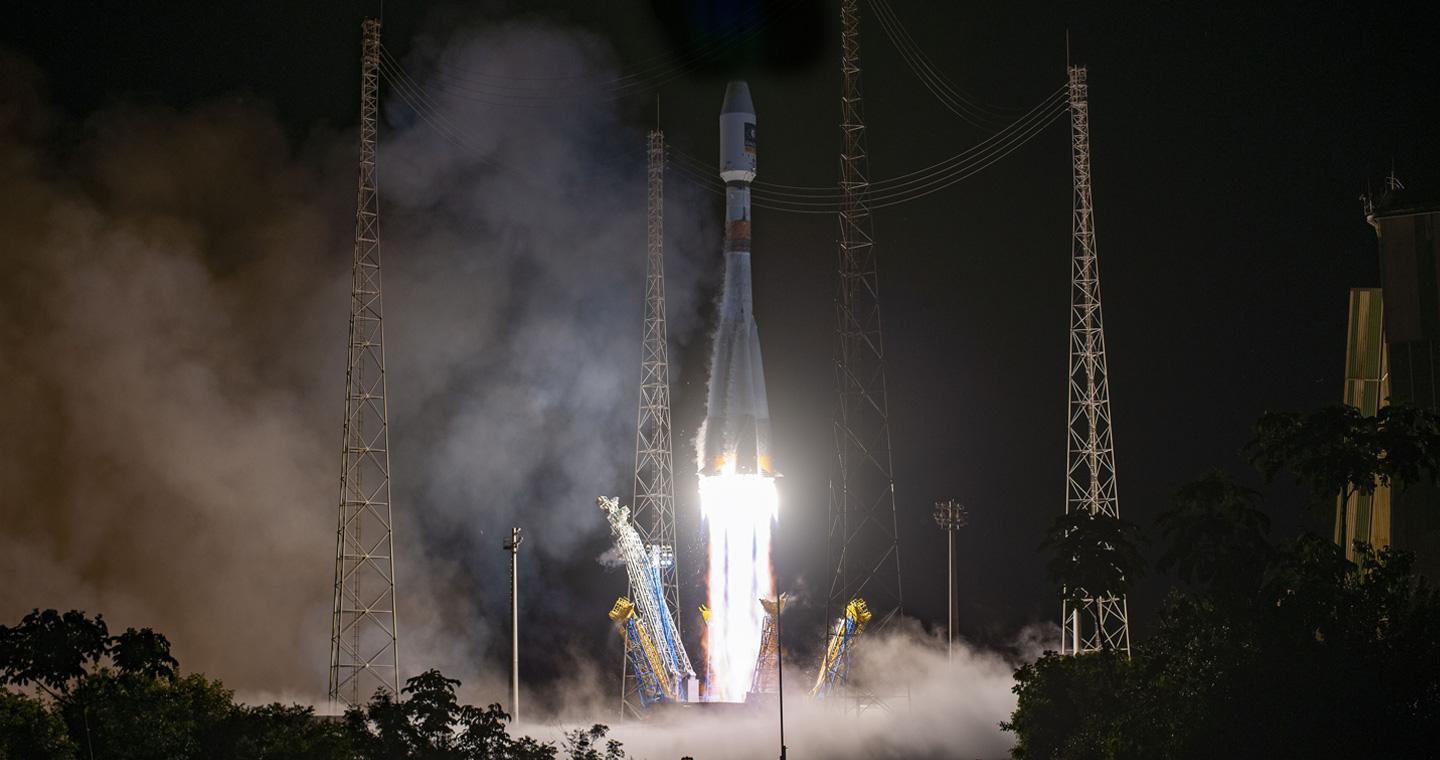
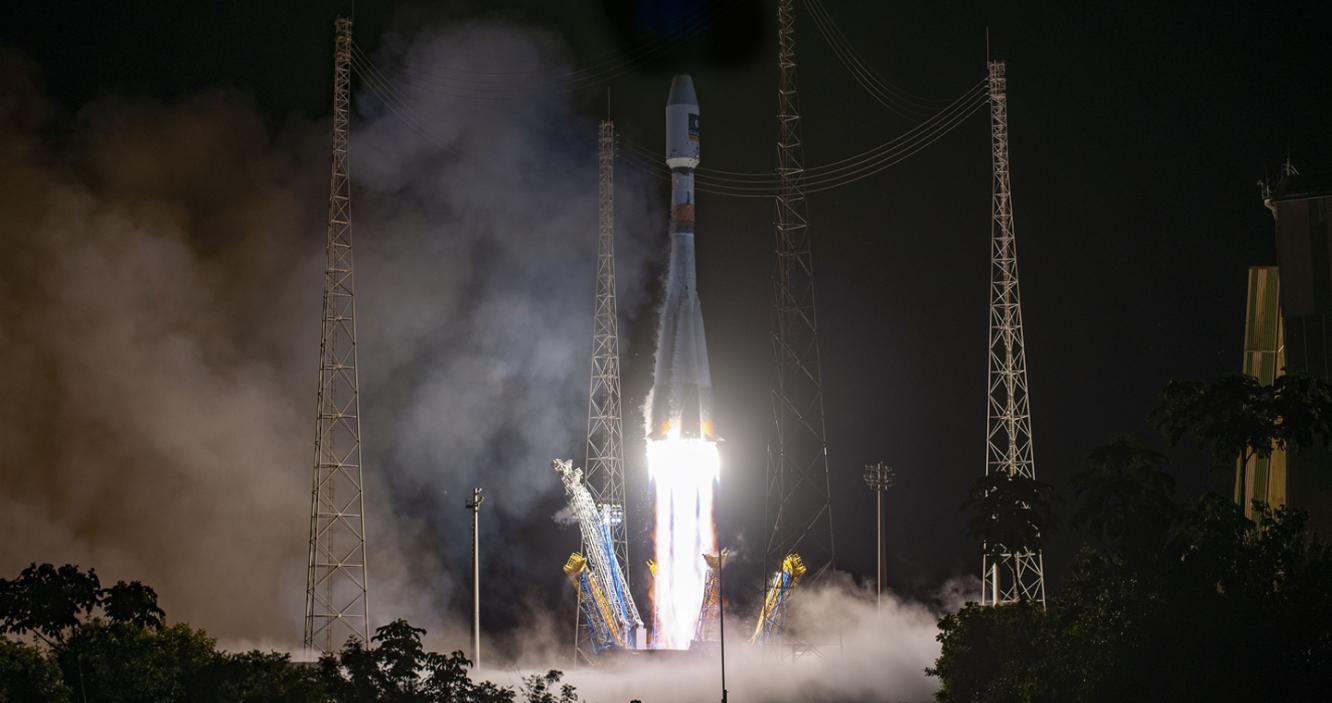
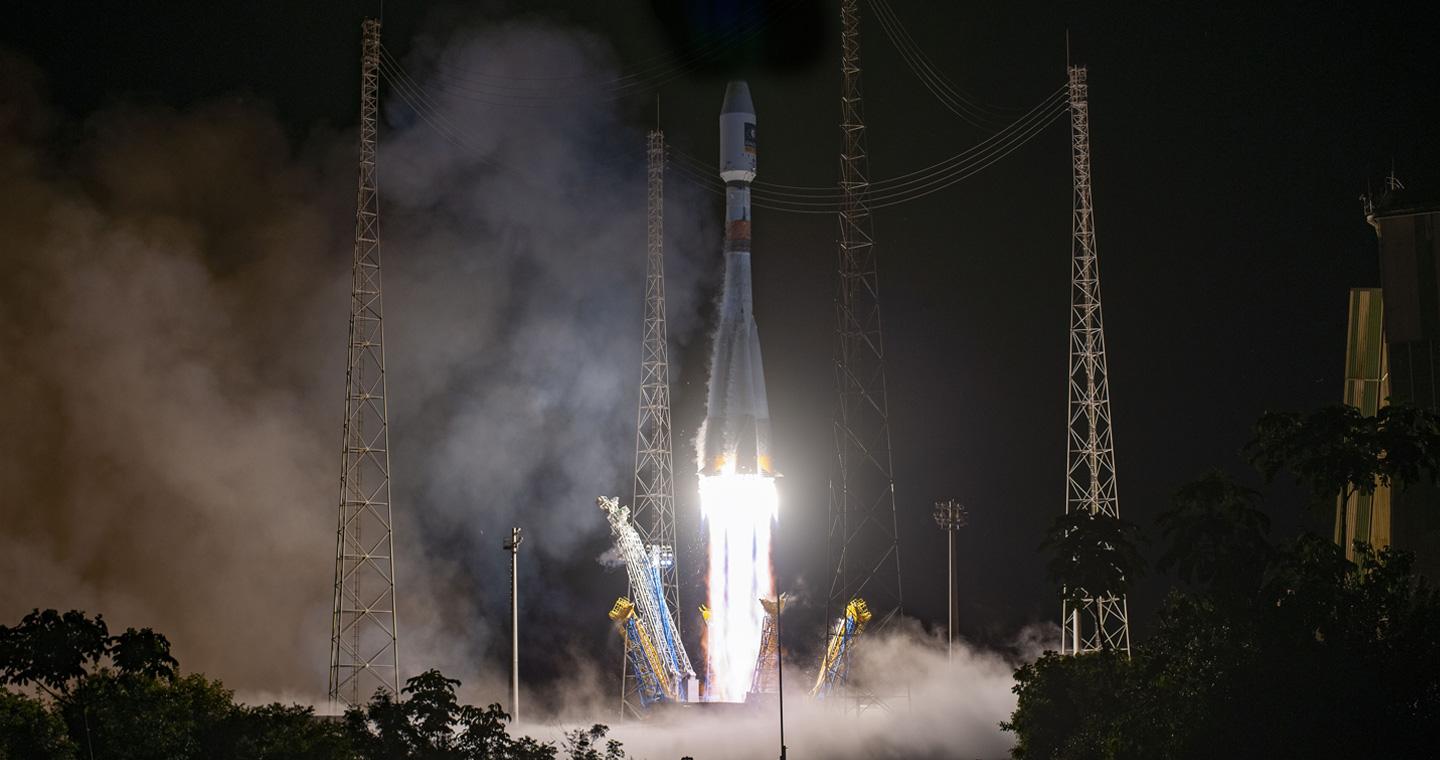
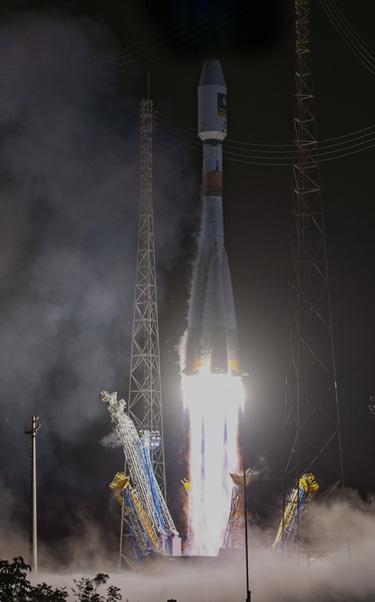
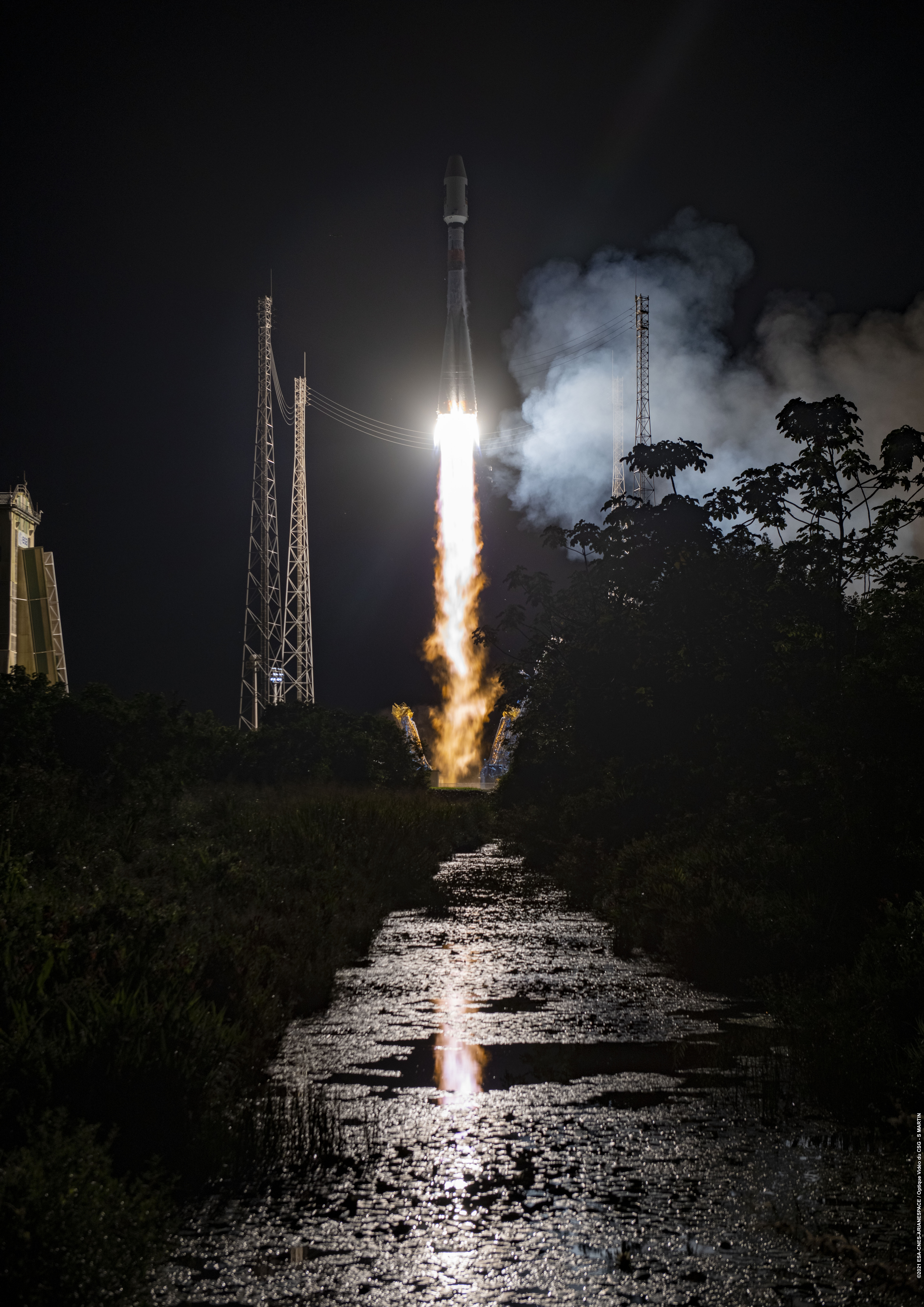
Two more Galileo satellites, Europe's global navigation and positioning system, has been launched on 5th December 2021 into orbit aboard a Soyuz rocket from the Guyana Space Centre. 

The rocket lifted-off at 1:19am CET with the separation of the two satellites from the launcher occurred 4 hours later, at approximately 22500 km of altitude. With this launch, the 11th launch of the Galileo programme, the constellation will be composed of 28 spacecrafts in orbit.

For the accurate positioning to their final orbit, at exactly 23222 Km, the two brand-new satellites (GSAT0223 and GSAT0224) are now facing the 10-days-long "Launch and Early Orbit Phase" (LEOP) followed by 25 days of drift and fine positioning operations.

It is performed by DLR GfR with mission directive of Spaceopal under the responsability of EUSPA and for the first time in the programme from the Galileo Control Centre (GCC) in Oberpfaffenhofen, near Munich in Germany.

Oberpfaffenhofen manages the constellation together with its sister centre at Telespazio’s Fucino Space Center, Italy, and during 2021, both Galileo Control Centres have been upgraded with a new system build enhancing its capabilities, among others to enable LEOP operations. Both GCC are managed by Spaceopal, a joint venture between Telespazio and DLR GfR, which since November 2010 has been the main contractor for operational services for Galileo (Galileo Service Operator, GSOp).
"It is a real satisfaction, after 12 years from the foundation of Spaceopal, to state the positive results of the collaboration with EUSPA and all European institutional stakeholders as well as the trust put on us in each and every moment of the Galileo service provision. We are proud to guide a highly professional industrial team to provide with devotion the 24/7 Galileo service operations with all global ground and space assets deployed".

 Marco Folino, CEO of Spaceopal.

Galileo is the result of a robust collaboration between EUSPA (the European Space Programme Agency), the European Commission, the European Space Agency (ESA) and industrial partners. This latest eleventh launch has confirmed Galileo as a success story in which the European institutions and several industrial partners have worked in deep synergy to build the system and provide its service.

‘’Today we can proudly celebrate another milestone achieved by the European Union’s most ambitious and largest industrial project, Galileo’’.

Rodrigo da Costa, EUSPA Executive Director.

Today Galileo, the world’s most precise global navigation satellite system and composed, counts on more than 2 billion users around the world and is continuing evolve. New services, currently under testing, will soon be available to users opening new market opportunities across various industries.


“We are proud to state that Galileo is the world’s most precise satellite navigation system. Due to its complexity, these extraordinary results by end-to-end operating and maintain the Galileo system can only be reached by putting together several and variegated technical competences spread over a wide, international team, that we are proud to lead under a unique vision and ambition”.

Emiliano Agosta, Technical Director of Spaceopal.

Other News & Stories

09.10.2026
Telespazio Benelux to build the ground infrastructure for ESA’s lunar ice-hunting mission

Telespazio Benelux will lead a European consortium, with EarthLab Luxembourg and Astro42, to deliver and operate the control centre for PROSPECT, ESA’s mission to drill for water ice and other volatile chemicals at the lunar south pole, with a drill developed and built by Leonardo.

08.10.2026
e-GEOS: Board of Directors appoints Cristina Sgubin as Chief Executive Officer

The Board of Directors of e-GEOS, a joint venture between Telespazio (80%) and the Italian Space Agency (20%), has unanimously appointed Attorney Cristina Sgubin as Chief Executive Officer of the company. Sgubin will also be responsible for Telespazio’s Geo Information Line of Business.

06.10.2026
ispace, Leonardo and Telespazio Sign Memorandum of Understanding to Collaborate on Lunar Exploration
  • The MoU builds on existing cooperation between ispace and Telespazio further expanding the areas of potential cooperation also leveraging on Leonardo space capabilities in robotics and AI applied to space exploration, strengthening Europe’s and Japan roles in the emerging cislunar economy.

  • The partnership will advance interoperability of lunar infrastructure and services to support global lunar exploration and explore ispace’s lunar transportation capabilities, with the European Space Agency’s Moonlight programme led by Telespazio, part of Leonardo Group, being the first opportunity to implement it.

25.09.2026
Fucino Space Centre: from the first "ping" to the future of the Internet

Prof. Luciano Lenzini, a pioneer in bringing the Internet to Italy, met with Telespazio engineers and technicians at the Fucino Space Centre, through which the first Internet link between Italy and the United States passed 40 years ago.

09.10.2026
Telespazio Benelux to build the ground infrastructure for ESA’s lunar ice-hunting mission

Telespazio Benelux will lead a European consortium, with EarthLab Luxembourg and Astro42, to deliver and operate the control centre for PROSPECT, ESA’s mission to drill for water ice and other volatile chemicals at the lunar south pole, with a drill developed and built by Leonardo.

08.10.2026
e-GEOS: Board of Directors appoints Cristina Sgubin as Chief Executive Officer

The Board of Directors of e-GEOS, a joint venture between Telespazio (80%) and the Italian Space Agency (20%), has unanimously appointed Attorney Cristina Sgubin as Chief Executive Officer of the company. Sgubin will also be responsible for Telespazio’s Geo Information Line of Business.

06.10.2026
ispace, Leonardo and Telespazio Sign Memorandum of Understanding to Collaborate on Lunar Exploration
  • The MoU builds on existing cooperation between ispace and Telespazio further expanding the areas of potential cooperation also leveraging on Leonardo space capabilities in robotics and AI applied to space exploration, strengthening Europe’s and Japan roles in the emerging cislunar economy.

  • The partnership will advance interoperability of lunar infrastructure and services to support global lunar exploration and explore ispace’s lunar transportation capabilities, with the European Space Agency’s Moonlight programme led by Telespazio, part of Leonardo Group, being the first opportunity to implement it.

25.09.2026
Fucino Space Centre: from the first "ping" to the future of the Internet

Prof. Luciano Lenzini, a pioneer in bringing the Internet to Italy, met with Telespazio engineers and technicians at the Fucino Space Centre, through which the first Internet link between Italy and the United States passed 40 years ago.