

Latin American Space Agencies Visit the Fucino Space Centre

05 June 2025

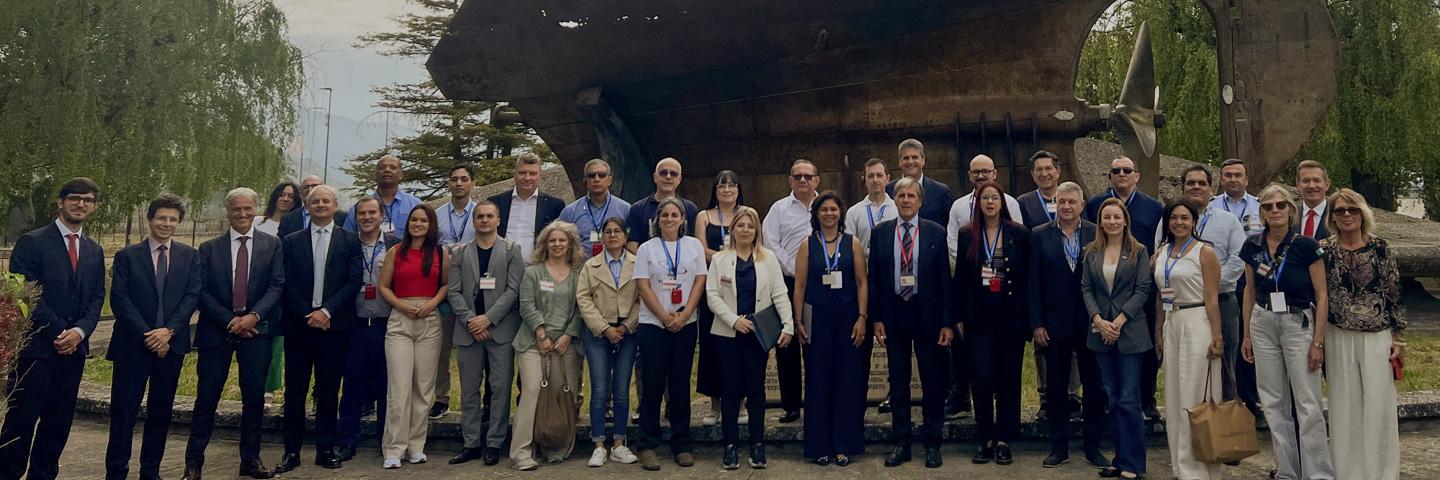
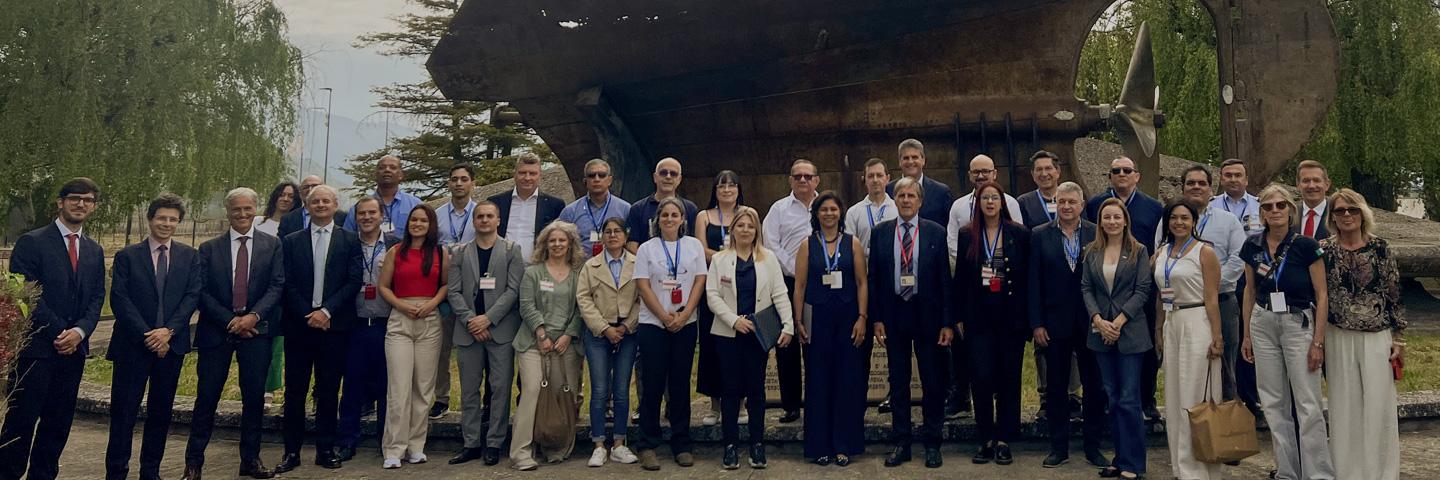
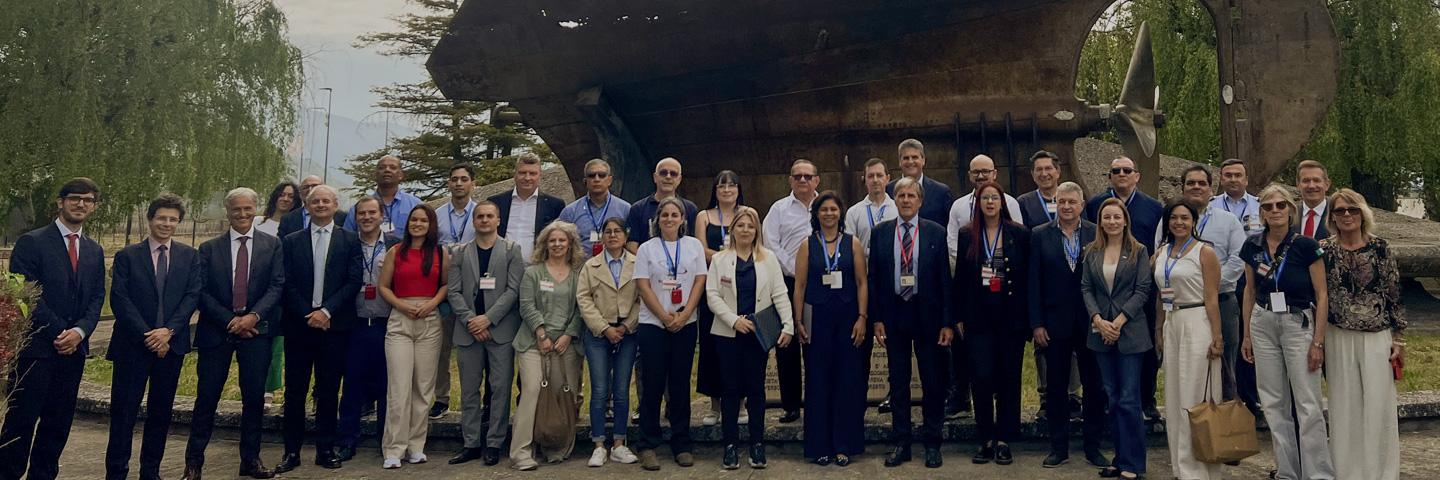
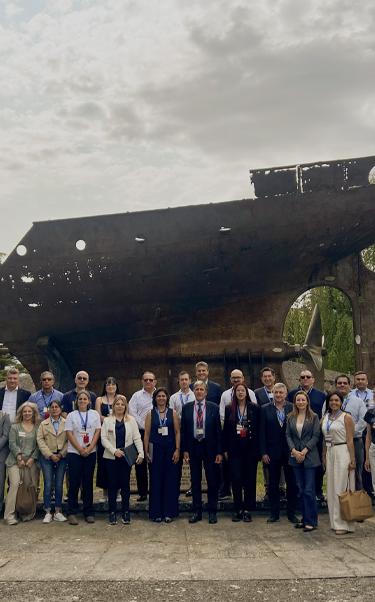
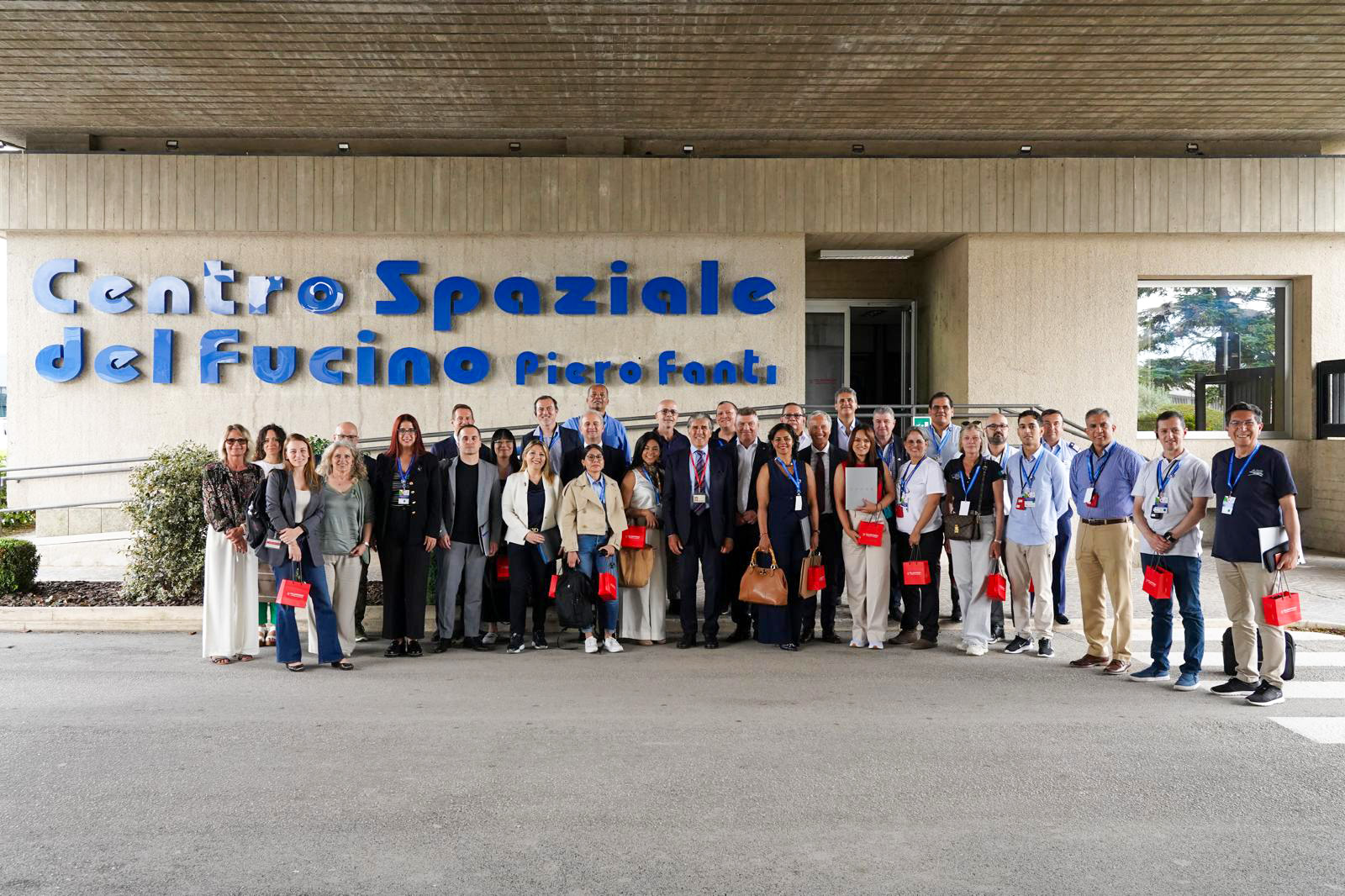
Today Telespazio’s Fucino Space Centre hosted representatives from the space agencies of the IILA (Italo-Latin American Institute) member countries, as part of the IV Meeting of Space Agencies, organized in collaboration with the Italian Space Agency (ASI).

The visit was one of the key moments of the event, which focused on the theme “Cooperating to Implement Concrete Actions and Tackle Shared Challenges”. The initiative reaffirmed the joint commitment of Italy and Latin American countries to strengthening regional cooperation in the space sector, promoting shared solutions to major global challenges in line with the Sustainable Development Goals (SDGs) and the Space Agenda 2030.

During the day at Fucino, delegates attended a presentation on the activities of Leonardo's Space Division, Telespazio, and e-GEOS, followed by a guided tour of the site’s main infrastructures—from the Master Control Room for TLC and TV services to the historic museum and the stern section of the Elettra, the ship where Guglielmo Marconi conducted groundbreaking shortwave radio propagation experiments between the two world wars.

Telespazio, a key player in European space innovation with a well-established presence in Latin America, reiterated its active role in fostering technological and industrial partnerships aimed at sustainable development and the growth of space systems in the world’s most dynamic markets.

The IV Meeting brought together space agencies, universities, research centers, institutional representatives, and key stakeholders, structured around four main thematic pillars: environment, global health, research and innovation, and capacity building. The day at the Fucino Space Centre highlighted the value of Italian industrial contributions and offered a concrete opportunity to promote new forms of bilateral and multilateral cooperation.

The visit was attended by delegates from the space agencies of Argentina, Bolivia, Brazil, Chile, Colombia, Costa Rica, Cuba, Ecuador, El Salvador, Mexico, Nicaragua, Panama, Paraguay, Peru, the Dominican Republic, Uruguay, and Venezuela, accompanied by representatives from the Italian Space Agency and the Ministry of Foreign Affairs and International Cooperation.
Other News & Stories

25.09.2026
Fucino Space Centre: from the first "ping" to the future of the Internet

Prof. Luciano Lenzini, a pioneer in bringing the Internet to Italy, met with Telespazio engineers and technicians at the Fucino Space Centre, through which the first Internet link between Italy and the United States passed 40 years ago.

21.09.2026
Connectivity: results of the satellite trial in Lombardy presented in Milan

Connecting entire villages to the national network through an infrastructure that combines satellite, fiber and wireless connections, in order to bring quality digital services even to the hardest-to-reach areas. This is the goal of the trial carried out in Lombardy, whose preliminary results were presented at the Milan office of the Department for Digital Transformation. Telespazio took part in the initiative by developing a proprietary backhauling solution that aggregates multiple satellite links.

15.09.2026
FLEX and Sentinel-3C in Orbit: Leonardo and Telespazio's Contribution to ESA's Earth Observation Missions

On September 15th 2026, at 03:21 Italian time, the FLEX and Copernicus Sentinel-3C satellites of the European Space Agency (ESA) successfully launched from Europe's Spaceport in Kourou, French Guiana. Both travelled aboard the same launcher, Avio's Vega-C, and are now flying in tandem orbit, spaced roughly ten seconds apart, at an altitude of around 800 kilometres.

28.08.2026
MTG-I2 successfully launched: Telespazio acquired the first signal from the third Meteosat Third Generation satellite from the Fucino Space Centre

MTG-I2, the third Meteosat Third Generation satellite from ESA and EUMETSAT, lifted off yesterday, 27 August, at 20:11 UTC from the Kourou spaceport in French Guiana, aboard an Arianespace Ariane 6 launcher. About 25 minutes after launch, Telespazio's Fucino Space Centre — a Leonardo Group subsidiary — acquired the satellite's first signal, officially marking the start of the LEOP (Launch and Early Orbit Phase), which will last twelve days.

25.09.2026
Fucino Space Centre: from the first "ping" to the future of the Internet

Prof. Luciano Lenzini, a pioneer in bringing the Internet to Italy, met with Telespazio engineers and technicians at the Fucino Space Centre, through which the first Internet link between Italy and the United States passed 40 years ago.

21.09.2026
Connectivity: results of the satellite trial in Lombardy presented in Milan

Connecting entire villages to the national network through an infrastructure that combines satellite, fiber and wireless connections, in order to bring quality digital services even to the hardest-to-reach areas. This is the goal of the trial carried out in Lombardy, whose preliminary results were presented at the Milan office of the Department for Digital Transformation. Telespazio took part in the initiative by developing a proprietary backhauling solution that aggregates multiple satellite links.

15.09.2026
FLEX and Sentinel-3C in Orbit: Leonardo and Telespazio's Contribution to ESA's Earth Observation Missions

On September 15th 2026, at 03:21 Italian time, the FLEX and Copernicus Sentinel-3C satellites of the European Space Agency (ESA) successfully launched from Europe's Spaceport in Kourou, French Guiana. Both travelled aboard the same launcher, Avio's Vega-C, and are now flying in tandem orbit, spaced roughly ten seconds apart, at an altitude of around 800 kilometres.

28.08.2026
MTG-I2 successfully launched: Telespazio acquired the first signal from the third Meteosat Third Generation satellite from the Fucino Space Centre

MTG-I2, the third Meteosat Third Generation satellite from ESA and EUMETSAT, lifted off yesterday, 27 August, at 20:11 UTC from the Kourou spaceport in French Guiana, aboard an Arianespace Ariane 6 launcher. About 25 minutes after launch, Telespazio's Fucino Space Centre — a Leonardo Group subsidiary — acquired the satellite's first signal, officially marking the start of the LEOP (Launch and Early Orbit Phase), which will last twelve days.