

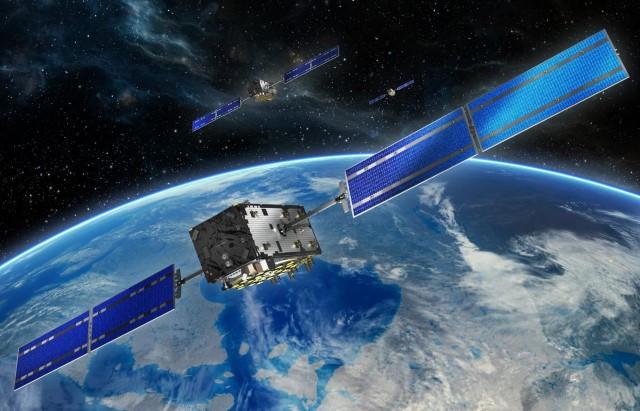
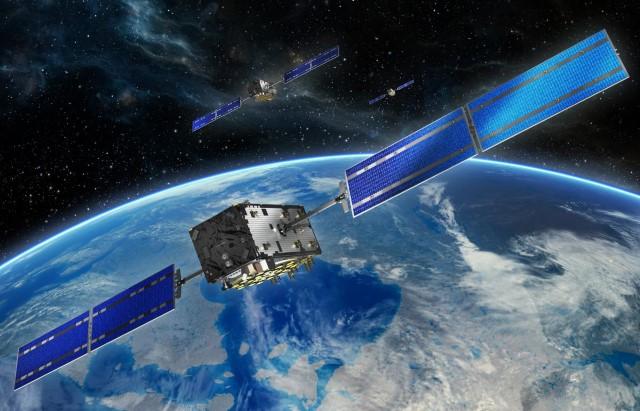
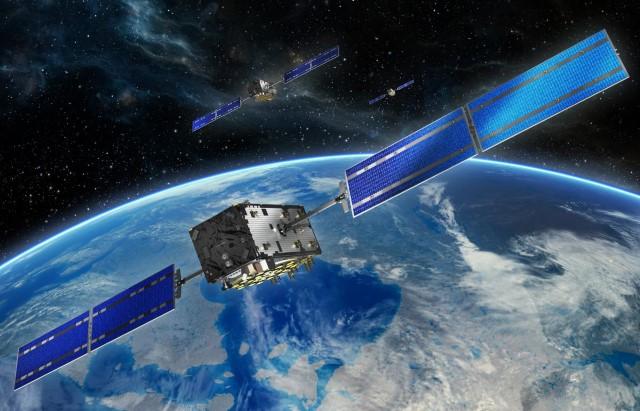
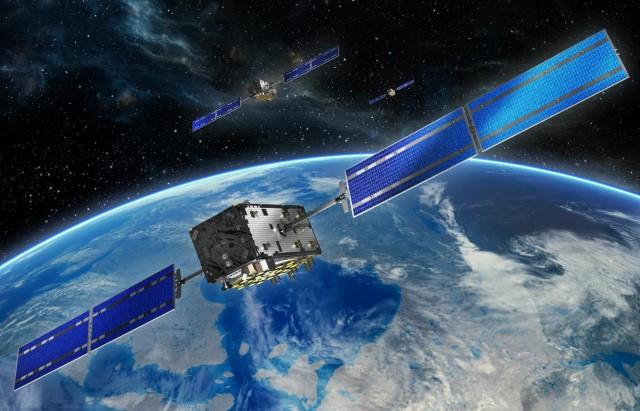
Galileo Constellation: Satellites 9 and 10 launched successfully

Kourou  11 September 2015

Satellites 9 and 10 of the European space programme Galileo were launched successfully at 02:08 GMT (04:08 CET) with a Soyuz rocket from Europe's Spaceport in Kourou, French Guiana.

Two other satellites of the European satellite navigation and localization programme Galileo will be put into orbit by the end of 2015.

Telespazio plays a leading role in Galileo, having built at the Fucino Space Centre one of the two Control Centres which manage the constellation and the programme mission. Through Spaceopal, a company formed as a joint venture with DLR GfR, Telespazio is responsible for the operations and integrated logistics of the entire system, ensuring the management and coordination of the services.

Spaceopal operates through the Galileo Control Centres in Oberpfaffenhofen (Munich) and Fucino (L'Aquila) for the provision of the navigation signals and the in-orbit control of the satellites.

Telespazio France plays an important role during the launch operations through the teams in Toulouse and Kourou. The subsidiary of Telespazio supports the CNES and Arianespace respectively in the management of the launch centre in Guyana and in the operations of launch and early orbit the Galileo satellites.

Telespazio is involved in the validation campaign of the programme's early services and in the implementation of applications based on Galileo, which will encourage the development and dissemination of innovative services in multiple sectors: transport, telecommunications, geodesy, oil exploration and mining.

The Galileo programme is a collaboration of the European Union with ESA to improve the technological independence of Europe and establish international standards for Global Navigation Satellite Systems (GNSS).

The purpose of the programme is to provide a global navigation satellite system, a highly accurate, guaranteed global positioning service, interoperable with the US GPS and Russian GLONASS systems. At full operation, Galileo will consist of 30 Medium Earth Orbit (MEO) satellites and a broad ground infrastructures.

Other News & Stories

25.09.2026
Fucino Space Centre: from the first "ping" to the future of the Internet

Prof. Luciano Lenzini, a pioneer in bringing the Internet to Italy, met with Telespazio engineers and technicians at the Fucino Space Centre, through which the first Internet link between Italy and the United States passed 40 years ago.

21.09.2026
Connectivity: results of the satellite trial in Lombardy presented in Milan

Connecting entire villages to the national network through an infrastructure that combines satellite, fiber and wireless connections, in order to bring quality digital services even to the hardest-to-reach areas. This is the goal of the trial carried out in Lombardy, whose preliminary results were presented at the Milan office of the Department for Digital Transformation. Telespazio took part in the initiative by developing a proprietary backhauling solution that aggregates multiple satellite links.

15.09.2026
FLEX and Sentinel-3C in Orbit: Leonardo and Telespazio's Contribution to ESA's Earth Observation Missions

On September 15th 2026, at 03:21 Italian time, the FLEX and Copernicus Sentinel-3C satellites of the European Space Agency (ESA) successfully launched from Europe's Spaceport in Kourou, French Guiana. Both travelled aboard the same launcher, Avio's Vega-C, and are now flying in tandem orbit, spaced roughly ten seconds apart, at an altitude of around 800 kilometres.

28.08.2026
MTG-I2 successfully launched: Telespazio acquired the first signal from the third Meteosat Third Generation satellite from the Fucino Space Centre

MTG-I2, the third Meteosat Third Generation satellite from ESA and EUMETSAT, lifted off yesterday, 27 August, at 20:11 UTC from the Kourou spaceport in French Guiana, aboard an Arianespace Ariane 6 launcher. About 25 minutes after launch, Telespazio's Fucino Space Centre — a Leonardo Group subsidiary — acquired the satellite's first signal, officially marking the start of the LEOP (Launch and Early Orbit Phase), which will last twelve days.

25.09.2026
Fucino Space Centre: from the first "ping" to the future of the Internet

Prof. Luciano Lenzini, a pioneer in bringing the Internet to Italy, met with Telespazio engineers and technicians at the Fucino Space Centre, through which the first Internet link between Italy and the United States passed 40 years ago.

21.09.2026
Connectivity: results of the satellite trial in Lombardy presented in Milan

Connecting entire villages to the national network through an infrastructure that combines satellite, fiber and wireless connections, in order to bring quality digital services even to the hardest-to-reach areas. This is the goal of the trial carried out in Lombardy, whose preliminary results were presented at the Milan office of the Department for Digital Transformation. Telespazio took part in the initiative by developing a proprietary backhauling solution that aggregates multiple satellite links.

15.09.2026
FLEX and Sentinel-3C in Orbit: Leonardo and Telespazio's Contribution to ESA's Earth Observation Missions

On September 15th 2026, at 03:21 Italian time, the FLEX and Copernicus Sentinel-3C satellites of the European Space Agency (ESA) successfully launched from Europe's Spaceport in Kourou, French Guiana. Both travelled aboard the same launcher, Avio's Vega-C, and are now flying in tandem orbit, spaced roughly ten seconds apart, at an altitude of around 800 kilometres.

28.08.2026
MTG-I2 successfully launched: Telespazio acquired the first signal from the third Meteosat Third Generation satellite from the Fucino Space Centre

MTG-I2, the third Meteosat Third Generation satellite from ESA and EUMETSAT, lifted off yesterday, 27 August, at 20:11 UTC from the Kourou spaceport in French Guiana, aboard an Arianespace Ariane 6 launcher. About 25 minutes after launch, Telespazio's Fucino Space Centre — a Leonardo Group subsidiary — acquired the satellite's first signal, officially marking the start of the LEOP (Launch and Early Orbit Phase), which will last twelve days.