

From Fucino to stars: a step into the future

So begins "A Space Story". Back to 1961: Telespazio was founded and Italy enters the extra-terrestrial telecommunications business.

11 February 2021

A gamble on the future and a dozen passionate engineers: that’s all it took to bring Italy into space. The adventure began on 18 October 1961, when Italcable and STET, supported by the National Research Council and the Ministry of Post and Telecommunications, set up Telespazio. Using satellites for telecommunication, then guaranteed by transoceanic cables alone, was an ambitious goal.

The brand new company needed a suitable home, and Piana del Fucino, in Abruzzo, seemed heaven-sent.
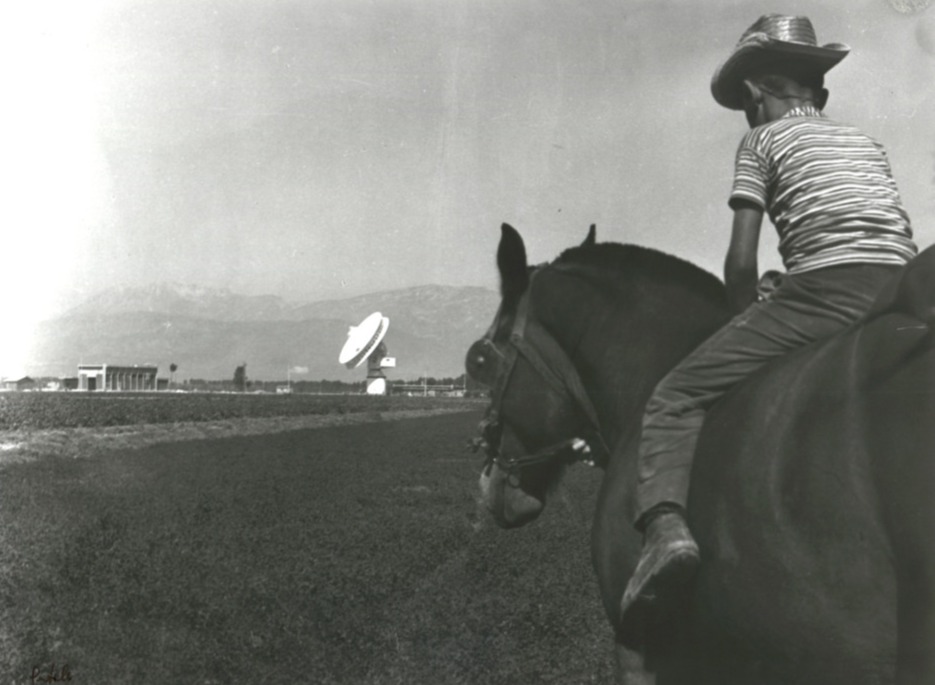
Fucino Plan, 120 kilometres from Rome, seems heaven-sent for Telespazio's antennas. On 8 March 1962, with a symbolic laying of the first brick in the municipality of Ortucchio, began a period of tests that would continue for over two years.


On 8 March 1962, the first stone was laid for what was to become in the following years the world’s most important teleport for civil purposes. Its initial equipment comprised just one parabolic dish, measuring 9.14 m in diameter, and three vans loaded with equipment.

Four months later, on 10 July, Telstar I, the NASA satellite that first connected America and Europe, went into orbit.

This marked the start of a revolution, as well as of a fully-fledged mania, with bars selling themed ice cream sundaes and hairdressers inventing hairstyles inspired by the American satellite. Few people know that, in all this, Italy had already carved out a role for itself. A few months after being established, Telespazio signed a memorandum of understanding with NASA to participate in the Telstar and Relay satellite testing phase.

Marcello Rodinò di Miglione, CEO of the Italian state broadcaster (RAI), became the first chairman of Telespazio. Piero Fanti was chosen to lead it.

And the first results soon started to come in. On 18 January 1964, the Fucino antennas broadcast images of the visit of the then President of the Council of Ministers, Amintore Fanfani, to the USA on screens across the country. Less than 20 years after the end of the war, Italy was officially the fourth country in the world to use extraterrestrial telecommunications.


Other News & Stories

17.12.2025
Two New Galileo Satellites Successfully Launched

Two new first-generation Galileo satellites, numbers 33 and 34, were successfully launched today aboard an Ariane 6 launcher at 06:01 (CET) Italian time from Europe’s Spaceport in Kourou, French Guiana. Galileo is Europe’s global satellite navigation system, developed by the European Union with the technical and industrial support of the European Space Agency (ESA).

16.12.2025
Love Planet Earth 2026: the Calendar by Leonardo, e-GEOS, Telespazio and Med-Or Italian Foundation on agriculture in the Mediterranean

On the occasion of 2025 Italian National Space Day, Leonardo, with e-GEOS (a joint venture 20% owned by the Italian Space Agency and 80% by Telespazio, Leonardo Group) and Telespazio (67% owned by Leonardo and 33% by Thales) present the eighteenth "Love Planet Earth" calendar, representing environmental sustainability through images taken by the COSMO-SkyMed satellites operated by the Italian Space Agency and the Italian Ministry of Defence.

11.12.2025
Leonardo, Telespazio and Intuitive Machines sign a strategic agreement for lunar communication and navigation

Leonardo, Telespazio and Intuitive Machines have signed a strategic cooperation agreement to develop interoperable infrastructures and provide communications and navigation services in support of lunar exploration.

13.11.2025
Agritech Living Lab: Telespazio at the forefront of agricultural innovation

Telespazio hosted the Agritech Living Lab at the Fucino Space Centre, an event organized within the framework of the Agritech Project, funded by the Italian Ministry of University and Research (MUR) under the National Recovery and Resilience Plan (NRRP), supported by the European Union’s NextGenerationEU initiative.

17.12.2025
Two New Galileo Satellites Successfully Launched

Two new first-generation Galileo satellites, numbers 33 and 34, were successfully launched today aboard an Ariane 6 launcher at 06:01 (CET) Italian time from Europe’s Spaceport in Kourou, French Guiana. Galileo is Europe’s global satellite navigation system, developed by the European Union with the technical and industrial support of the European Space Agency (ESA).

16.12.2025
Love Planet Earth 2026: the Calendar by Leonardo, e-GEOS, Telespazio and Med-Or Italian Foundation on agriculture in the Mediterranean

On the occasion of 2025 Italian National Space Day, Leonardo, with e-GEOS (a joint venture 20% owned by the Italian Space Agency and 80% by Telespazio, Leonardo Group) and Telespazio (67% owned by Leonardo and 33% by Thales) present the eighteenth "Love Planet Earth" calendar, representing environmental sustainability through images taken by the COSMO-SkyMed satellites operated by the Italian Space Agency and the Italian Ministry of Defence.

11.12.2025
Leonardo, Telespazio and Intuitive Machines sign a strategic agreement for lunar communication and navigation

Leonardo, Telespazio and Intuitive Machines have signed a strategic cooperation agreement to develop interoperable infrastructures and provide communications and navigation services in support of lunar exploration.

13.11.2025
Agritech Living Lab: Telespazio at the forefront of agricultural innovation

Telespazio hosted the Agritech Living Lab at the Fucino Space Centre, an event organized within the framework of the Agritech Project, funded by the Italian Ministry of University and Research (MUR) under the National Recovery and Resilience Plan (NRRP), supported by the European Union’s NextGenerationEU initiative.