

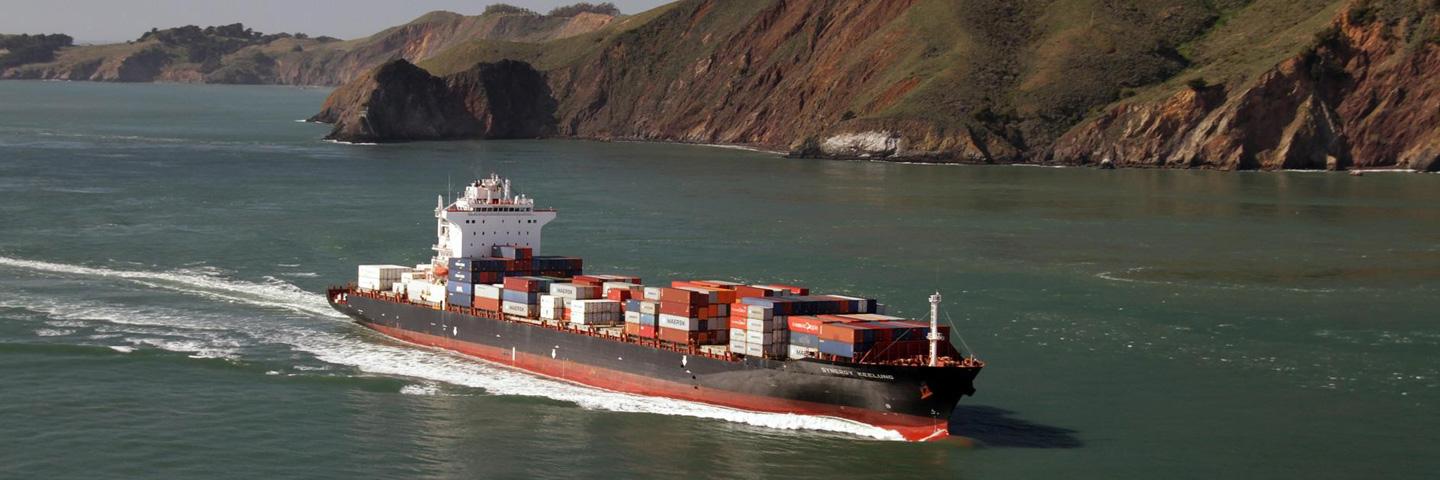
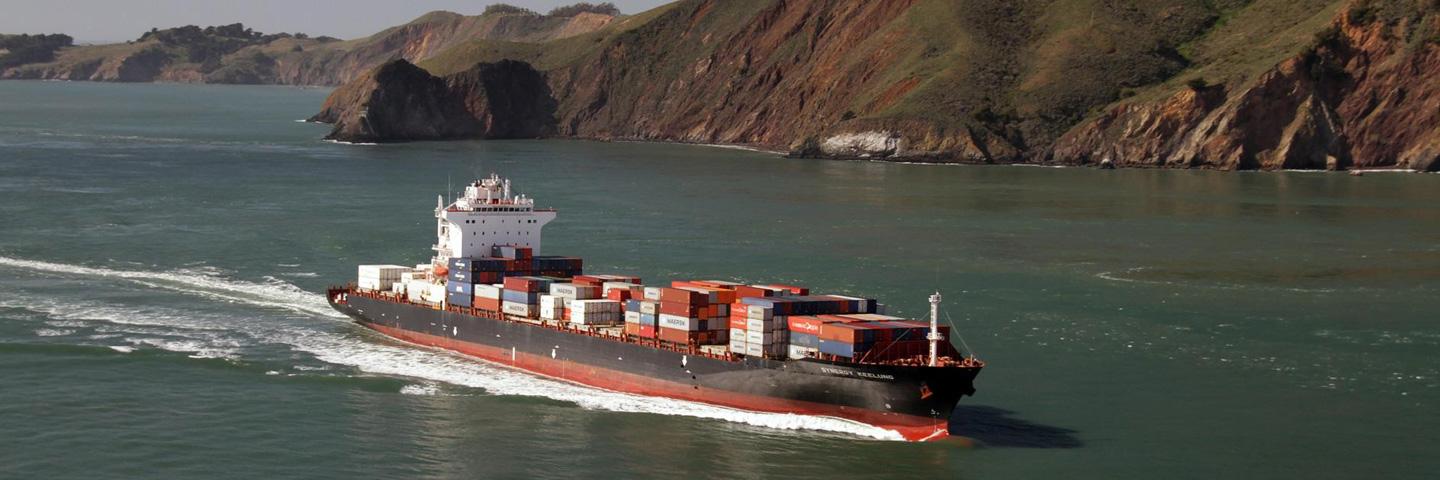
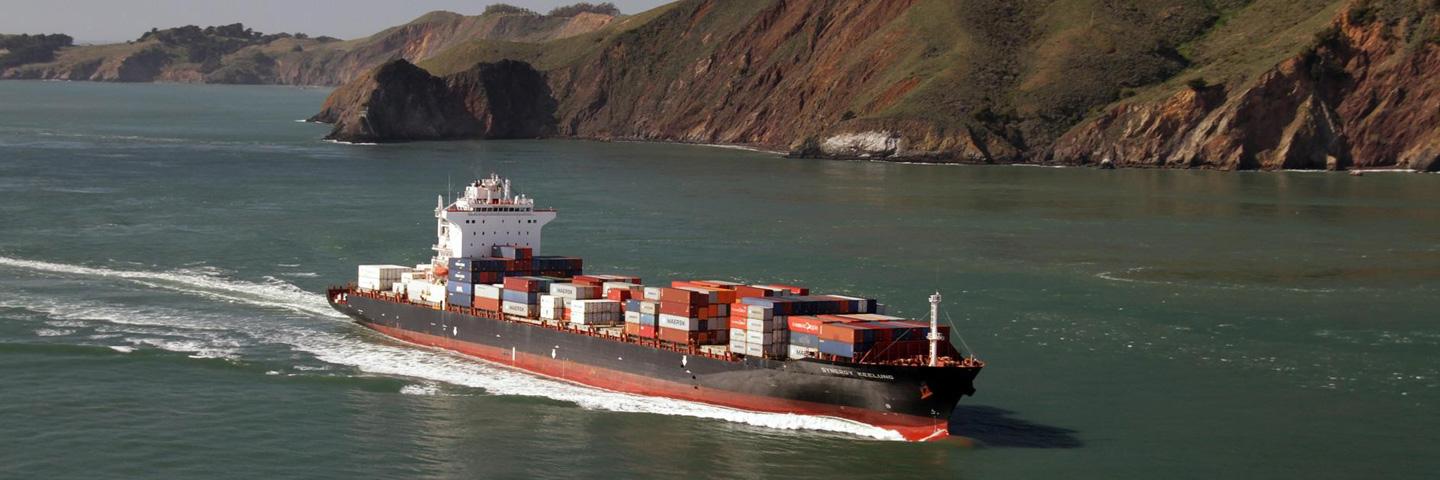
Telespazio UK awarded ESA Contract for the Development of Advanced Alternative PNT Technologies for Maritime Use

07 September 2022

Telespazio UK has been awarded a new contract by ESA, the European Space Agency.  Telespazio UK is the prime contractor to ESA for the project and will be working with a single very strong and expert sub-contractor, Kongsberg Seatex (Norway).

As part of the ESA’s Navigation Innovation and Support Programme (NavISP), Telespazio UK is excited to announce that it has been awarded the contract for the Development of Advanced VDES-R User Technologies for Alternative PNT in a project called VDES-R Advanced User Technologies for Alternative PNT (VAUTAP).

VDES stands for VHF data exchange system, a communications channel for maritime systems, and VDES-R is a PNT solution independent of GNSS that will be developed in this project for maritime use.

Global Navigation Satellite Systems (GNSS) have become the primary marine aid-to-navigation and source of Position, Navigation and Timing (PNT) information.

Yet, all GNSS are vulnerable to natural interference, deliberate and accidental jamming and spoofing. Trials have demonstrated that degraded GNSS produce hazardously misleading information and erroneous vessel positions without alarms being raised. As ships’ systems become increasingly digital, with the introduction of a wide range of supporting services and the emergence of autonomous vessels, PNT accuracy, integrity, continuity, and availability become increasingly critical.

A System-of-Systems approach to PNT resilience is now widely accepted; such an approach requires that systems other than GNSS be utilised to provide resiliency.  One such system is the Very High Frequency Data Exchange System (VDES).  VDES is a new maritime radio communication system being developed by the international maritime community (with open standards), on a frequency band recently allocated by the International Telecommunication Union (ITU).

At the same time there is an investigation on the potential use of these VDES communication signals transmitted from shore-based stations for positioning a concept commonly referred to as ‘ranging mode’, or R-Mode.

“This is a great opportunity for us to be part of this important ESA project, which will build on the work that has already been done within the Alternative-PNT arena, especially with new maritime concepts. We are pleased to be leading such a strong team and look forward to developing a proof of concept that will help protect against malicious threats to GNSS systems and ultimately will make an important difference to maritime users”.

Mark Hewer, CEO of Telespazio UK 

VDES R-Mode is still at a relatively low Technology Readiness Level and much of the standardisation required for such System-of-Systems components are not yet in place, giving developers the opportunity to propose and develop better waveforms, techniques, components, and concepts to provide truly resilient PNT.

The VAUTAP project will utilise the strong alliance and experience of our consortium to investigate, consolidate and develop new algorithms, waveforms, software, and hardware, to evolve VDES R-Mode closer to an operational and viable component of a resilient PNT System-of-Systems.

Other News & Stories

06.05.2026
Greenerwave and Telespazio France sign strategic agreement to distribute multi-orbit, low-power and sovereign satcom terminals in europe

Telespazio France, a Leonardo group company, and Greenerwave, a French deeptech company, announce the signing of a strategic agreement aimed at deploying and distributing Greenerwave’s multi-orbit, energy-efficient and sovereign SATCOM terminals across the European defense and government markets.

05.05.2026
Open Innovation in the space sector: Leonardo and Telespazio honour the winners of the seven edition of #T-Tec

The award ceremony for the seventh edition of #T-TeC was held today in Rome, at the headquarters of the Italian Space Agency (ASI). The contest is an Open Innovation competition organised by Leonardo and Telespazio to foster technological innovation in the space sector among the younger generation of students and researchers from universities around the world.

30.04.2026
40 years ago, Italy’s first connection to the Internet thanks to the antennas of the Fucino space Centre

On April 30, 1986, Italy joined the global network that in the following years would become the Internet for the first time. The connection was made possible thanks to the key role of the Fucino space Centre, whose antennas carried the signal that connected the country with the United States.

02.04.2026
New Generation Builders: Space Division’s Development program

The final event of the “New Generation Builders – Where Ideas Meet Purpose” program took place on March 10 at the Acquario Romano. The initiative brought together 80 colleagues from across the Space Division: Leonardo, Telespazio, and e-GEOS.

06.05.2026
Greenerwave and Telespazio France sign strategic agreement to distribute multi-orbit, low-power and sovereign satcom terminals in europe

Telespazio France, a Leonardo group company, and Greenerwave, a French deeptech company, announce the signing of a strategic agreement aimed at deploying and distributing Greenerwave’s multi-orbit, energy-efficient and sovereign SATCOM terminals across the European defense and government markets.

05.05.2026
Open Innovation in the space sector: Leonardo and Telespazio honour the winners of the seven edition of #T-Tec

The award ceremony for the seventh edition of #T-TeC was held today in Rome, at the headquarters of the Italian Space Agency (ASI). The contest is an Open Innovation competition organised by Leonardo and Telespazio to foster technological innovation in the space sector among the younger generation of students and researchers from universities around the world.

30.04.2026
40 years ago, Italy’s first connection to the Internet thanks to the antennas of the Fucino space Centre

On April 30, 1986, Italy joined the global network that in the following years would become the Internet for the first time. The connection was made possible thanks to the key role of the Fucino space Centre, whose antennas carried the signal that connected the country with the United States.

02.04.2026
New Generation Builders: Space Division’s Development program

The final event of the “New Generation Builders – Where Ideas Meet Purpose” program took place on March 10 at the Acquario Romano. The initiative brought together 80 colleagues from across the Space Division: Leonardo, Telespazio, and e-GEOS.