

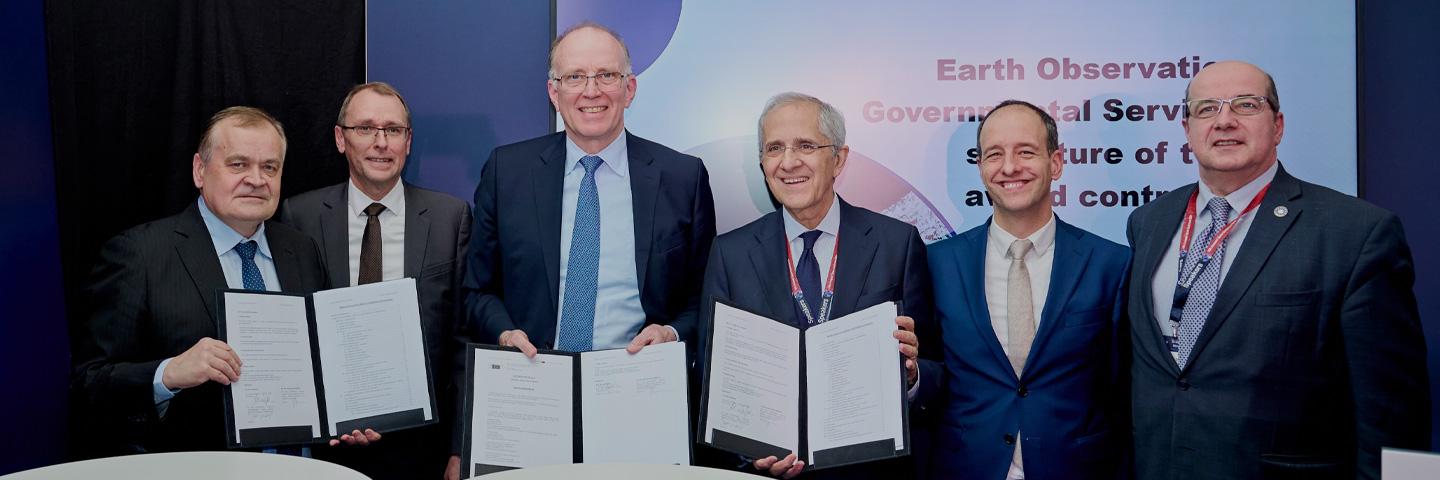
An industrial team led by Telespazio has been tasked with carrying out a feasibility study on future EU Earth-Observation services for governmental use

23 January 2024

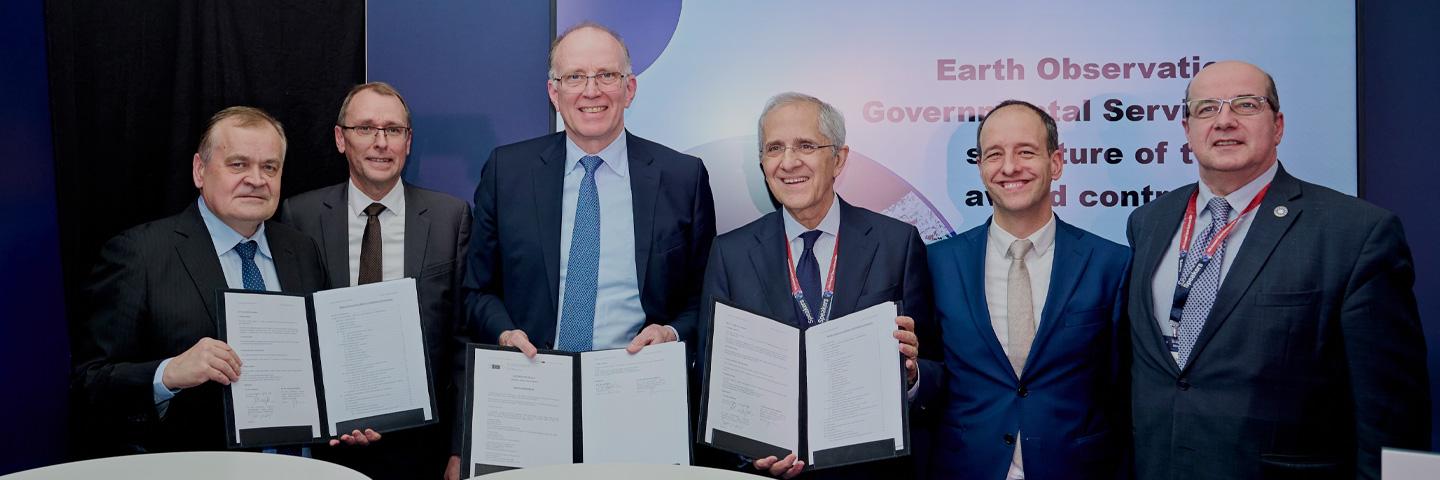
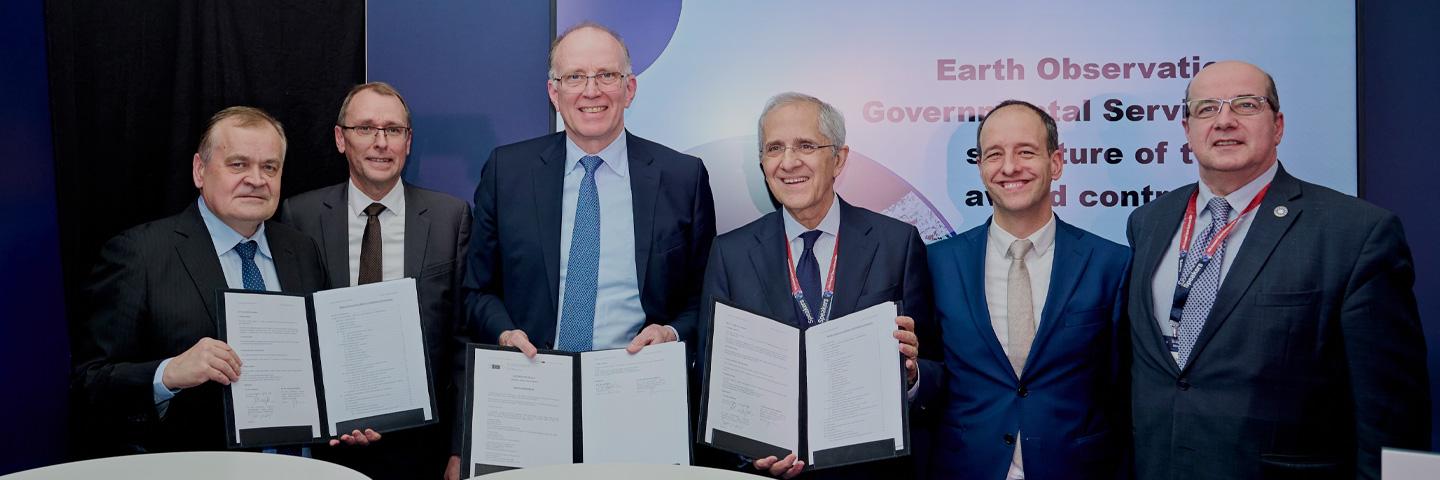
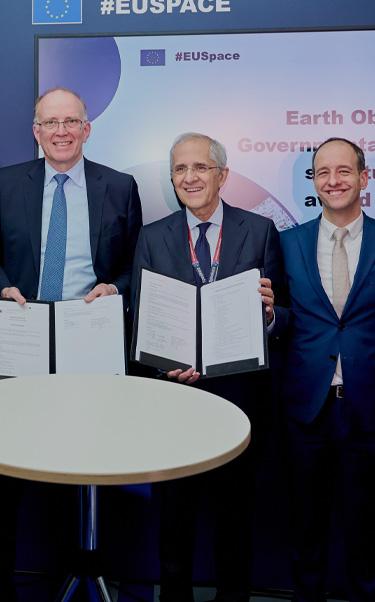
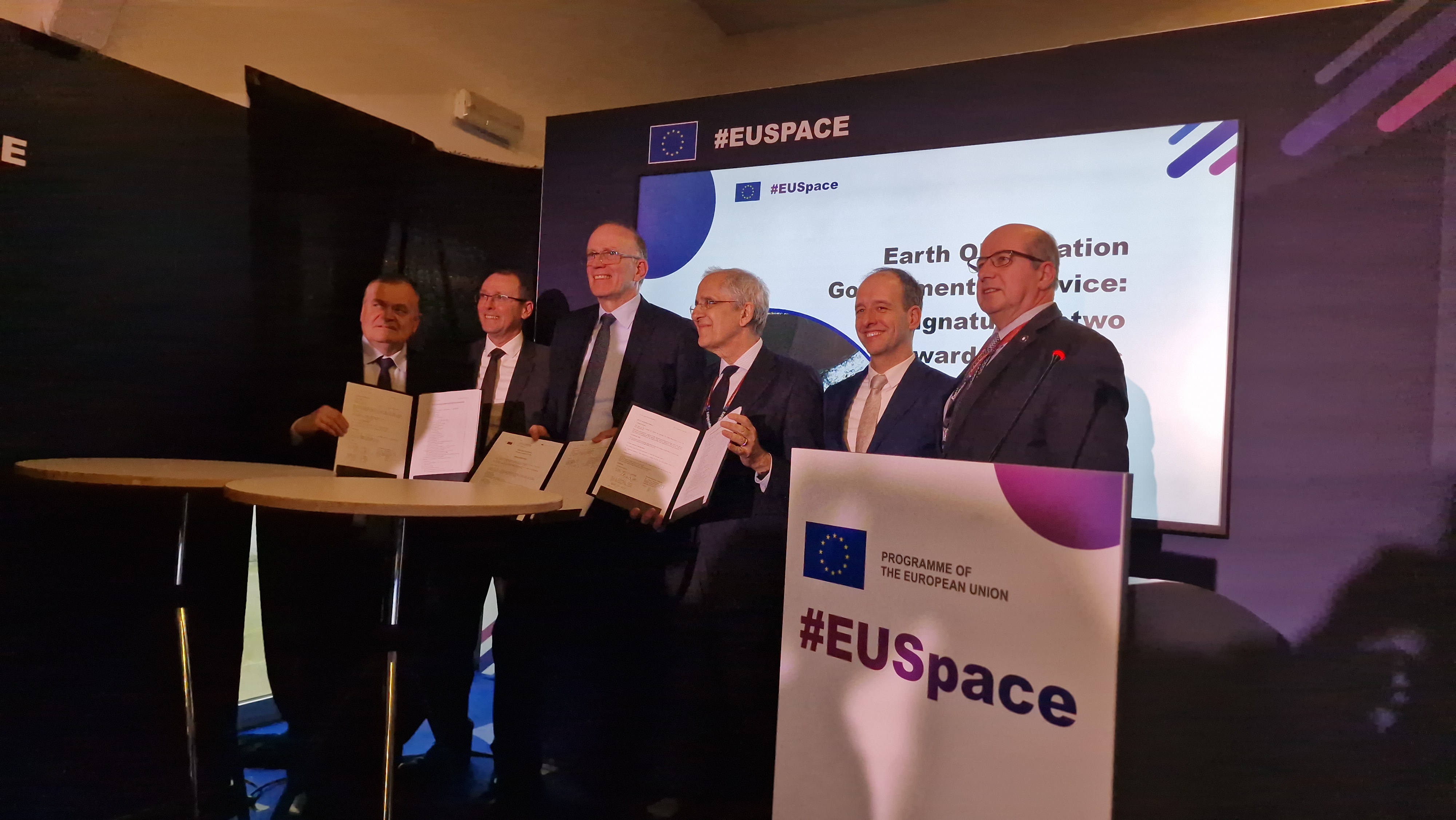
Today 23rd January 2024 during the European Space Conference  in Brussels, Telespazio, as the leader of a consortium of European companies, has signed a contract for the “Study on potential EU Earth-Observation services for governmental use” with the European Commission, DG-DEFIS, to study the feasibility of a new service for sensitive applications in the areas of security and defence that can valorise the considerable and heterogeneous amount of available data, including the ones provided by the EU’s satellites for Earth observation.

Together with Telespazio (Italy), the consortium includes Airbus (France), e-GEOS (Italy), Geoville (Austria), Hisdesat (Spain), Leonardo (Italy), PWC (France) and Thales Alenia Space (Italy).

The industrial team is also supported by highly qualified subcontractors such as Constellr (Germany), DefSecIntel (Estonia), Endurosat (Bulgaria), GAF (Germany), Hensoldt Analytics (Austria), ISDEFE (Spain), Planetek Hellas (Greece), Preligens (France), Spacemetrics (Sweden), Telespazio France (France) and Thales Alenia Space (France).
EU institutions and Member States will benefit from a geo-information infrastructure for sharing and producing added value data and products of very high quality, which can be used to provide new capacities in synergy with other European and national programmes and initiatives.

Additionally, highly advanced European technologies (such as secure cloud, data fusion and artificial intelligence) will be considered, ensuring the operational needs of the governmental user community can be met.

This feasibility study will allow the Commission to assess the different technical and programmatic options for the potential development of the service in the EU  Multiannual Financial Framework 2028-2034.

Other News & Stories

25.09.2026
Fucino Space Centre: from the first "ping" to the future of the Internet

Prof. Luciano Lenzini, a pioneer in bringing the Internet to Italy, met with Telespazio engineers and technicians at the Fucino Space Centre, through which the first Internet link between Italy and the United States passed 40 years ago.

21.09.2026
Connectivity: results of the satellite trial in Lombardy presented in Milan

Connecting entire villages to the national network through an infrastructure that combines satellite, fiber and wireless connections, in order to bring quality digital services even to the hardest-to-reach areas. This is the goal of the trial carried out in Lombardy, whose preliminary results were presented at the Milan office of the Department for Digital Transformation. Telespazio took part in the initiative by developing a proprietary backhauling solution that aggregates multiple satellite links.

15.09.2026
FLEX and Sentinel-3C in Orbit: Leonardo and Telespazio's Contribution to ESA's Earth Observation Missions

On September 15th 2026, at 03:21 Italian time, the FLEX and Copernicus Sentinel-3C satellites of the European Space Agency (ESA) successfully launched from Europe's Spaceport in Kourou, French Guiana. Both travelled aboard the same launcher, Avio's Vega-C, and are now flying in tandem orbit, spaced roughly ten seconds apart, at an altitude of around 800 kilometres.

28.08.2026
MTG-I2 successfully launched: Telespazio acquired the first signal from the third Meteosat Third Generation satellite from the Fucino Space Centre

MTG-I2, the third Meteosat Third Generation satellite from ESA and EUMETSAT, lifted off yesterday, 27 August, at 20:11 UTC from the Kourou spaceport in French Guiana, aboard an Arianespace Ariane 6 launcher. About 25 minutes after launch, Telespazio's Fucino Space Centre — a Leonardo Group subsidiary — acquired the satellite's first signal, officially marking the start of the LEOP (Launch and Early Orbit Phase), which will last twelve days.

25.09.2026
Fucino Space Centre: from the first "ping" to the future of the Internet

Prof. Luciano Lenzini, a pioneer in bringing the Internet to Italy, met with Telespazio engineers and technicians at the Fucino Space Centre, through which the first Internet link between Italy and the United States passed 40 years ago.

21.09.2026
Connectivity: results of the satellite trial in Lombardy presented in Milan

Connecting entire villages to the national network through an infrastructure that combines satellite, fiber and wireless connections, in order to bring quality digital services even to the hardest-to-reach areas. This is the goal of the trial carried out in Lombardy, whose preliminary results were presented at the Milan office of the Department for Digital Transformation. Telespazio took part in the initiative by developing a proprietary backhauling solution that aggregates multiple satellite links.

15.09.2026
FLEX and Sentinel-3C in Orbit: Leonardo and Telespazio's Contribution to ESA's Earth Observation Missions

On September 15th 2026, at 03:21 Italian time, the FLEX and Copernicus Sentinel-3C satellites of the European Space Agency (ESA) successfully launched from Europe's Spaceport in Kourou, French Guiana. Both travelled aboard the same launcher, Avio's Vega-C, and are now flying in tandem orbit, spaced roughly ten seconds apart, at an altitude of around 800 kilometres.

28.08.2026
MTG-I2 successfully launched: Telespazio acquired the first signal from the third Meteosat Third Generation satellite from the Fucino Space Centre

MTG-I2, the third Meteosat Third Generation satellite from ESA and EUMETSAT, lifted off yesterday, 27 August, at 20:11 UTC from the Kourou spaceport in French Guiana, aboard an Arianespace Ariane 6 launcher. About 25 minutes after launch, Telespazio's Fucino Space Centre — a Leonardo Group subsidiary — acquired the satellite's first signal, officially marking the start of the LEOP (Launch and Early Orbit Phase), which will last twelve days.