


After months of forced shutdown due to COVID-19, the Space Centre in Kourou (Guyana Space Centre – GSC), is now back in operation, resuming its work on the launch campaigns for the Ariane 5 VA253 mission, which took off recently, and for the first VEGA flight of the year (planned in the coming weeks).
Telespazio has been working at GSC through its subsidiary Telespazio France ever since the Ariane programme came to Guyana in the 1970s, and works with the French space agency CNES, Arianespace and ArianeGroup to ensure correct performance of all launch operations.
About 130 engineers and technicians from Telespazio France now work in Kourou.
Eric Poulain is French Guyana Operations Director for Telespazio France. He told us what the company is doing at the Centre and how work was reorganised during the lockdown.
What does Telespazio France do in the Guyana Space Centre?
We are focused on providing services pertaining to the functioning, management and maintenance of ground systems for the launch campaigns of the carriers Ariane, Soyuz and VEGA. Telespazio France workers implement and operate all the systems directly under the technical authority of the customers, CNES, Arianespace and ArianeGroup.
More specifically, we are concerned with preparation of flight trajectories in both the pre-launch and launch phases. Post-launch, we also work on data processing and generation of reports on all the measurements taken. For the three families of launchers present at GSC, in addition to satellites, we also work with CNES on obtaining, processing and displaying telemetry, ensuring the dedicated ground systems are maintained to the highest standards of operation. We work on the organisation and scheduling of launch campaigns, the Ariane 6 construction site and maintenaning ground structures.
Lastly, we work with telephone communications and data transmission systems, both during maintenance and in launch campaigns.
In addition to the GSC, Telespazio France operates: Galliot and Saint-Jean-du-Maroni stations, also in Guyana; Libreville station in Gabon; Ariane naval station (SNA); descent tracking centre in Bermuda; and all the mobile structures for the Ariane, VEGA and Soyuz missions.
In addition to technical and operational activities connected with the launch centre, our team ensures that complex systems are maintained in good operating condition for other customers, such as the GM400 radar station on Mt. Venus operated by the DGA (the French defence contracts agency), the telemetry facilities, the Galileo station’s network and telecommunications for Spaceopal (a joint venture of DLR Gesellschaft für Raumfahrtanwendungen, GfR and Telespazio), and ESA’s Diane station.
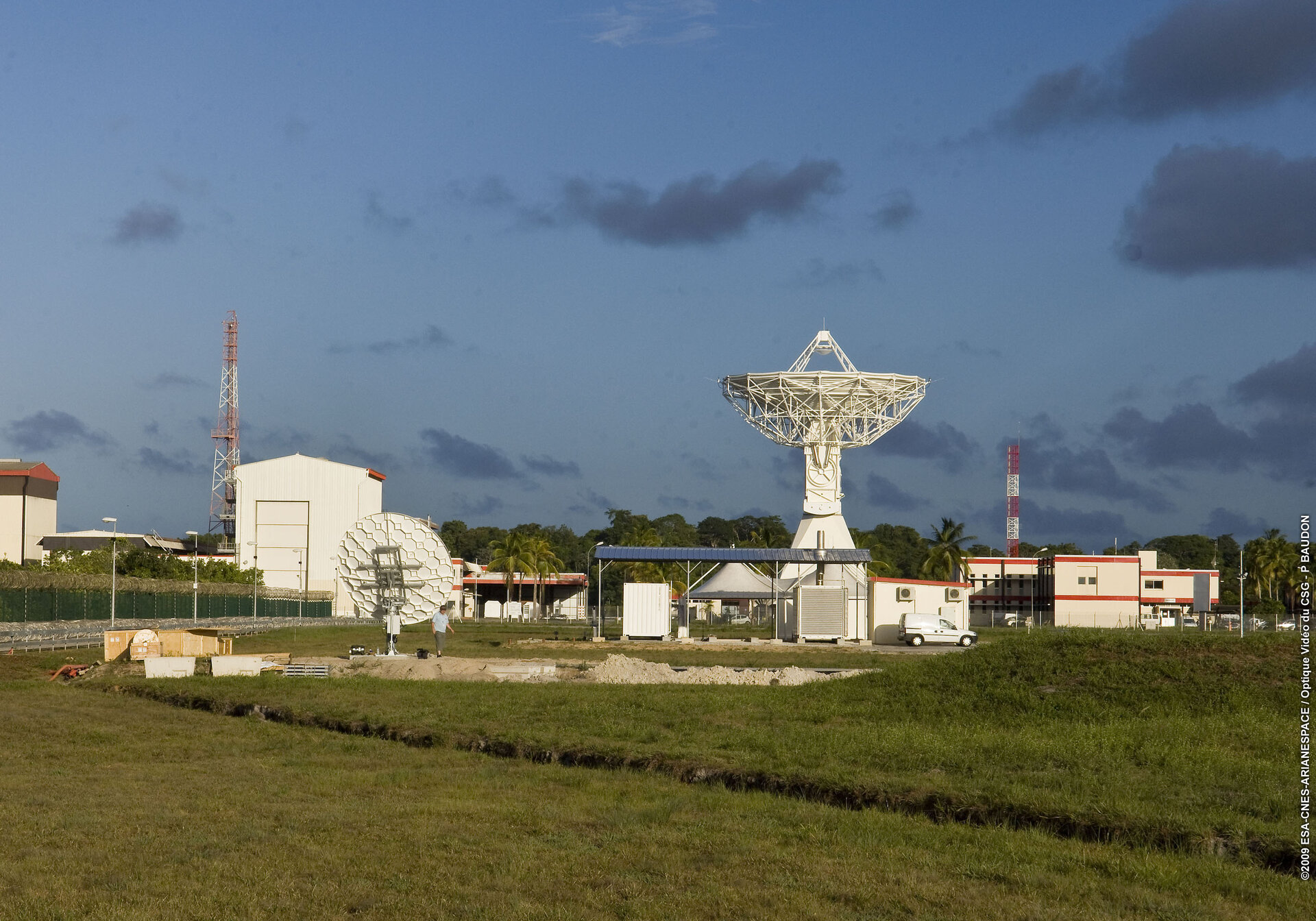
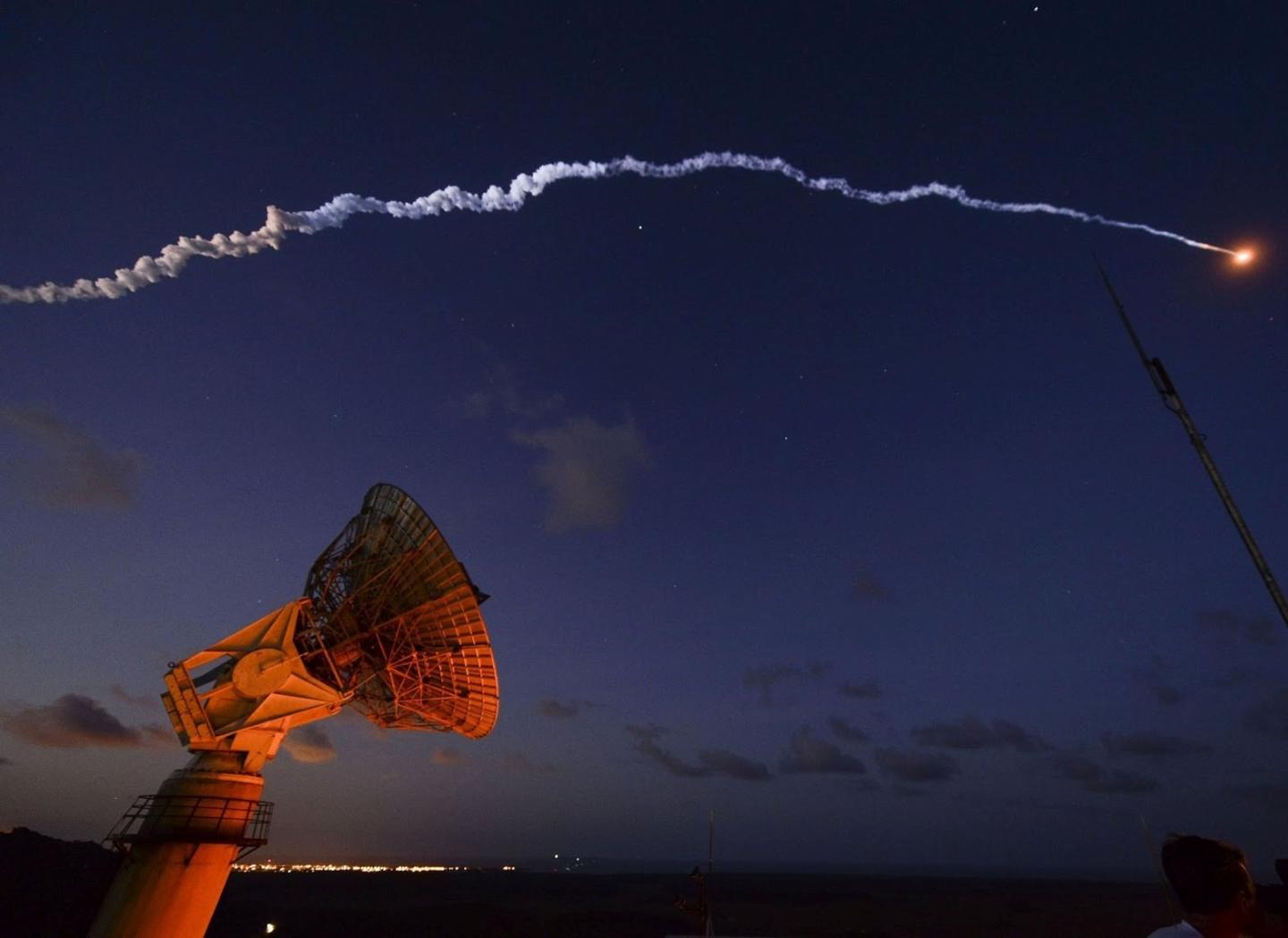
The Galileo's antenna at Guiana Space Center (Credit: ESA, CNES, Arianespace)
How did you manage to support GSC during the COVID-19 lockdown?
Some of my colleagues could work from home, while others stayed on site, since GSC never shut down its operations entirely. During March and April, for example, though the launch campaigns underway were interrupted, de-fuelling was carried out for the VEGA and Soyuz launchers. These are complex operations requiring the utmost care, so we needed to provide support to all the workers involved. Plus we worked on maintenance and monitoring of the most critical structure and the principal networks.
How are the various teams preparing to resume work?
GSC is resuming its activities gradually to prevent any risk of spreading the virus. We are slowly resuming our work on all launches, but in a rather different way, because we need to change our habits to comply with the health restrictions: our office staff work on rotation to ensure social distancing, while our launch campaigns have been planned to ensure that workers from continental France have time to quarantine. There are specific restrictions in place for launches, so we need to organise our work differently. The security measures do not require a reduction of the personnel in attendance, as we still need the same number of people for a launch.
What is the strong point of Telespazio’s work at GSC?
Our principal strong point is our great skill, ensuring perfect functioning of the space centre’s complex structures and systems. Our teams work to ensure that launch operations go ahead without obstacles, and, in addition to great technical know-how, they demonstrate true dedication to their work.
What does it mean for our colleagues to work in a place like GSC?
There’s something special about working at GSC; it’s a European spaceport and it’s a real satisfaction for everyone to say they are working on a great space adventure. There’s definitely also a very unusual aspect, as we are in effect working on satellite launches. This is a unique line of business, which is certainly subject to many restrictions, but nonetheless creates a sort of excitement, in addition to the healthy sense of competition resulting from participating in Europe’s great adventure in space.
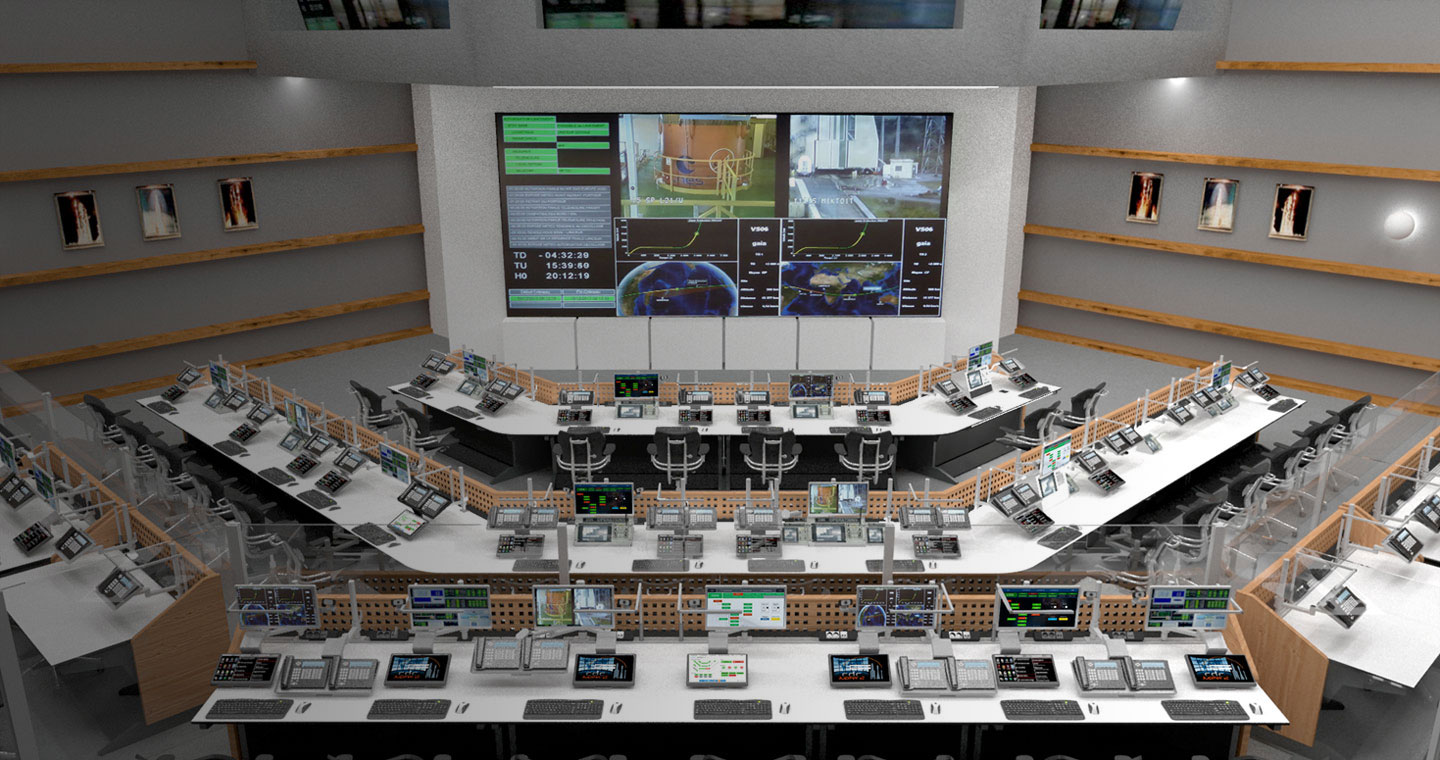
The Jupiter II Control Room (Credit: Telespazio UK)
In addition to Telespazio France, Telespazio UK has also worked at Guyana Space Centre.
In 2018, our British branch updated the launch authorisation and monitoring software in the Jupiter II Control Room – the heart of the Space Centre – from which all take-off and landing operations are controlled.
The new system designed by Telespazio UK supports up to 50 operators (20 more than before) and has an innovative interface which not only facilitates the operations, but is already prepared for the launchers of the future.