

Telespazio boards the ISS to support Samantha Cristoforetti

08 June 2022

For days now, the Italian astronaut of the European Space Agency (ESA) Samantha Cristoforetti, on board the International Space Station (ISS), has been engaged round the clock in carrying out numerous scientific experiments as part of the Minerva mission. 

Among them, on June 6 Ms Cristoforetti began operations on LIDAL (Light Ion Detector for ALTEA), a scientific tool capable of measuring cosmic radiation with a broad spectrum of atomic numbers.

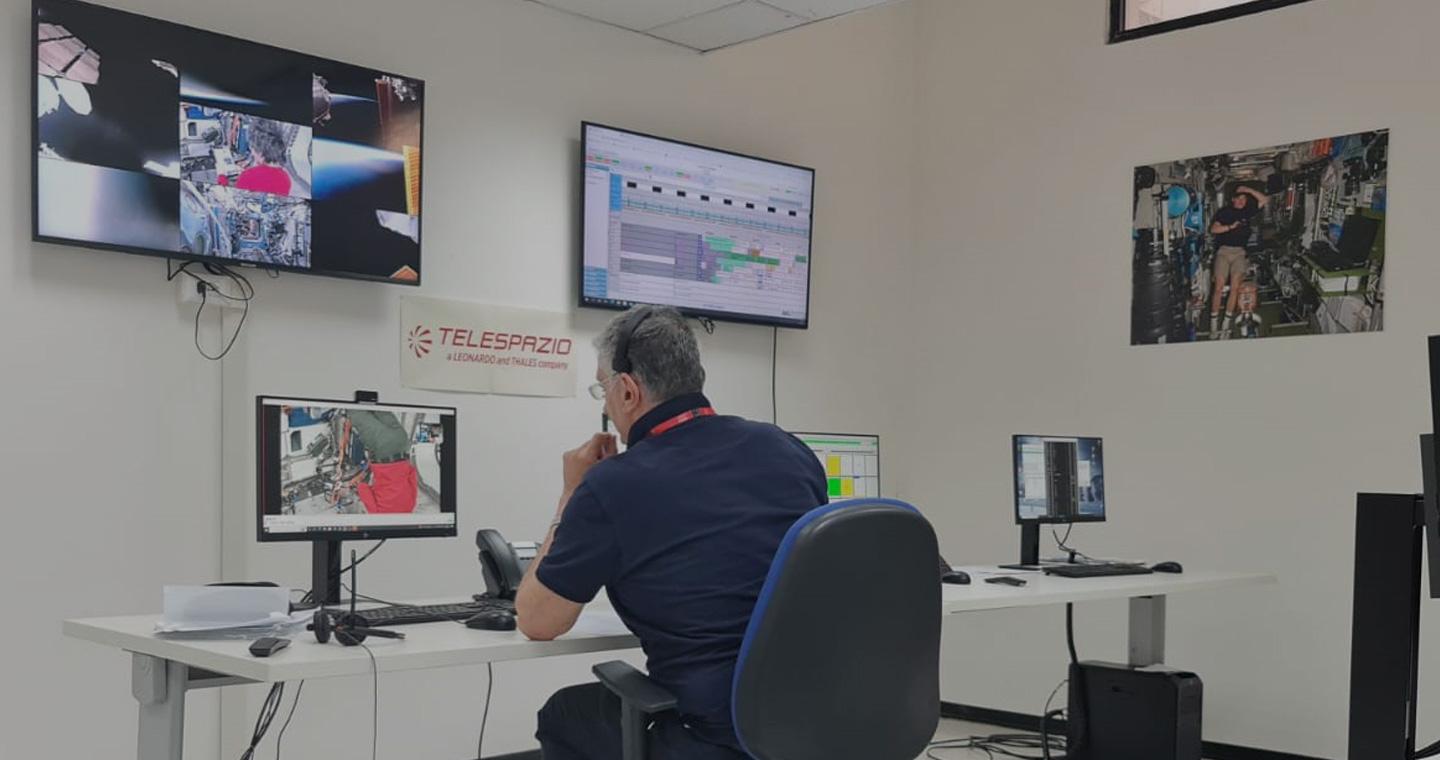
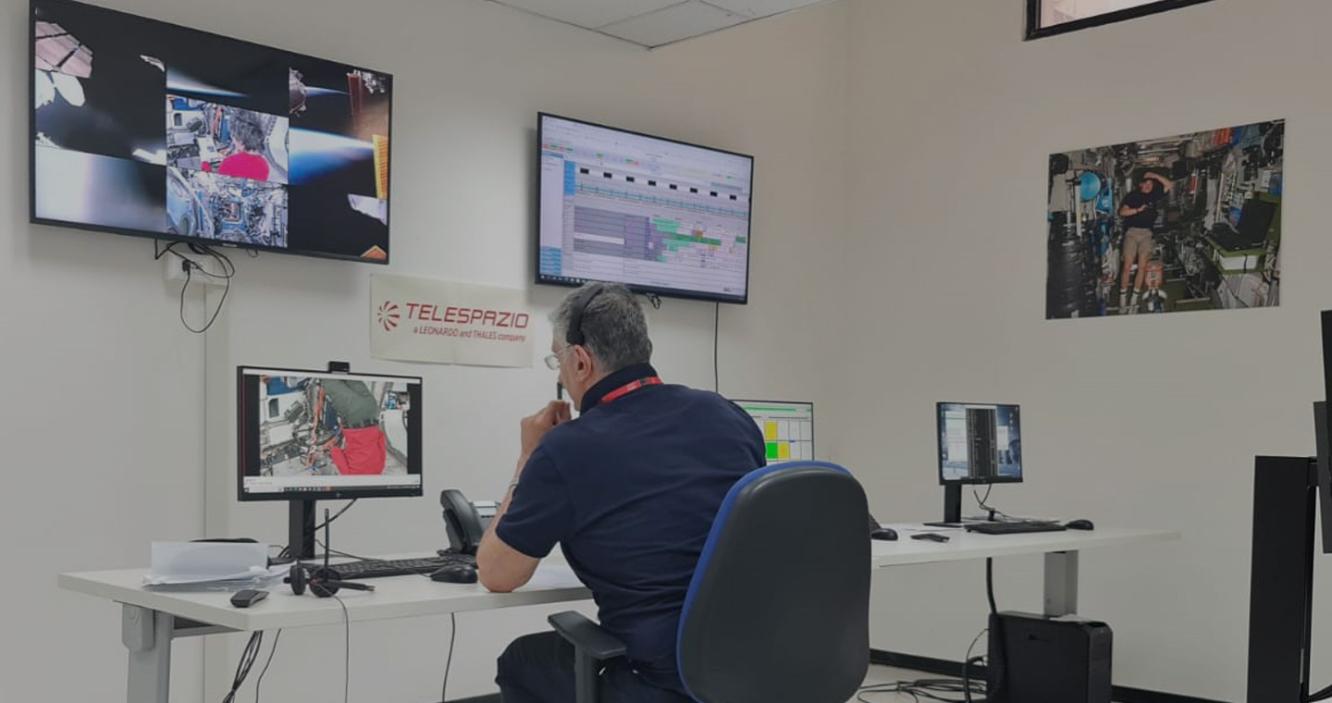
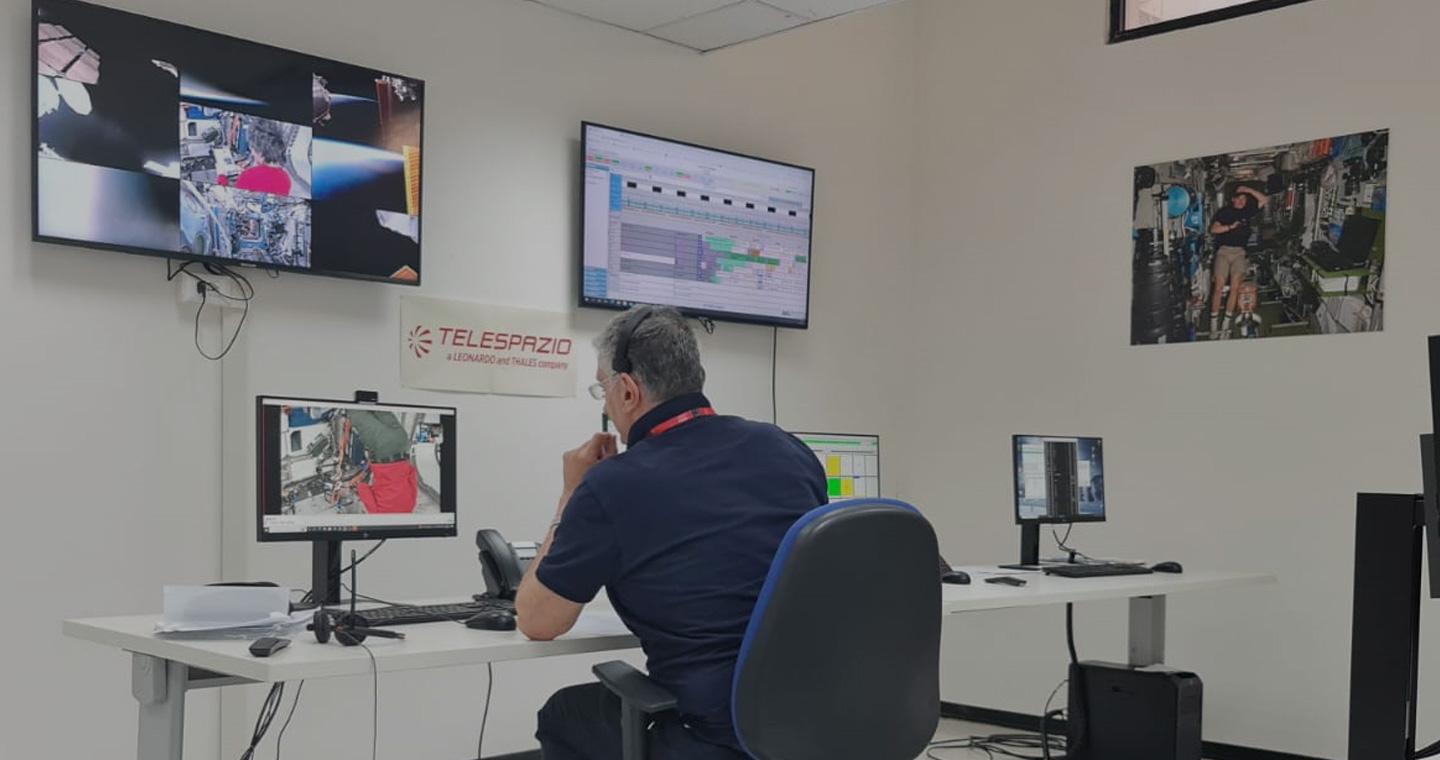
From its office in Naples, Telespazio followed all the operations of LIDAL on behalf of the Italian Space Agency (ASI), also managing data flows through ASINet, the network tasked with ensuring communications between the national and international centres involved in the space missions in which Italy is taking part.

ASINet, for which Telespazio manages operations and maintenance and whose Network Control Centre (NCC) is hosted at the Fucino Space Centre, enabled LIDAL data to arrive in Naples in real time and to be backed up the following day. This was then processed and transferred to the INFN in Rome, where the experiment’s group of researchers is based.
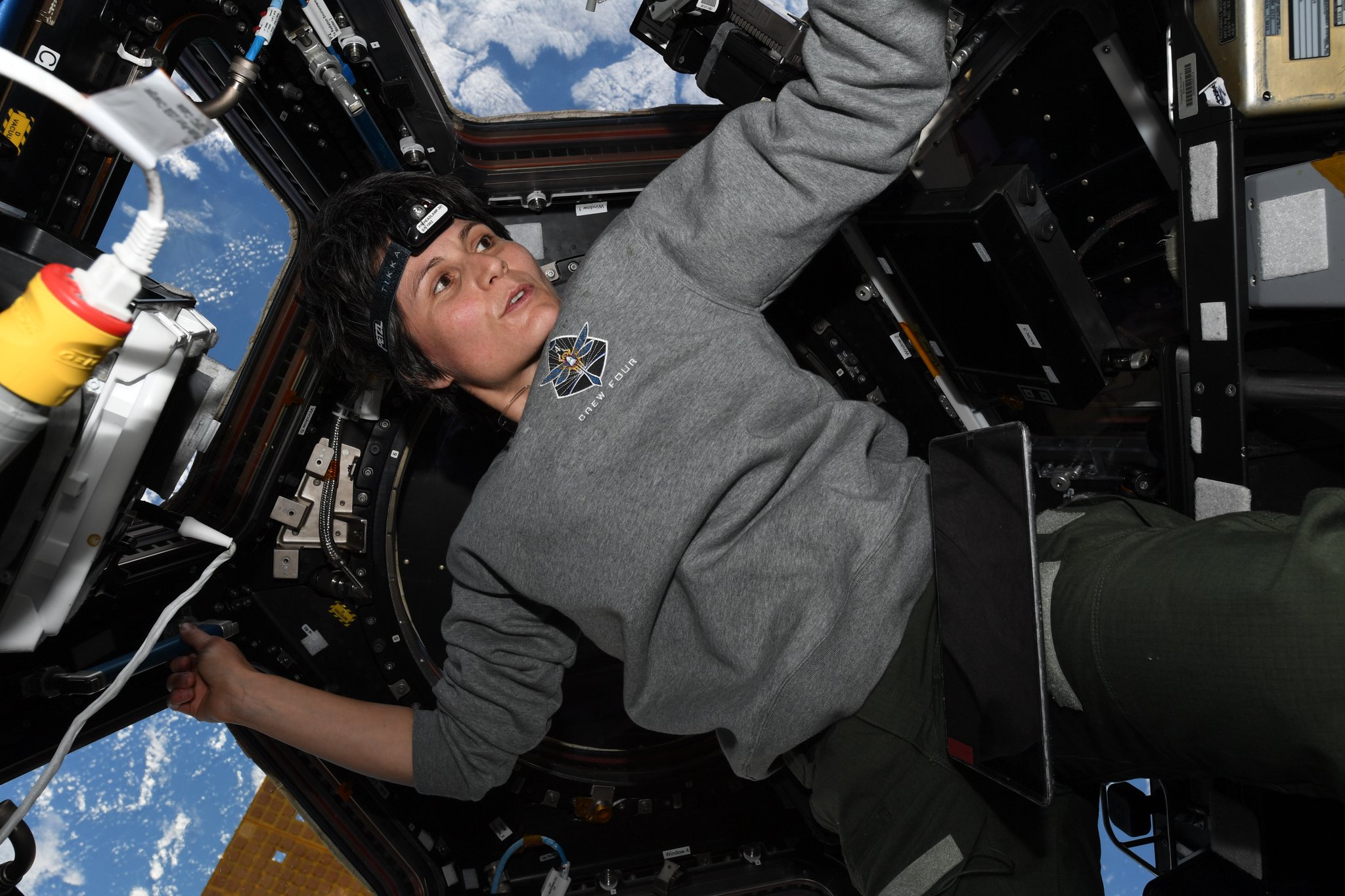
Meanwhile, 400 kilometres above our heads, Cristoforetti was grappling with LIDAL.

In particular, the Italian astronaut positioned the payload so as to acquire the radiation flows that cross the ISS along the direction that connects the centre of the space station with the centre of the Earth. Since LIDAL works in tandem with a tool hosted at NASA's Johnson Space Center in Houston, known as REM, data acquisition is critical as the goal is to acquire common measurements and mutually validate them.

Argotec, prime contractor of the temporary association of companies that also includes Telespazio, also follows LIDAL as a backup centre and as a centre for recovering orbiting ISS data, to allow researchers to determine the correlations between the radiation flow and the orbital position of the ISS at every second.

Other News & Stories

25.09.2026
Fucino Space Centre: from the first "ping" to the future of the Internet

Prof. Luciano Lenzini, a pioneer in bringing the Internet to Italy, met with Telespazio engineers and technicians at the Fucino Space Centre, through which the first Internet link between Italy and the United States passed 40 years ago.

21.09.2026
Connectivity: results of the satellite trial in Lombardy presented in Milan

Connecting entire villages to the national network through an infrastructure that combines satellite, fiber and wireless connections, in order to bring quality digital services even to the hardest-to-reach areas. This is the goal of the trial carried out in Lombardy, whose preliminary results were presented at the Milan office of the Department for Digital Transformation. Telespazio took part in the initiative by developing a proprietary backhauling solution that aggregates multiple satellite links.

15.09.2026
FLEX and Sentinel-3C in Orbit: Leonardo and Telespazio's Contribution to ESA's Earth Observation Missions

On September 15th 2026, at 03:21 Italian time, the FLEX and Copernicus Sentinel-3C satellites of the European Space Agency (ESA) successfully launched from Europe's Spaceport in Kourou, French Guiana. Both travelled aboard the same launcher, Avio's Vega-C, and are now flying in tandem orbit, spaced roughly ten seconds apart, at an altitude of around 800 kilometres.

28.08.2026
MTG-I2 successfully launched: Telespazio acquired the first signal from the third Meteosat Third Generation satellite from the Fucino Space Centre

MTG-I2, the third Meteosat Third Generation satellite from ESA and EUMETSAT, lifted off yesterday, 27 August, at 20:11 UTC from the Kourou spaceport in French Guiana, aboard an Arianespace Ariane 6 launcher. About 25 minutes after launch, Telespazio's Fucino Space Centre — a Leonardo Group subsidiary — acquired the satellite's first signal, officially marking the start of the LEOP (Launch and Early Orbit Phase), which will last twelve days.

25.09.2026
Fucino Space Centre: from the first "ping" to the future of the Internet

Prof. Luciano Lenzini, a pioneer in bringing the Internet to Italy, met with Telespazio engineers and technicians at the Fucino Space Centre, through which the first Internet link between Italy and the United States passed 40 years ago.

21.09.2026
Connectivity: results of the satellite trial in Lombardy presented in Milan

Connecting entire villages to the national network through an infrastructure that combines satellite, fiber and wireless connections, in order to bring quality digital services even to the hardest-to-reach areas. This is the goal of the trial carried out in Lombardy, whose preliminary results were presented at the Milan office of the Department for Digital Transformation. Telespazio took part in the initiative by developing a proprietary backhauling solution that aggregates multiple satellite links.

15.09.2026
FLEX and Sentinel-3C in Orbit: Leonardo and Telespazio's Contribution to ESA's Earth Observation Missions

On September 15th 2026, at 03:21 Italian time, the FLEX and Copernicus Sentinel-3C satellites of the European Space Agency (ESA) successfully launched from Europe's Spaceport in Kourou, French Guiana. Both travelled aboard the same launcher, Avio's Vega-C, and are now flying in tandem orbit, spaced roughly ten seconds apart, at an altitude of around 800 kilometres.

28.08.2026
MTG-I2 successfully launched: Telespazio acquired the first signal from the third Meteosat Third Generation satellite from the Fucino Space Centre

MTG-I2, the third Meteosat Third Generation satellite from ESA and EUMETSAT, lifted off yesterday, 27 August, at 20:11 UTC from the Kourou spaceport in French Guiana, aboard an Arianespace Ariane 6 launcher. About 25 minutes after launch, Telespazio's Fucino Space Centre — a Leonardo Group subsidiary — acquired the satellite's first signal, officially marking the start of the LEOP (Launch and Early Orbit Phase), which will last twelve days.