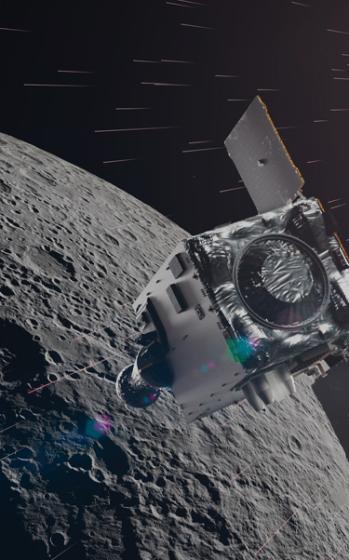
The following navigation services are foreseen:
- Real-time services:
- One-Way Ranging (OWR)
- Position, Velocity and Time (PVT)
- Time Dissemination Service (TS)
- Two-Way Measurement (TWM – to be confirmed)
- navigation service availability and performance prediction
- Non-real-time services enabling highly accurate post-processed PVT solutions
LCNS will be based on international LunaNet standards defined by the world's leading space exploration industries together with space agencies such as NASA, ESA and JAXA. The system will support lunar navigation and communication terminals compliant with the standard.
The Moonlight program will be implemented in phases: the first Navigation satellite will enter service in 2029, while the other satellites will follow in 2031, ensuring full operational capability of the services.
LCNS will not only meet the needs of human and robotic space exploration, but will also create commercial opportunities for European industry within the emerging lunar economy. The satellite network will allow missions to communicate simply and efficiently, even from lunar regions not visible from Earth, reducing the need for Direct-to-Earth communications and improving overall operational efficiency. This system will be essential for enabling new applications, technological innovations, and sustainable exploration of the Moon, with a significant impact on containing mission costs.
Furthermore, the navigation signals provided by the LCNS satellites will enable extremely precise positioning, reducing the complexity of the onboard navigation systems of landers, rovers, and orbiters. This will help save costs and facilitate navigation for future exploration missions, both human and robotic.