


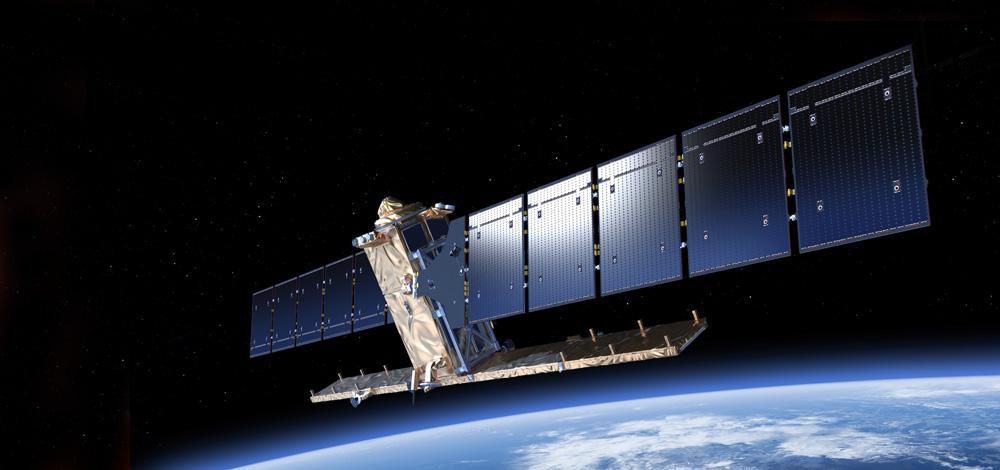
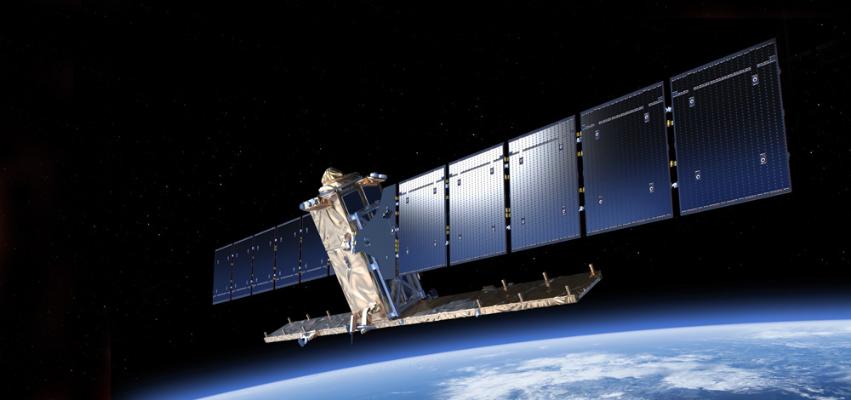
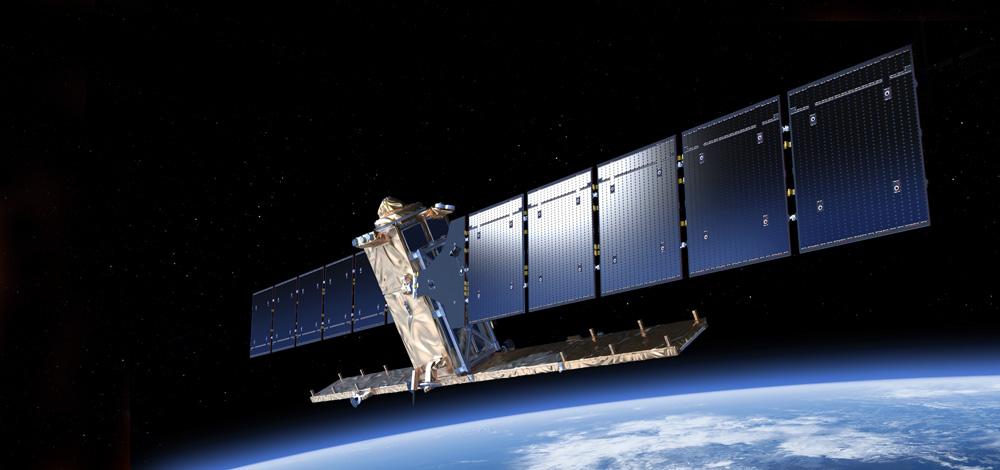
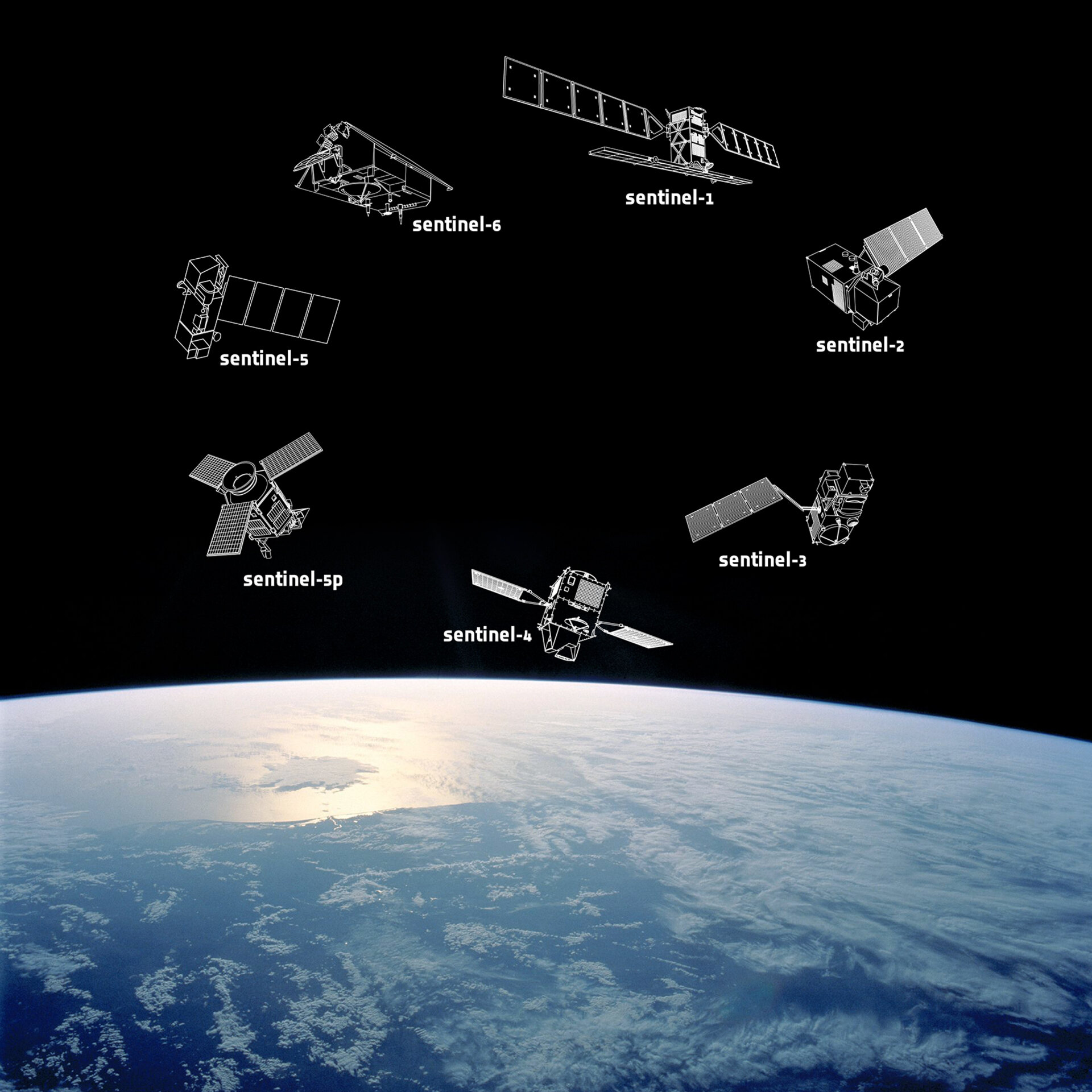
Sentinel-1 is a polar-orbiting radar mission capable of operating day and night under all weather conditions, providing observation services for land and sea. Sentinel-1A was launched on April 3, 2014, Sentinel-1B on April 25, 2016 (no longer operational as of September 2024), Sentinel-1C on December 5, 2024 and Sentinel-1D on November 4, 2025.
Sentinel-2 is a polar-orbiting, multispectral high-resolution imaging mission for land monitoring to provide, for example, imagery of vegetation, soil and water cover, inland waterways and coastal areas. Sentinel-2 can also deliver information for emergency services. Sentinel-2A was launched on 23 June 2015, Sentinel-2B on 7 March 2017 and Sentinel-2C on 4 September 2024.
Sentinel-3 is a multi-instrument, polar-orbiting mission designed to measure a range of variables, including sea-surface topography and sea and land surface temperatures, with high accuracy and reliability. Sentinel-3A was launched on 16 February 2016, while Sentinel-3B was launched on 25 April 2018. Sentinel-3C, dedicated to oceanography, was launched on 15 September 2026.
Sentinel-4 is a payload devoted to the air quality monitoring that was embarked on the Meteosat third-generation satellite (MTG-S1), launched into geostationary orbit on July 1, 2025.
Sentinel-5 is a payload that will monitor the atmosphere from polar orbit aboard the MetOp-SG-A1 satellite, launched on August 13th 2025.
Sentinel-5 Precursor satellite mission is dedicated to atmospheric monitoring. The satellite was launched on 13 October 2017.
Sentinel-6 mission carries a radar altimeter to measure global sea-surface height, primarily for operational oceanography and for climate studies. The satellite was launched on 21 November 2020.
Looking ahead, six new missions are under study to meet EU policies, user needs, and to expand the current capabilities of Copernicus’ space component. In particular: CHIME, for hyperspectral imaging of soil and vegetation; CIMR, a microwave radiometer for sea ice and sea surface temperature; CO2M, for monitoring carbon dioxide emissions; CRISTAL, an altimeter for polar ice and snow; LSTM, for land surface temperature; and ROSE-L, an L-band radar for biomass and ground deformation.