

Telespazio UK Awarded an ESA Contract to Develop AI-enabled Satellite Data Quality Assurance Tool

07 July 2020

Telespazio UK, a subsidiary of Telespazio – a joint venture between Leonardo (67%) and Thales (33%) – has been awarded a European Space Agency (ESA) contract to further develop a tool to automate quality assurance analysis of Satellite-based Earth Observation data products.

The new tool uses advanced machine learning techniques to automate processing of EO Products within a high-performance Cloud Computing environment. It will be made available as an easy to use Cloud-based service for New Space mission providers and Institutions.

The volume of EO data from satellites has increased 10x in the last 5-years due to modern satellites launched by New Space companies and Governments/Institutions. The total data generated is already on the petabyte scale and it is not feasible to perform quality assurance of such data volumes with only human interaction alone, or traditional image processing techniques. The automated tool seeks to address this challenge of analysing the huge volume of EO data products. 

“Quality assurance is a critical step in the Earth Observation value chain. Yet with the drastically increasing volumes of acquired data, traditional approaches to quality assurance are no longer viable. This activity will explore how novel technologies, such as cloud processing and new machine learning approaches, can help making the process more efficient and ensuring that the best quality data products are delivered to the user community.”

Dr Patrick Griffiths, EO data engineer at ESA/ESRIN  and technical officer for the project

The new activity, funded by the European Space Agency (ESA), seeks to build on previous internal development activities. Overall, it seeks to strengthen Telespazio UK’s world leading capabilities in EO data quality assurance and to provide an easy-to-use service to commercial organisations and institutions.

“We are excited to be applying innovative Artificial Intelligence technology to develop this tool. This new capability allows cost effective provision of quality control services to our customers and allows them to continue provide leading-edge EO data and information products to their users”.

Dr Geoff Busswell, Head of Sales at Telespazio UK
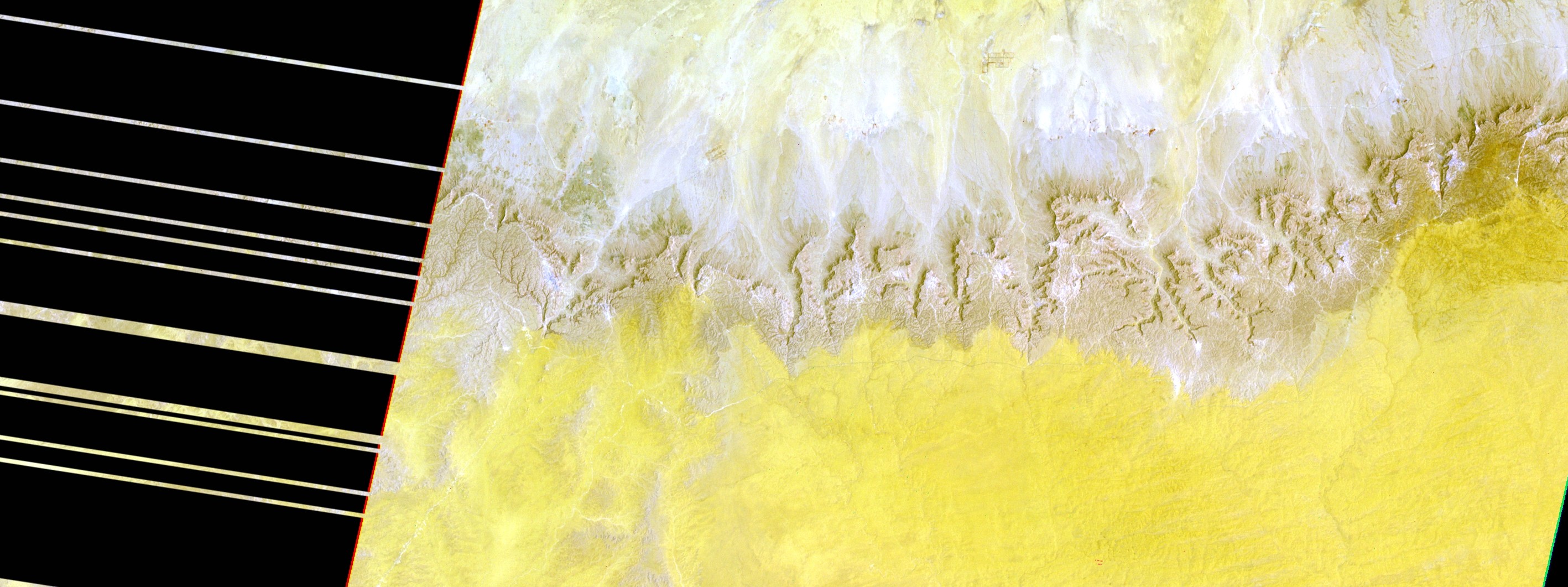
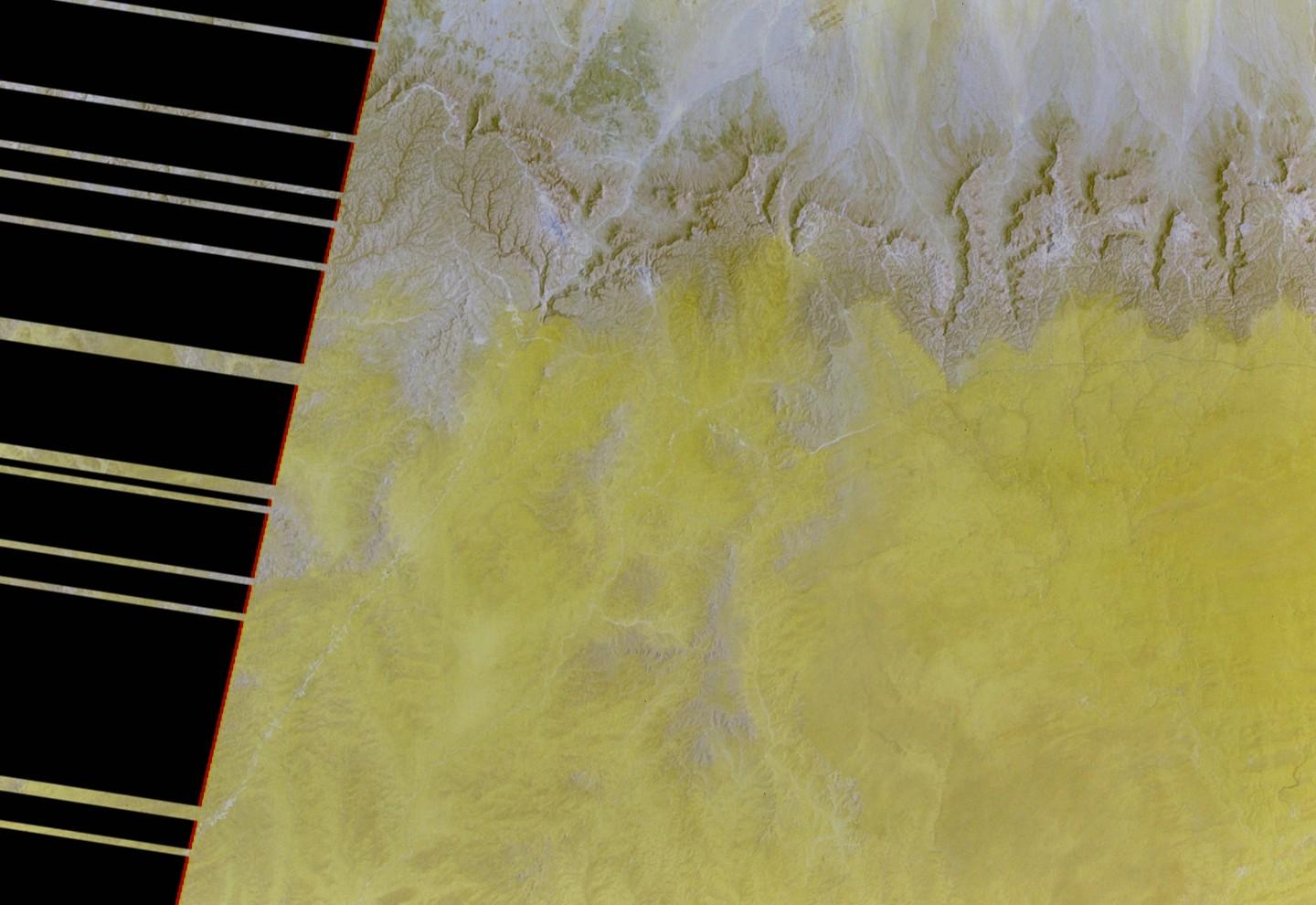
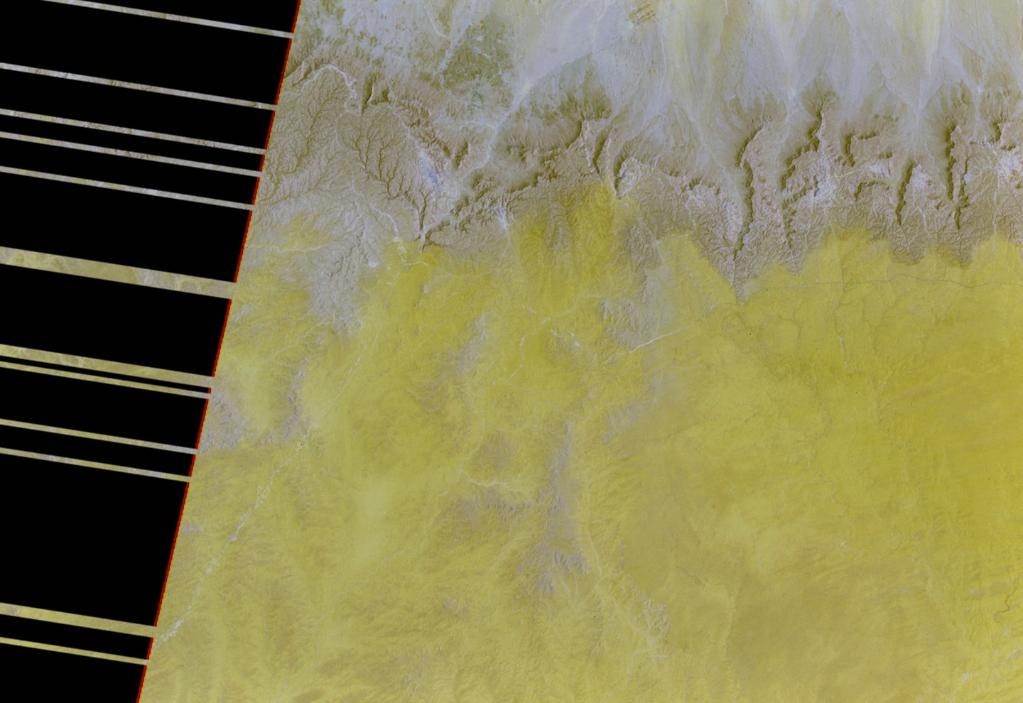
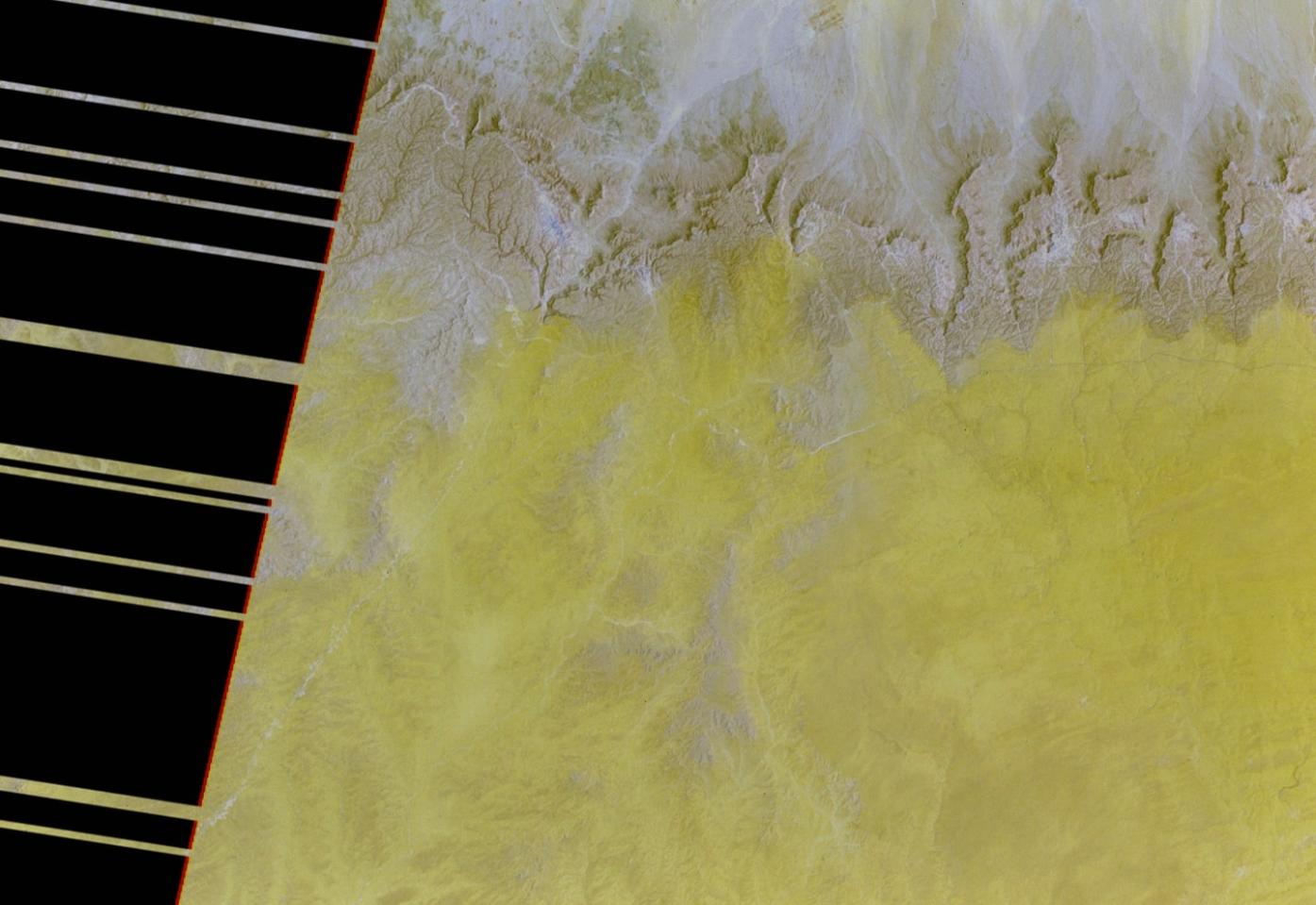
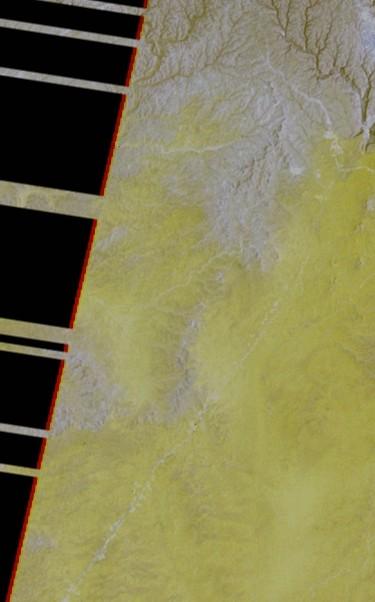
This satellite image sensed over the Tunisian section of the Sahara Desert, demonstrates the presence of the scan start anomaly. This anomaly, which occupies the left hand side of the product scene, originates from the fault where the data sampling start time within each mirror scan is delayed and so a near-consistent proportion of data is lost from each nominal scan line (Image: ESA/NASA/USGS)

Other News & Stories

17.12.2025
Two New Galileo Satellites Successfully Launched

Two new first-generation Galileo satellites, numbers 33 and 34, were successfully launched today aboard an Ariane 6 launcher at 06:01 (CET) Italian time from Europe’s Spaceport in Kourou, French Guiana. Galileo is Europe’s global satellite navigation system, developed by the European Union with the technical and industrial support of the European Space Agency (ESA).

16.12.2025
Love Planet Earth 2026: the Calendar by Leonardo, e-GEOS, Telespazio and Med-Or Italian Foundation on agriculture in the Mediterranean

On the occasion of 2025 Italian National Space Day, Leonardo, with e-GEOS (a joint venture 20% owned by the Italian Space Agency and 80% by Telespazio, Leonardo Group) and Telespazio (67% owned by Leonardo and 33% by Thales) present the eighteenth "Love Planet Earth" calendar, representing environmental sustainability through images taken by the COSMO-SkyMed satellites operated by the Italian Space Agency and the Italian Ministry of Defence.

11.12.2025
Leonardo, Telespazio and Intuitive Machines sign a strategic agreement for lunar communication and navigation

Leonardo, Telespazio and Intuitive Machines have signed a strategic cooperation agreement to develop interoperable infrastructures and provide communications and navigation services in support of lunar exploration.

13.11.2025
Agritech Living Lab: Telespazio at the forefront of agricultural innovation

Telespazio hosted the Agritech Living Lab at the Fucino Space Centre, an event organized within the framework of the Agritech Project, funded by the Italian Ministry of University and Research (MUR) under the National Recovery and Resilience Plan (NRRP), supported by the European Union’s NextGenerationEU initiative.

17.12.2025
Two New Galileo Satellites Successfully Launched

Two new first-generation Galileo satellites, numbers 33 and 34, were successfully launched today aboard an Ariane 6 launcher at 06:01 (CET) Italian time from Europe’s Spaceport in Kourou, French Guiana. Galileo is Europe’s global satellite navigation system, developed by the European Union with the technical and industrial support of the European Space Agency (ESA).

16.12.2025
Love Planet Earth 2026: the Calendar by Leonardo, e-GEOS, Telespazio and Med-Or Italian Foundation on agriculture in the Mediterranean

On the occasion of 2025 Italian National Space Day, Leonardo, with e-GEOS (a joint venture 20% owned by the Italian Space Agency and 80% by Telespazio, Leonardo Group) and Telespazio (67% owned by Leonardo and 33% by Thales) present the eighteenth "Love Planet Earth" calendar, representing environmental sustainability through images taken by the COSMO-SkyMed satellites operated by the Italian Space Agency and the Italian Ministry of Defence.

11.12.2025
Leonardo, Telespazio and Intuitive Machines sign a strategic agreement for lunar communication and navigation

Leonardo, Telespazio and Intuitive Machines have signed a strategic cooperation agreement to develop interoperable infrastructures and provide communications and navigation services in support of lunar exploration.

13.11.2025
Agritech Living Lab: Telespazio at the forefront of agricultural innovation

Telespazio hosted the Agritech Living Lab at the Fucino Space Centre, an event organized within the framework of the Agritech Project, funded by the Italian Ministry of University and Research (MUR) under the National Recovery and Resilience Plan (NRRP), supported by the European Union’s NextGenerationEU initiative.