


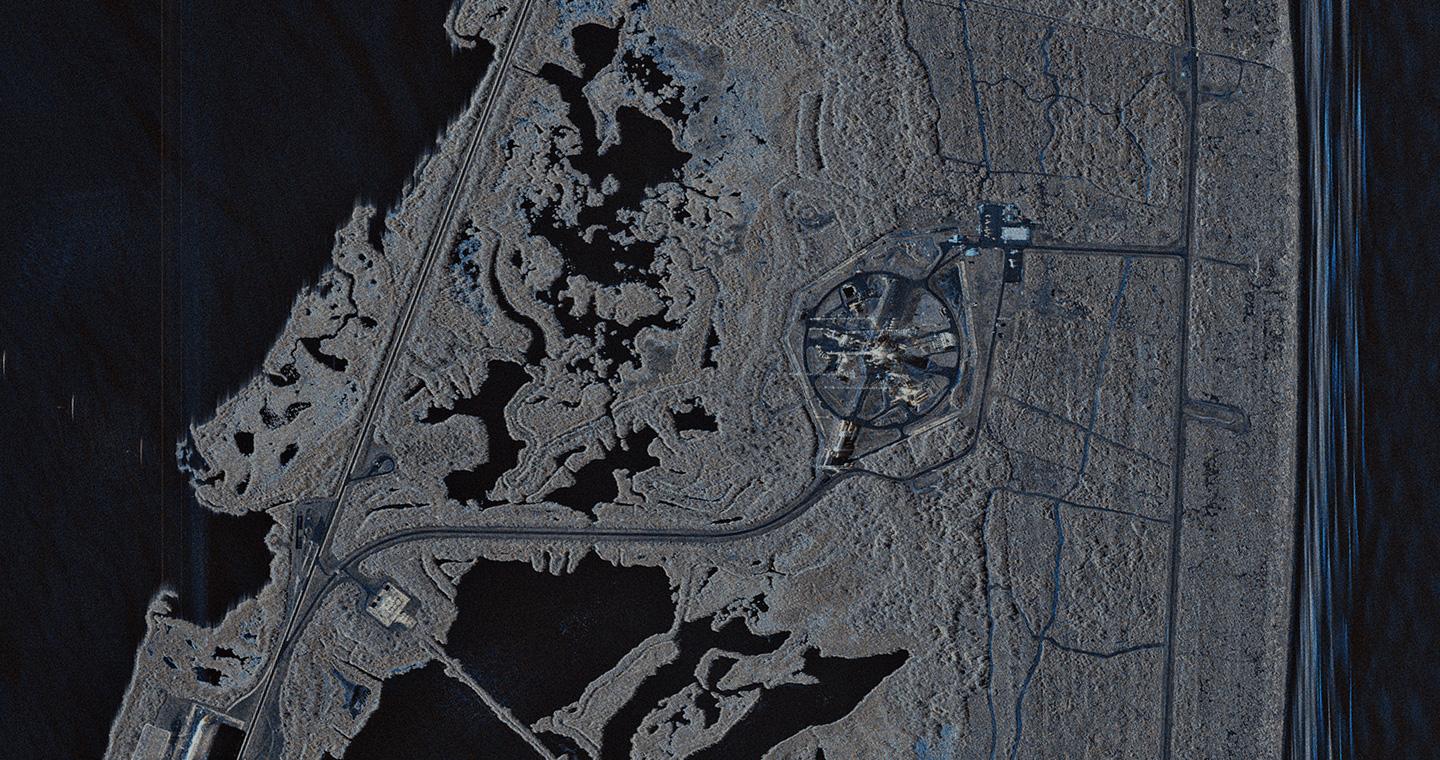
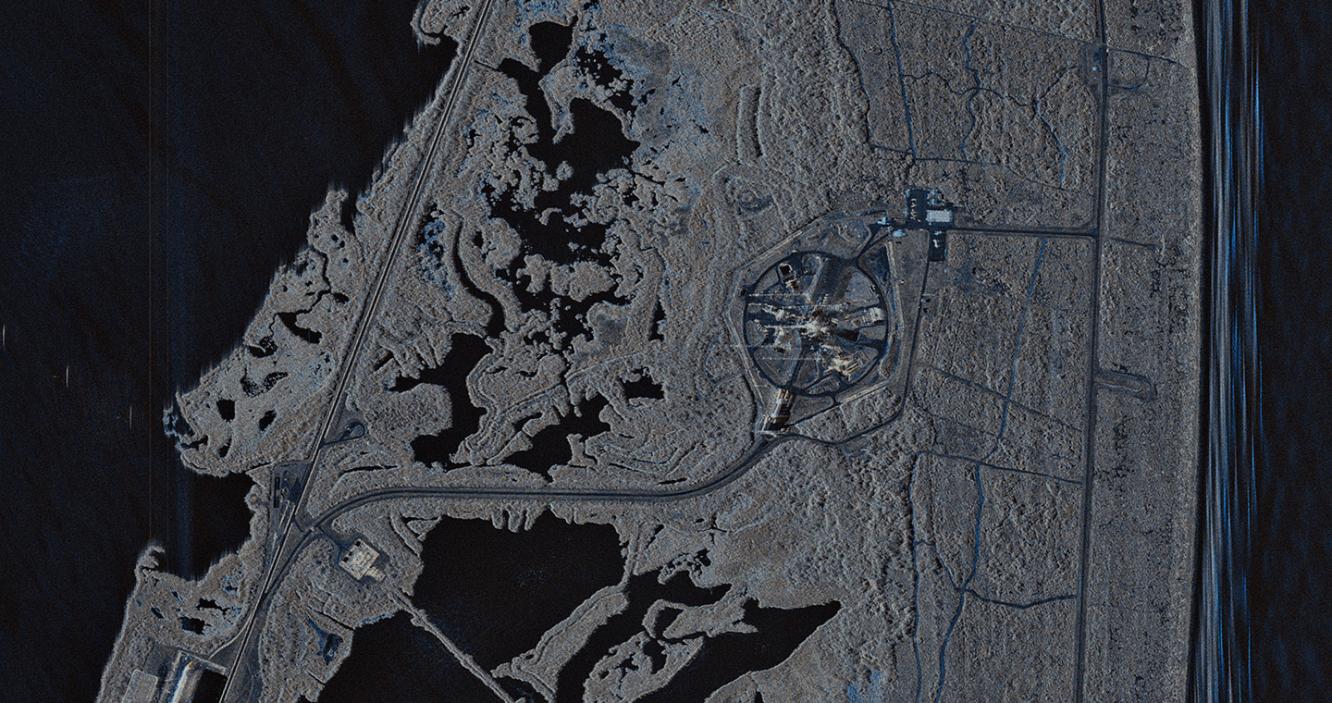
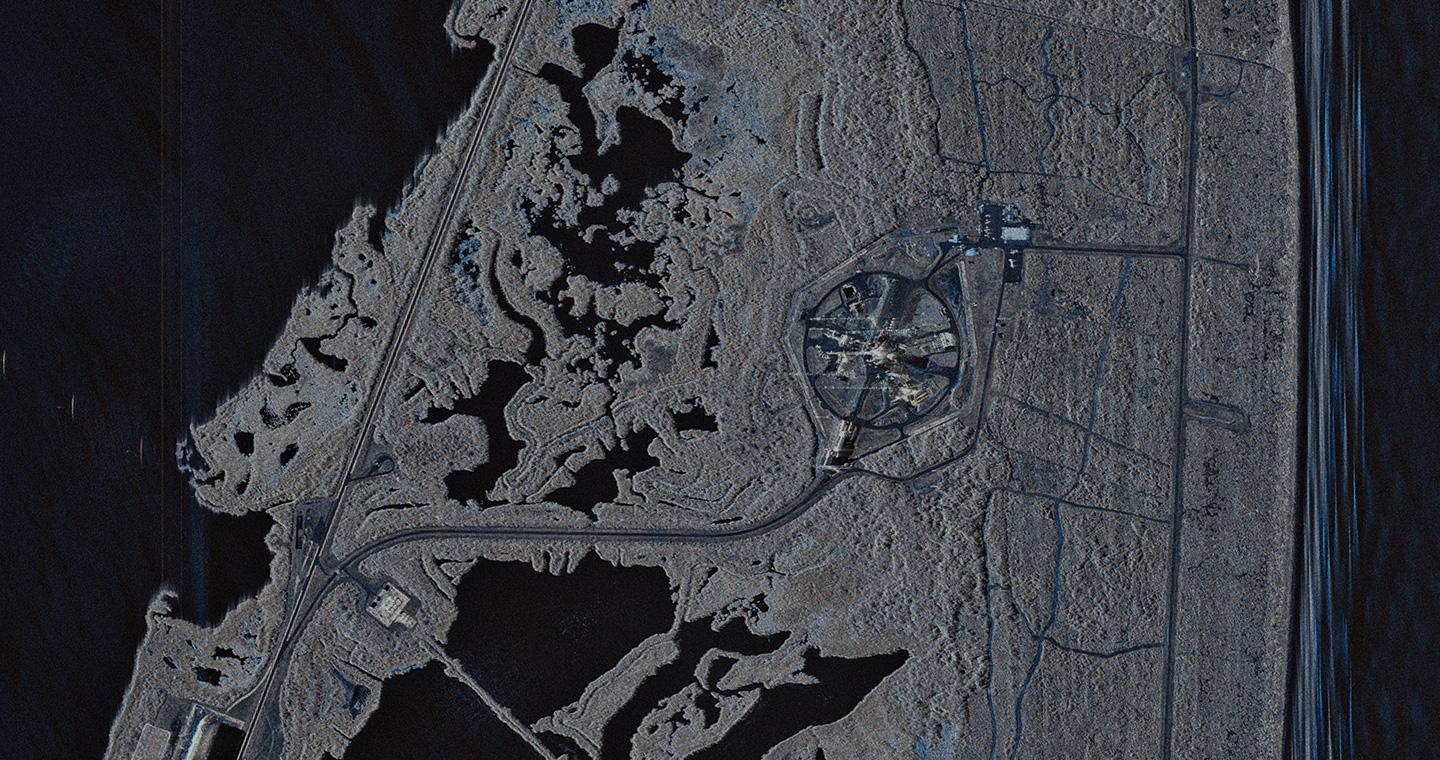
The new launch ensures complete operative continuity of the entire COSMO-SkyMed constellation, which has been in orbit for more than fifteen years and adds to its total capacity.
The COSMO-SkyMed system, financed by the Italian Space Agency with funds allocated by the Ministry of Universities and Research and the Ministry of Defence, and is the result and expression of the top talents in the Italian space industry, with Leonardo and its joint ventures Thales Alenia Space and Telespazio and with contributions made by a large number of SMEs.
Thales Alenia Space is responsible for the entire COSMO-SkyMed Second Generation programme, including satellite planning and development and design, integration and commissioning of the end-to-end system. In this context, Thales Alenia Space represents a Temporary Group of Companies set up with Telespazio, in charge of the design and development of the CSG ground segment and the supply of integrated logistics and operations services (ILS and OPS).
Telespazio’s Fucino Space Centre will manage the satellite’s Launch and Early Orbit Phase (LEOP) and acquire the first telemetry data sent by the satellite.
Leonardo’s contributions to the programme also include star trackers for orienting the satellite, along with photovoltaic panels and electrical power management equipment.
COSMO-SkyMed data is sold all over the world by e-GEOS, a joint venture of Telespazio (80%) and ASI (20%).
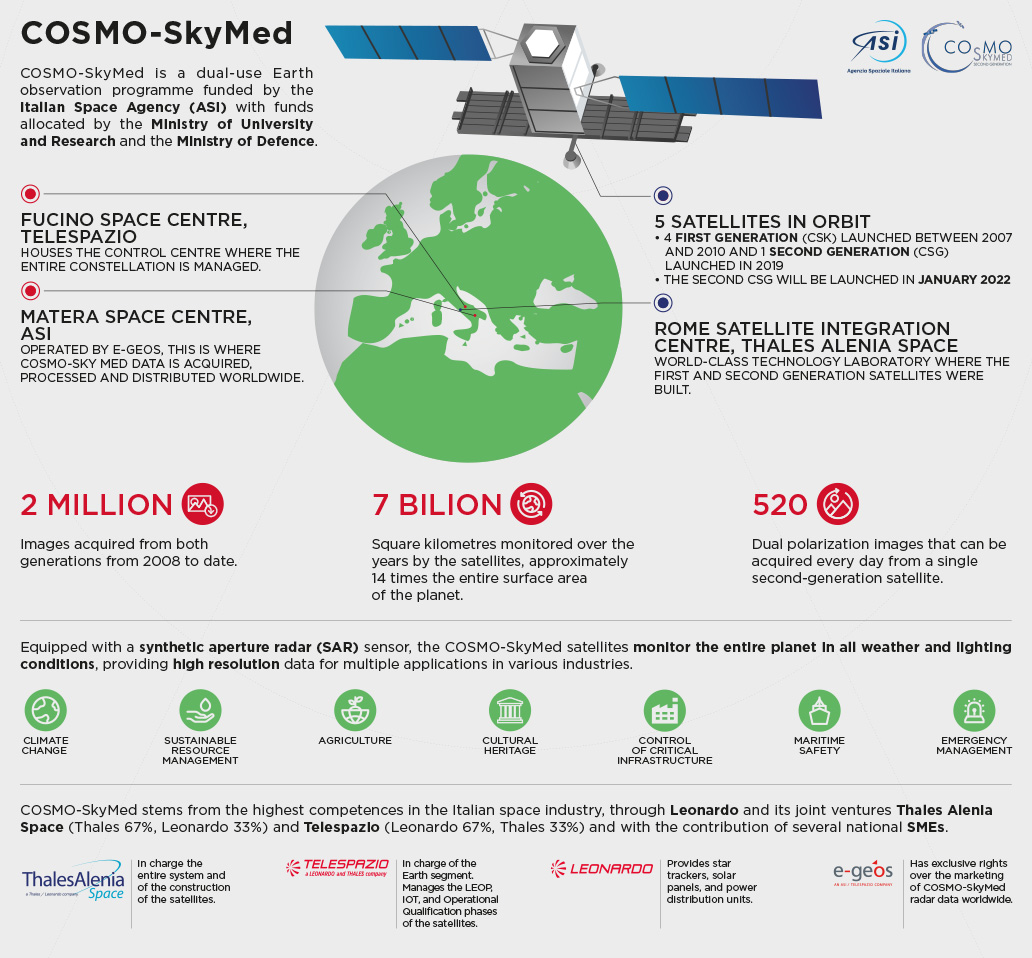
The COSMO-SkyMed system consists of a constellation of satellites, equipped with very high resolution (VHR) SAR (synthetic aperture radar) sensors operating in the X band and an Earth Segment including infrastructure for management and control of the constellation and for receiving, filing, processing and distribution of its products.
Capable of integration with other space systems to meet the needs of a vast community of users, COSMO-SkyMed permits global coverage of the planet, functioning in all weather and lighting conditions (day and night) and supplying very accurately geo-localised high spatial resolution images with rapid response times, unrivalled so far by any other Earth Observation space system.
The Second Generation of the COSMO system (CSG), the first satellite in which was launched in 2019, will therefore be expanded with the launch in orbit of this additional satellite and will progressively replace the first generation system current in orbit, improving its performance and significantly extending the field of applications in operation in view of the final configuration of 4 satellites.
Our planet will therefore be able to count on an extraordinary monitoring tool, a unique updated system capable of supplying accurate information.
It will guarantee the continuity of service supplied so far by the first generation system, representing an authentic generational leap in terms of technology, performance and operative lifespan of the system and offering new potential applications thanks to its capacity for acquisition of Ultra-High Resolution (UHR) radar images, with greater electronic agility of the SAR sensor and greater mechanical agility of the platform as well as simultaneous multi-polarisation.
All these capabilities will significantly amplify the CSG’s potential applications, particularly in the areas of risk prevention and management and assessment of damage in the event of disasters with natural and human causes.
