

Sicral and the entry into Finmeccanica: the new millennium of Telespazio

The 21st century began with some major new developments. First the launch of an innovative satellite for the defence sector, then a new corporate alignment. The new episode of “A Space Story”.

03 May 2021

The new millennium was little more than 365 days old when SICRAL 1 lifted off from the base at Kourou in French Guiana. It was 7 February 2001.

The Italian System for Secure Communications and Alerts, to give the project its full name, had an ambitious mission: to guarantee telecommunications access for the national armed forces in all operational areas, even far from Italian territory. This was a task that it would go on to perform well beyond its operational life, originally estimated at ten years.   
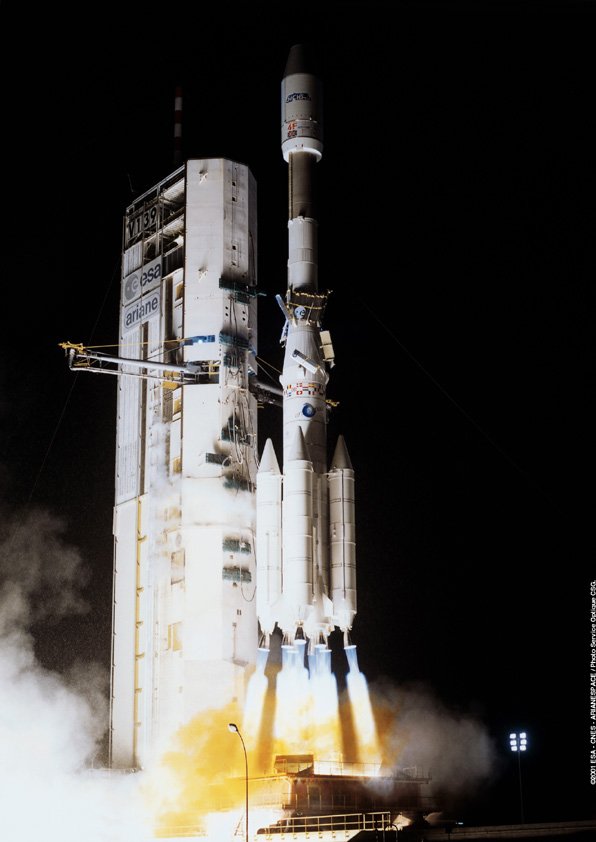
SICRAL 1's  mission is to guarantee telecommunications access for the national armed forces in all operational areas, even far from Italian territory. Photo: Arianespace/CNES/ESA

For Telespazio, which handled the satellite's launch into orbit and operational management for a year before handing it over to the Italian Defence Ministry's Centro Interforze di Gestione e Controllo (joint centre for management and control), this was its last launch before the official confirmation of its transfer from Telecom Italia to Finmeccanica (now Leonardo) in January 2002.

The SICRAL programme demonstrated how much the Italian space industry had learned from the previous Italsat project, and was a springboard for a new form of project financing.
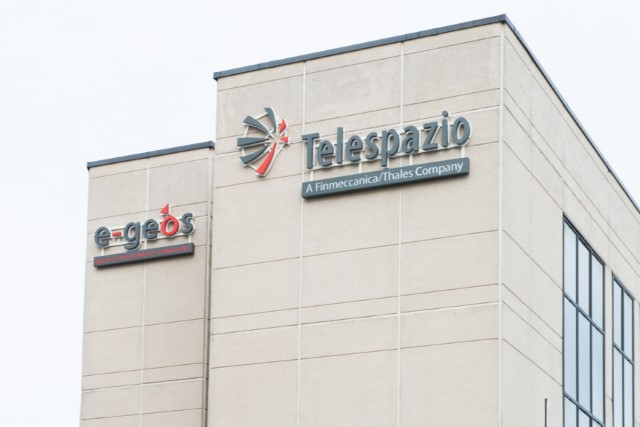
 Not only did the single currency come into effect. For Telespazio, 1 January 2002 also marked its transfer from Telecom to the Finmeccanica group, now Leonardo.

Through the PPP (Public-Private Partnership), and starting with the subsequent SICRAL-1B, Telespazio would co-finance missions while reserving the right to use and market a proportion of the satellites’ transmission capacity to offer services to countries belonging to NATO.

The subsequent satellites for the SICRAL constellation were launched in 2009 (SICRAL-1B) and 2015 (SICRAL-2).

SICRAL 1 satellite lifts off from the launch pad at Kourou, French Guiana, on 7 February 2001 on Arianespace's Ariane 4 rocket. VIDEO: Arianespace

Other News & Stories

15.10.2026
Telespazio’s polar site in Sodankylä is ready for operations

Acquiring satellite data and making it available to those who run space missions is the job of the two S/X-band antennas that Telespazio has installed in Sodankylä, Finland, at the Arctic Space Centre operated by the Finnish Meteorological Institute (FMI). Strategically located, the site is a benchmark for all of Finland: it hosts the country’s main infrastructure and works with the leading international players in space.

09.10.2026
Telespazio Benelux to build the ground infrastructure for ESA’s lunar ice-hunting mission

Telespazio Benelux will lead a European consortium, with EarthLab Luxembourg and Astro42, to deliver and operate the control centre for PROSPECT, ESA’s mission to drill for water ice and other volatile chemicals at the lunar south pole, with a drill developed and built by Leonardo.

08.10.2026
e-GEOS: Board of Directors appoints Cristina Sgubin as Chief Executive Officer

The Board of Directors of e-GEOS, a joint venture between Telespazio (80%) and the Italian Space Agency (20%), has unanimously appointed Attorney Cristina Sgubin as Chief Executive Officer of the company. Sgubin will also be responsible for Telespazio’s Geo Information Line of Business.

06.10.2026
ispace, Leonardo and Telespazio Sign Memorandum of Understanding to Collaborate on Lunar Exploration
  • The MoU builds on existing cooperation between ispace and Telespazio further expanding the areas of potential cooperation also leveraging on Leonardo space capabilities in robotics and AI applied to space exploration, strengthening Europe’s and Japan roles in the emerging cislunar economy.

  • The partnership will advance interoperability of lunar infrastructure and services to support global lunar exploration and explore ispace’s lunar transportation capabilities, with the European Space Agency’s Moonlight programme led by Telespazio, part of Leonardo Group, being the first opportunity to implement it.

15.10.2026
Telespazio’s polar site in Sodankylä is ready for operations

Acquiring satellite data and making it available to those who run space missions is the job of the two S/X-band antennas that Telespazio has installed in Sodankylä, Finland, at the Arctic Space Centre operated by the Finnish Meteorological Institute (FMI). Strategically located, the site is a benchmark for all of Finland: it hosts the country’s main infrastructure and works with the leading international players in space.

09.10.2026
Telespazio Benelux to build the ground infrastructure for ESA’s lunar ice-hunting mission

Telespazio Benelux will lead a European consortium, with EarthLab Luxembourg and Astro42, to deliver and operate the control centre for PROSPECT, ESA’s mission to drill for water ice and other volatile chemicals at the lunar south pole, with a drill developed and built by Leonardo.

08.10.2026
e-GEOS: Board of Directors appoints Cristina Sgubin as Chief Executive Officer

The Board of Directors of e-GEOS, a joint venture between Telespazio (80%) and the Italian Space Agency (20%), has unanimously appointed Attorney Cristina Sgubin as Chief Executive Officer of the company. Sgubin will also be responsible for Telespazio’s Geo Information Line of Business.

06.10.2026
ispace, Leonardo and Telespazio Sign Memorandum of Understanding to Collaborate on Lunar Exploration
  • The MoU builds on existing cooperation between ispace and Telespazio further expanding the areas of potential cooperation also leveraging on Leonardo space capabilities in robotics and AI applied to space exploration, strengthening Europe’s and Japan roles in the emerging cislunar economy.

  • The partnership will advance interoperability of lunar infrastructure and services to support global lunar exploration and explore ispace’s lunar transportation capabilities, with the European Space Agency’s Moonlight programme led by Telespazio, part of Leonardo Group, being the first opportunity to implement it.