

Sateliot will rely on the know-how of Space Alliance for the deployment of its constellation of nanosatellites and for the development of the IoT market

23 February 2021

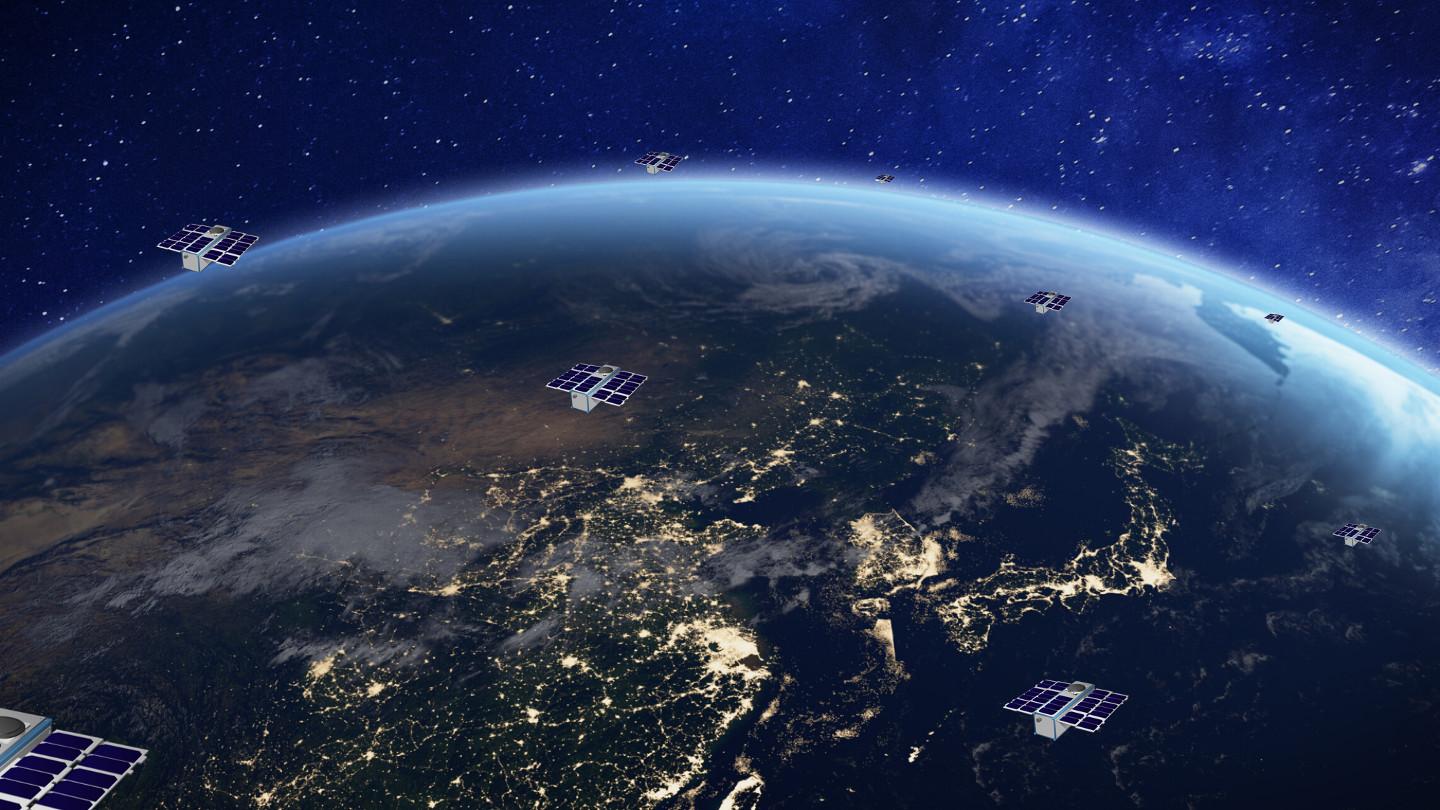
The satellite telecommunications operator Sateliot will rely on the experience and know-how of The Space Alliance between Thales Alenia Space and Telespazio for the development of a constellation of nanosatellites to ensure that IoT connectivity is compatible with the 5G standard.

Acting as telecommunications cell towers in space, the space assets – the plan envisages from 2022 to reach 96 satellites by 2025 with an investment of around 100 million euros – will enable the deployment of IoT services in sectors such as maritime, logistics, energy, agri-food, infrastructures and environmental monitoring.

Sateliot has reached an agreement with Thales Alenia Space in Spain and France to coordinate the design and development of the technologies required to offer the envisaged IoT services with 5G coverage from 2022.

In more detail, Thales Alenia Space will build on over 40 years of experience in the space sector to ensure the viability of the entire technical phase - including engineering activities and the definition of the mission and end-user needs - with the objective of guaranteeing coverage extension services to European, American, South American and even African telecommunications operators from 2022.

The agreement between Sateliot and Telespazio is aimed at promoting the development of the IoT market. In particular, Sateliot will leverage Telespazio’s experience and penetration in the international space services market to assess the main needs of customers in different sectors, while Telespazio will use Sateliot’s capabilities to boost its offering in an IoT sector that already includes global hybrid coverage based on the integration of LTE/WiFi/Lora/Satellite technologies.

This partnership confirms Telespazio’s vocation for innovation and the constant quest for increasingly advanced services for partners, customers and citizens, in-line with Leonardo’s strategy and initiatives aimed at sustainable progress in a safer world.

The agreement will allow Telespazio and Sateliot to develop new IoT services in sectors such as seaborne freight, agriculture, infrastructure management and telecommunications.

In the freight sector, for example, IoT sensors connected via satellite are able to offer information about the load status, allowing transport monitoring and enhanced security, while in the agricultural sector they can provide real-time data to promote sustainable crop management.

IoT sensors are also one of the most promising solutions for infrastructure monitoring and management, maintenance management, traffic status control and rescue operations management after accidents.

Other News & Stories

17.12.2025
Two New Galileo Satellites Successfully Launched

Two new first-generation Galileo satellites, numbers 33 and 34, were successfully launched today aboard an Ariane 6 launcher at 06:01 (CET) Italian time from Europe’s Spaceport in Kourou, French Guiana. Galileo is Europe’s global satellite navigation system, developed by the European Union with the technical and industrial support of the European Space Agency (ESA).

16.12.2025
Love Planet Earth 2026: the Calendar by Leonardo, e-GEOS, Telespazio and Med-Or Italian Foundation on agriculture in the Mediterranean

On the occasion of 2025 Italian National Space Day, Leonardo, with e-GEOS (a joint venture 20% owned by the Italian Space Agency and 80% by Telespazio, Leonardo Group) and Telespazio (67% owned by Leonardo and 33% by Thales) present the eighteenth "Love Planet Earth" calendar, representing environmental sustainability through images taken by the COSMO-SkyMed satellites operated by the Italian Space Agency and the Italian Ministry of Defence.

11.12.2025
Leonardo, Telespazio and Intuitive Machines sign a strategic agreement for lunar communication and navigation

Leonardo, Telespazio and Intuitive Machines have signed a strategic cooperation agreement to develop interoperable infrastructures and provide communications and navigation services in support of lunar exploration.

13.11.2025
Agritech Living Lab: Telespazio at the forefront of agricultural innovation

Telespazio hosted the Agritech Living Lab at the Fucino Space Centre, an event organized within the framework of the Agritech Project, funded by the Italian Ministry of University and Research (MUR) under the National Recovery and Resilience Plan (NRRP), supported by the European Union’s NextGenerationEU initiative.

17.12.2025
Two New Galileo Satellites Successfully Launched

Two new first-generation Galileo satellites, numbers 33 and 34, were successfully launched today aboard an Ariane 6 launcher at 06:01 (CET) Italian time from Europe’s Spaceport in Kourou, French Guiana. Galileo is Europe’s global satellite navigation system, developed by the European Union with the technical and industrial support of the European Space Agency (ESA).

16.12.2025
Love Planet Earth 2026: the Calendar by Leonardo, e-GEOS, Telespazio and Med-Or Italian Foundation on agriculture in the Mediterranean

On the occasion of 2025 Italian National Space Day, Leonardo, with e-GEOS (a joint venture 20% owned by the Italian Space Agency and 80% by Telespazio, Leonardo Group) and Telespazio (67% owned by Leonardo and 33% by Thales) present the eighteenth "Love Planet Earth" calendar, representing environmental sustainability through images taken by the COSMO-SkyMed satellites operated by the Italian Space Agency and the Italian Ministry of Defence.

11.12.2025
Leonardo, Telespazio and Intuitive Machines sign a strategic agreement for lunar communication and navigation

Leonardo, Telespazio and Intuitive Machines have signed a strategic cooperation agreement to develop interoperable infrastructures and provide communications and navigation services in support of lunar exploration.

13.11.2025
Agritech Living Lab: Telespazio at the forefront of agricultural innovation

Telespazio hosted the Agritech Living Lab at the Fucino Space Centre, an event organized within the framework of the Agritech Project, funded by the Italian Ministry of University and Research (MUR) under the National Recovery and Resilience Plan (NRRP), supported by the European Union’s NextGenerationEU initiative.