

Emergencies and more: the ARGO revolution

In 1980, the earthquake in Irpinia that shook Italy to the core taught Telespazio an important lesson. The fifth episode of the “A Space Story” series.

22 March 2021

Confirmations and new horizons. For Telespazio, the early eighties were marked by two important names: Intelsat and Italsat.

On the one hand, the Italian company was entrusted once again with ordinary traffic management, telemetry and in-orbit control of NASA’s satellite, now at its fifth launch. On the other, an agreement was signed with the CNR for a preliminary study on what were to become the first satellites managed directly by the Italian Space Agency. 
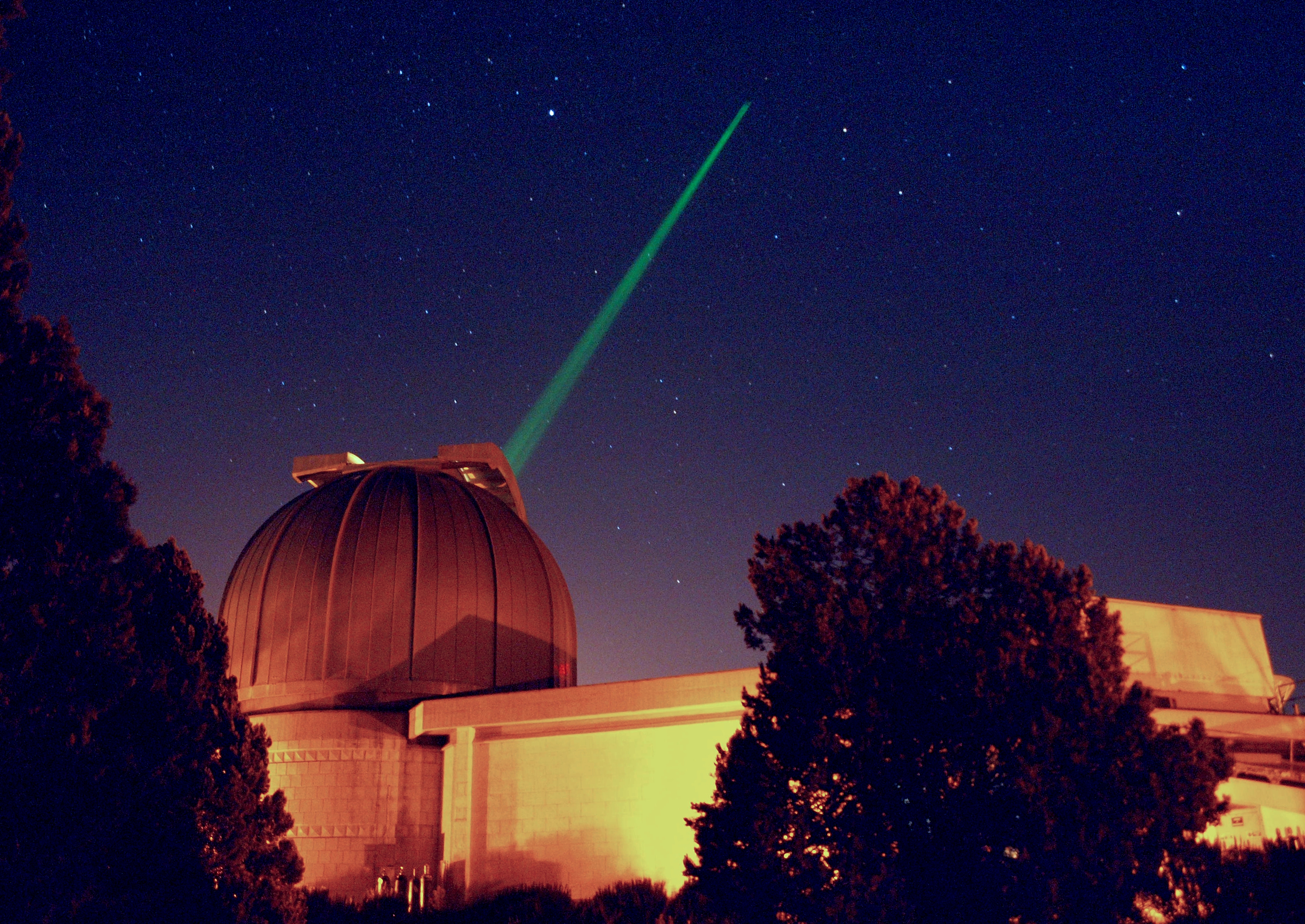
Just a decade after receiving the first Landsat data, Telespazio takes another important step in the field of Earth observation: in 1983, it obtains the management of the Space Geodesy Center in Matera from ASI.

Meanwhile, Italy was facing one of the worst natural disasters in its history. At 19.34 on 23 November 1980, Campania and Basilicata trembled for 90 consecutive seconds. Three thousand people died, ten thousand were wounded and almost 280,000 were evacuated.

Communications between the rescue centres and the areas hit by the catastrophe were being dramatically slowed down by damage to the telephone network, and the Neapolitan newspaper Il Mattino urged the authorities in big type to “Do something quick”.

The Irpinia tragedy was a lesson for the entire country and motivated Telespazio to develop a communication system with which to tackle emergencies more efficiently. Known as the Argo program, this system was based on 12 small transportable satellite antennas (VSATs), in addition to one television and two phono channels, three military helicopters for television reconnaissance, and 110 fixed stations for the detection of seismic, volcanological and hydrogeological data. Submitted to the Civil Protection Department as early as 1981, Argo became operational in 1986.

Its technology, suitable for extremely diverse purposes, opened up a new area of business for Telespazio, which received orders from SNAM, Banca dell’Agricoltura, the Bank of Italy, the Italian Department of Motor Vehicles, and even Ferrari. 
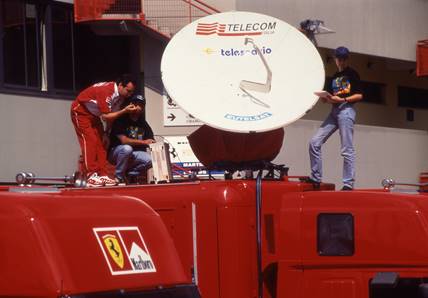
The ARGO program, inaugurated in 1986, was worth 37 billion Lire. The VSATs were also used in sports context: Ferrari used it to transmit motorhome data from the racetracks to Maranello.

Meanwhile, in Matera, the company was working on another front. In 1983, the Space Geodesy Operations Centre was inaugurated, with the aim of studying Earth's gravity and the movement of the continents, at the origin of seismic phenomena. And once again, Telespazio was put in charge.

Other News & Stories

28.08.2026
MTG-I2 successfully launched: Telespazio acquired the first signal from the third Meteosat Third Generation satellite from the Fucino Space Centre

MTG-I2, the third Meteosat Third Generation satellite from ESA and EUMETSAT, lifted off yesterday, 27 August, at 20:11 UTC from the Kourou spaceport in French Guiana, aboard an Arianespace Ariane 6 launcher. About 25 minutes after launch, Telespazio's Fucino Space Centre — a Leonardo Group subsidiary — acquired the satellite's first signal, officially marking the start of the LEOP (Launch and Early Orbit Phase), which will last twelve days.

30.07.2026
Italy-France: the Fucino Space Centre welcomes the institutional visit of Ministers Urso and Baptiste

The Minister of Enterprises and Made in Italy and Delegated Authority for Space and Aerospace Policies, Sen. Adolfo Urso, and France's Minister for Higher Education, Research and Space, Philippe Baptiste, today visited Telespazio's Fucino Space Centre, in the presence of Marco Marsilio, President of the Abruzzo Region, as part of an initiative organized by Leonardo and Telespazio.

09.07.2026
Telespazio successfully completes an important milestone for the upgrade of ASI's Sardinia Deep Space Antenna

The Sardinia Deep Space Antenna of the Italian Space Agency (ASI) is taking a decisive step toward becoming a strategic asset for Deep Space and Near Earth missions. Telespazio (Leonardo Group) has successfully completed the final milestone "EMM Delivery M4," achieving 100% of the objectives set for the activities entrusted by ASI as part of the Earth, Moon and Mars (EMM) project, funded by the Ministry of University and Research through PNRR (National Recovery and Resilience Plan) funds.

23.06.2026
Telespazio and CEiiA join forces in the Iberian space sector

Earth Observation, satellite constellations, space operations: Telespazio Iberica and CEiiA, an engineering and product development centre based in Portugal, are joining forces through a Letter of Intent aimed at strengthening the Iberian space ecosystem.

28.08.2026
MTG-I2 successfully launched: Telespazio acquired the first signal from the third Meteosat Third Generation satellite from the Fucino Space Centre

MTG-I2, the third Meteosat Third Generation satellite from ESA and EUMETSAT, lifted off yesterday, 27 August, at 20:11 UTC from the Kourou spaceport in French Guiana, aboard an Arianespace Ariane 6 launcher. About 25 minutes after launch, Telespazio's Fucino Space Centre — a Leonardo Group subsidiary — acquired the satellite's first signal, officially marking the start of the LEOP (Launch and Early Orbit Phase), which will last twelve days.

30.07.2026
Italy-France: the Fucino Space Centre welcomes the institutional visit of Ministers Urso and Baptiste

The Minister of Enterprises and Made in Italy and Delegated Authority for Space and Aerospace Policies, Sen. Adolfo Urso, and France's Minister for Higher Education, Research and Space, Philippe Baptiste, today visited Telespazio's Fucino Space Centre, in the presence of Marco Marsilio, President of the Abruzzo Region, as part of an initiative organized by Leonardo and Telespazio.

09.07.2026
Telespazio successfully completes an important milestone for the upgrade of ASI's Sardinia Deep Space Antenna

The Sardinia Deep Space Antenna of the Italian Space Agency (ASI) is taking a decisive step toward becoming a strategic asset for Deep Space and Near Earth missions. Telespazio (Leonardo Group) has successfully completed the final milestone "EMM Delivery M4," achieving 100% of the objectives set for the activities entrusted by ASI as part of the Earth, Moon and Mars (EMM) project, funded by the Ministry of University and Research through PNRR (National Recovery and Resilience Plan) funds.

23.06.2026
Telespazio and CEiiA join forces in the Iberian space sector

Earth Observation, satellite constellations, space operations: Telespazio Iberica and CEiiA, an engineering and product development centre based in Portugal, are joining forces through a Letter of Intent aimed at strengthening the Iberian space ecosystem.