

e-GEOS: contract with ESA promoting use of EO applications to support international organisations involved in development projects

04 March 2022

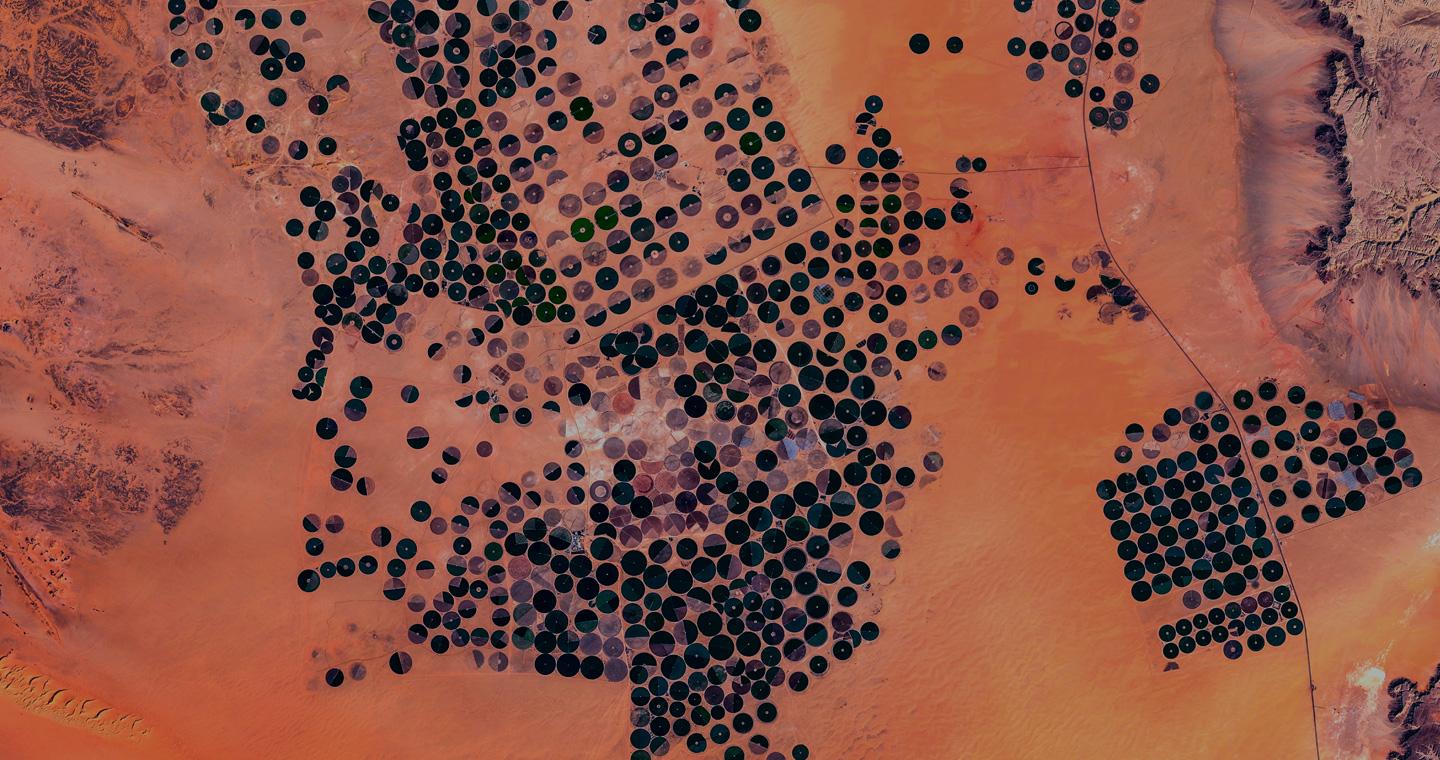
e-GEOS has signed a contract with the European Space Agency (ESA) for development of a project entitled “Global Development Assistance (GDA )- Agile EO Information Development (AID) - fragility, conflict, and security”. The project aims to use Earth observation satellites to improve the implementation and coordination of international aid projects in the parts of the world most heavily affected by conflict, poverty and environmental insecurity.

e-GEOS signed the contract as prime contractor of a consortium with the participation of the German Space Agency DLR, Hensoldt Analytics (Austria), Vito (Belgium), Janes (UK), and CGI of Italy.

Using the vast body of data from Earth observation satellites, the GDA (Global Development Assistance) programme aims to satisfy the information requirements of international financial institutions and parties involved in development. The domains of interest to the GDA- AID programme are Disaster Resilience, Urban Sustainability, Climate Resilience, Marine Environment and the Blue Economy, Agriculture, Water Resources and Clean Energy.

The new project falls under the Fragility, Conflict and Security domain, offering international financial institutions a tool providing prompt, precise information for analyzing and assessing the results of initiatives aimed at reducing poverty, boosting economic development and favoring environmental security in what are considered the world’s most “fragile” states.

Fragile settings are characterized by economic and social insecurity, political instability, weak governance, and greater vulnerability to the effects of climate change and natural hazards. The project will develop applications employing a multidisciplinary approach, combining geospace data with information from a variety of sources, using OSINT/SOSINT techniques to supply products, analyses and reports contributing to improved decision-making processes.

To make the data quick and easy to use, a special platform will integrate solutions developed by the consortium led by e-GEOS for the project in a harmonized environment.


“Thanks to participation in the Global Development Assistance programme, in which we had an opportunity to make a contribution in the area of Fragility, Conflict and Security, we are proud to be able to use Earth observation data to help the fragile parts of the world. The goal is to improve implementation and provide new tools for coordinating international aid projects”.

Paolo Minciacchi, e-GEOS CEO.


“ESA’s Global Development Assistance Programme aims to foster impact through the systematic integration of Earth observation data in development projects. Digital and geospatial technology, including earth observation (EO), have become crucial for getting reliable insights into various FCV contexts, while also providing effective solutions for analytical purposes, and insights into large-scale dynamics in efficient ways. This includes issues related to environmental degradation, food security, resource extraction, displacement dynamics and other issues that relate to compound risks”.

Michela Corvino, Technical Officer of the GDA-AID Fragility Project at ESA.

Other News & Stories

25.09.2026
Fucino Space Centre: from the first "ping" to the future of the Internet

Prof. Luciano Lenzini, a pioneer in bringing the Internet to Italy, met with Telespazio engineers and technicians at the Fucino Space Centre, through which the first Internet link between Italy and the United States passed 40 years ago.

21.09.2026
Connectivity: results of the satellite trial in Lombardy presented in Milan

Connecting entire villages to the national network through an infrastructure that combines satellite, fiber and wireless connections, in order to bring quality digital services even to the hardest-to-reach areas. This is the goal of the trial carried out in Lombardy, whose preliminary results were presented at the Milan office of the Department for Digital Transformation. Telespazio took part in the initiative by developing a proprietary backhauling solution that aggregates multiple satellite links.

15.09.2026
FLEX and Sentinel-3C in Orbit: Leonardo and Telespazio's Contribution to ESA's Earth Observation Missions

On September 15th 2026, at 03:21 Italian time, the FLEX and Copernicus Sentinel-3C satellites of the European Space Agency (ESA) successfully launched from Europe's Spaceport in Kourou, French Guiana. Both travelled aboard the same launcher, Avio's Vega-C, and are now flying in tandem orbit, spaced roughly ten seconds apart, at an altitude of around 800 kilometres.

28.08.2026
MTG-I2 successfully launched: Telespazio acquired the first signal from the third Meteosat Third Generation satellite from the Fucino Space Centre

MTG-I2, the third Meteosat Third Generation satellite from ESA and EUMETSAT, lifted off yesterday, 27 August, at 20:11 UTC from the Kourou spaceport in French Guiana, aboard an Arianespace Ariane 6 launcher. About 25 minutes after launch, Telespazio's Fucino Space Centre — a Leonardo Group subsidiary — acquired the satellite's first signal, officially marking the start of the LEOP (Launch and Early Orbit Phase), which will last twelve days.

25.09.2026
Fucino Space Centre: from the first "ping" to the future of the Internet

Prof. Luciano Lenzini, a pioneer in bringing the Internet to Italy, met with Telespazio engineers and technicians at the Fucino Space Centre, through which the first Internet link between Italy and the United States passed 40 years ago.

21.09.2026
Connectivity: results of the satellite trial in Lombardy presented in Milan

Connecting entire villages to the national network through an infrastructure that combines satellite, fiber and wireless connections, in order to bring quality digital services even to the hardest-to-reach areas. This is the goal of the trial carried out in Lombardy, whose preliminary results were presented at the Milan office of the Department for Digital Transformation. Telespazio took part in the initiative by developing a proprietary backhauling solution that aggregates multiple satellite links.

15.09.2026
FLEX and Sentinel-3C in Orbit: Leonardo and Telespazio's Contribution to ESA's Earth Observation Missions

On September 15th 2026, at 03:21 Italian time, the FLEX and Copernicus Sentinel-3C satellites of the European Space Agency (ESA) successfully launched from Europe's Spaceport in Kourou, French Guiana. Both travelled aboard the same launcher, Avio's Vega-C, and are now flying in tandem orbit, spaced roughly ten seconds apart, at an altitude of around 800 kilometres.

28.08.2026
MTG-I2 successfully launched: Telespazio acquired the first signal from the third Meteosat Third Generation satellite from the Fucino Space Centre

MTG-I2, the third Meteosat Third Generation satellite from ESA and EUMETSAT, lifted off yesterday, 27 August, at 20:11 UTC from the Kourou spaceport in French Guiana, aboard an Arianespace Ariane 6 launcher. About 25 minutes after launch, Telespazio's Fucino Space Centre — a Leonardo Group subsidiary — acquired the satellite's first signal, officially marking the start of the LEOP (Launch and Early Orbit Phase), which will last twelve days.