

“Bravo BeppoSAX!” - The story of an unexpected success

In the mid-1990s, Telespazio was at the forefront of managing the first Italian satellite for scientific use. In the meantime, it was preparing to expand in South America and Romania. A new episode in the “A Space Story” series.

19 April 2021

Cape Canaveral, 30 April 1996. The Americans did not know this yet, but an Italian satellite ready to come off the launch ramp – the first for scientific use - was about to solve the mystery that had been tormenting NASA for many years.

Sax (Satellite for X-Ray Astronomy), later renamed BeppoSAX in honour of physicist Giuseppe Occhialini, was to reveal the origin of Gamma-Ray Bursts. These were not the result of enemy military experiments, as Americans and Soviets had thought during the Cold War. They had to do with enormous explosions at the ends of the universe, outside our galaxy. For the world of astronomy, this was a real turning point.

“Bravo BeppoSAX!” was inscribed on the last remote control sent to the satellite in 2002 to deactivate it. Among the reasons for this sign of gratitude were six years of operations, 1500 observations of celestial sources, and a shower of prestigious awards for the scientists involved in the project. Once again, Telespazio took a leading role, having been granted exclusive management of the satellite in orbit.
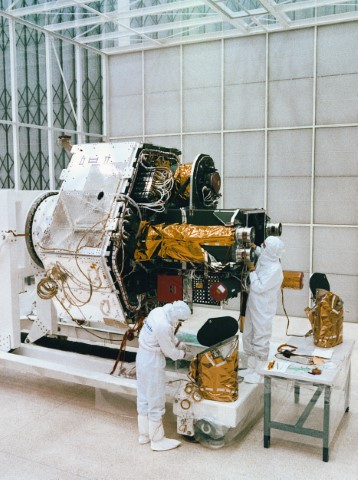
BeppoSAX, designed in collaboration with the Dutch space agency NIVR, was the first Italian satellite for scientific use. Its state-of-the-art on-board instrumentation revealed the origin of Gamma-Ray Bursts, a milestone unaccomplished by NASA.

The second half of the 1990s was a particularly intense period for the Italian company, which was then expanding beyond its national borders for the first time. New subsidiaries were established in Europe and Latin America: Telespazio Argentina (1994), Telespazio Brasil (1997), and Rartel in Romania (1998). A clear sign of a paradigm shift, and the first step towards becoming a truly global space company.
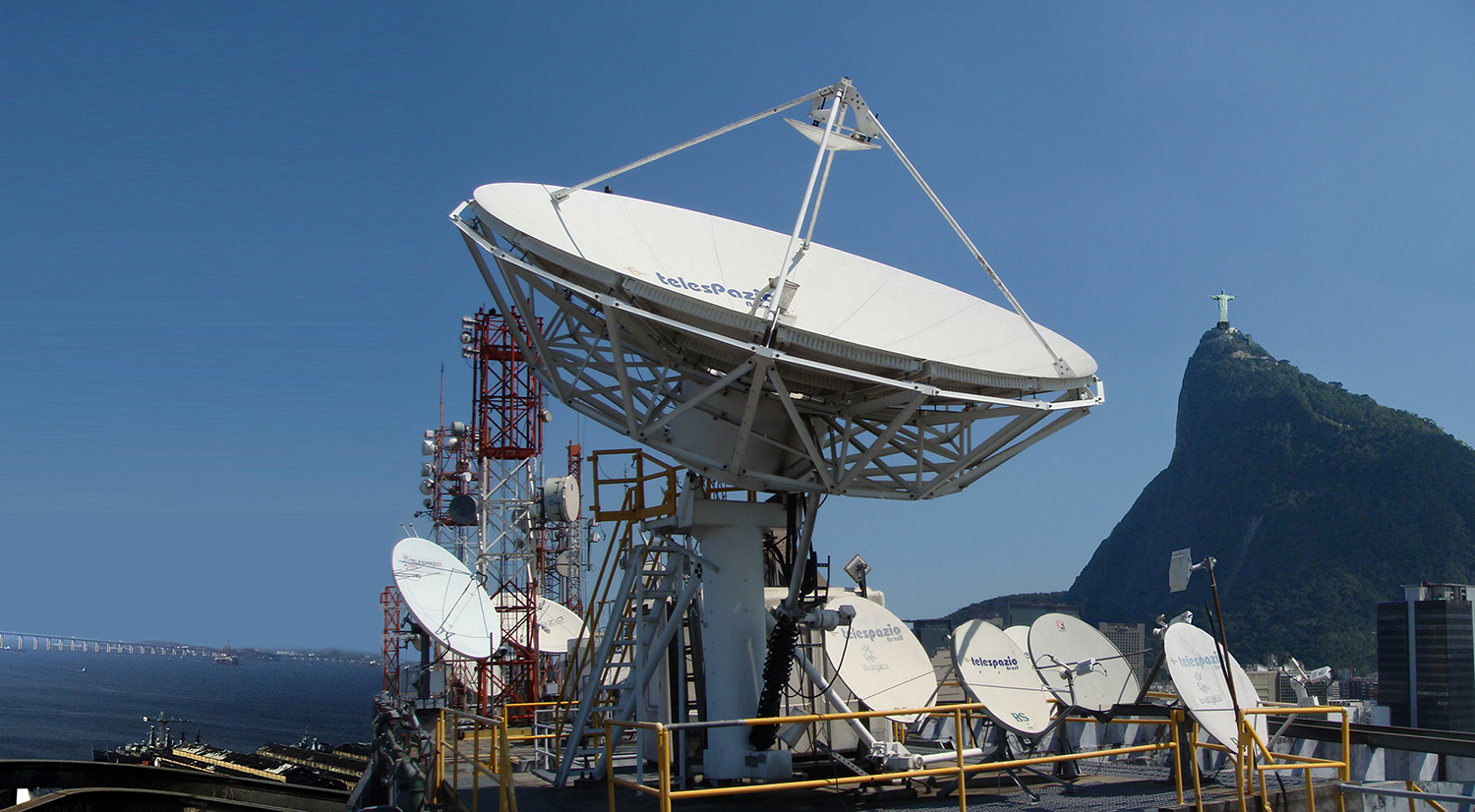
In the second half of the 1990s, Telespazio expanded beyond its national borders. Its first three subsidiaries were established: Telespazio Brasil, Telespazio Argentina, and Rartel in Romania.

Other News & Stories

09.10.2026
Telespazio Benelux to build the ground infrastructure for ESA’s lunar ice-hunting mission

Telespazio Benelux will lead a European consortium, with EarthLab Luxembourg and Astro42, to deliver and operate the control centre for PROSPECT, ESA’s mission to drill for water ice and other volatile chemicals at the lunar south pole, with a drill developed and built by Leonardo.

08.10.2026
e-GEOS: Board of Directors appoints Cristina Sgubin as Chief Executive Officer

The Board of Directors of e-GEOS, a joint venture between Telespazio (80%) and the Italian Space Agency (20%), has unanimously appointed Attorney Cristina Sgubin as Chief Executive Officer of the company. Sgubin will also be responsible for Telespazio’s Geo Information Line of Business.

06.10.2026
ispace, Leonardo and Telespazio Sign Memorandum of Understanding to Collaborate on Lunar Exploration
  • The MoU builds on existing cooperation between ispace and Telespazio further expanding the areas of potential cooperation also leveraging on Leonardo space capabilities in robotics and AI applied to space exploration, strengthening Europe’s and Japan roles in the emerging cislunar economy.

  • The partnership will advance interoperability of lunar infrastructure and services to support global lunar exploration and explore ispace’s lunar transportation capabilities, with the European Space Agency’s Moonlight programme led by Telespazio, part of Leonardo Group, being the first opportunity to implement it.

25.09.2026
Fucino Space Centre: from the first "ping" to the future of the Internet

Prof. Luciano Lenzini, a pioneer in bringing the Internet to Italy, met with Telespazio engineers and technicians at the Fucino Space Centre, through which the first Internet link between Italy and the United States passed 40 years ago.

09.10.2026
Telespazio Benelux to build the ground infrastructure for ESA’s lunar ice-hunting mission

Telespazio Benelux will lead a European consortium, with EarthLab Luxembourg and Astro42, to deliver and operate the control centre for PROSPECT, ESA’s mission to drill for water ice and other volatile chemicals at the lunar south pole, with a drill developed and built by Leonardo.

08.10.2026
e-GEOS: Board of Directors appoints Cristina Sgubin as Chief Executive Officer

The Board of Directors of e-GEOS, a joint venture between Telespazio (80%) and the Italian Space Agency (20%), has unanimously appointed Attorney Cristina Sgubin as Chief Executive Officer of the company. Sgubin will also be responsible for Telespazio’s Geo Information Line of Business.

06.10.2026
ispace, Leonardo and Telespazio Sign Memorandum of Understanding to Collaborate on Lunar Exploration
  • The MoU builds on existing cooperation between ispace and Telespazio further expanding the areas of potential cooperation also leveraging on Leonardo space capabilities in robotics and AI applied to space exploration, strengthening Europe’s and Japan roles in the emerging cislunar economy.

  • The partnership will advance interoperability of lunar infrastructure and services to support global lunar exploration and explore ispace’s lunar transportation capabilities, with the European Space Agency’s Moonlight programme led by Telespazio, part of Leonardo Group, being the first opportunity to implement it.

25.09.2026
Fucino Space Centre: from the first "ping" to the future of the Internet

Prof. Luciano Lenzini, a pioneer in bringing the Internet to Italy, met with Telespazio engineers and technicians at the Fucino Space Centre, through which the first Internet link between Italy and the United States passed 40 years ago.