

Brasilia: Telespazio promotes a convention on satellite radar technology

Brasilia  27 September 2018

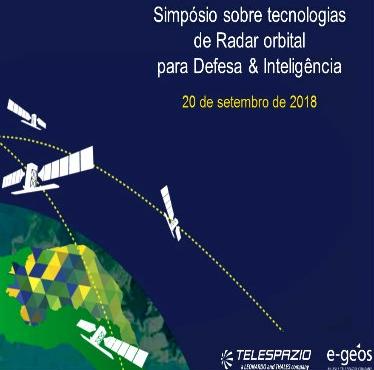
On 20 September in Brasilia, the "Simposio sobre tecnologia radar para Defesa e Inteligência” was held, organised by Telespazio Brasil in collaboration with the CCISE (Comissão de Cordenação e Implantação de Sistemas Espaciais) and the Brazilian Defence Ministry.

During the convention, member of the Leonardo Group, Telespazio and e-GEOS (a Telespazio / ASI joint-venture), along with their affiliate, Thales Alenia Space, presented the most recent progress made in radar monitoring activities using satellites, highlighting the benefits using this technology has to offer for South American Countries.

The CCISE recently published its Defence Space Plan, which provides for the building of radar satellites. The event, promoted by Telespazio, therefore had the task of promoting the importance of this technology for security and defence-related applications, among the stakeholders in Brazilian Defence.

Among others, those involved in the works included the Brazilian Defence Minister Joaquim Silva e Luna, top ranking offices from the Country’s Armed Forces, the Italian Ambassador to Brazil Antonio Bernardini, representatives of Italian institutions, the Italian Space Agency, and the Leonardo Group.

During the addresses, the Brazilian Defence Minister stressed the importance of his Country equipping itself with satellite radar capacity. Italian Ambassador, Antonio Bernardini said that, “The aerospace sector represents a new path in cooperation between Italy and Brazil,” and expressed his hope that collaboration between the two countries would develop further. General Fortunato di Marzio, the Italian Defence Force Representative, pointed out how Italy is able to count on well-grounded experience in handling data from space, especially in the civil field, such as when dealing with emergencies. Placido de Maio, the Leonardo Group’s representative in South America, highlighted how Brazil, with its 8.5 million square kilometre territory needs to monitor its territory, and how satellite technology provides a response to this need. In his address, Chairman of e-GEOS, Roberto Ibba and delegate of the President of the ASI, stressed the technological and scientific excellence of the Italian space system.

Other News & Stories

25.09.2026
Fucino Space Centre: from the first "ping" to the future of the Internet

Prof. Luciano Lenzini, a pioneer in bringing the Internet to Italy, met with Telespazio engineers and technicians at the Fucino Space Centre, through which the first Internet link between Italy and the United States passed 40 years ago.

21.09.2026
Connectivity: results of the satellite trial in Lombardy presented in Milan

Connecting entire villages to the national network through an infrastructure that combines satellite, fiber and wireless connections, in order to bring quality digital services even to the hardest-to-reach areas. This is the goal of the trial carried out in Lombardy, whose preliminary results were presented at the Milan office of the Department for Digital Transformation. Telespazio took part in the initiative by developing a proprietary backhauling solution that aggregates multiple satellite links.

15.09.2026
FLEX and Sentinel-3C in Orbit: Leonardo and Telespazio's Contribution to ESA's Earth Observation Missions

On September 15th 2026, at 03:21 Italian time, the FLEX and Copernicus Sentinel-3C satellites of the European Space Agency (ESA) successfully launched from Europe's Spaceport in Kourou, French Guiana. Both travelled aboard the same launcher, Avio's Vega-C, and are now flying in tandem orbit, spaced roughly ten seconds apart, at an altitude of around 800 kilometres.

28.08.2026
MTG-I2 successfully launched: Telespazio acquired the first signal from the third Meteosat Third Generation satellite from the Fucino Space Centre

MTG-I2, the third Meteosat Third Generation satellite from ESA and EUMETSAT, lifted off yesterday, 27 August, at 20:11 UTC from the Kourou spaceport in French Guiana, aboard an Arianespace Ariane 6 launcher. About 25 minutes after launch, Telespazio's Fucino Space Centre — a Leonardo Group subsidiary — acquired the satellite's first signal, officially marking the start of the LEOP (Launch and Early Orbit Phase), which will last twelve days.

25.09.2026
Fucino Space Centre: from the first "ping" to the future of the Internet

Prof. Luciano Lenzini, a pioneer in bringing the Internet to Italy, met with Telespazio engineers and technicians at the Fucino Space Centre, through which the first Internet link between Italy and the United States passed 40 years ago.

21.09.2026
Connectivity: results of the satellite trial in Lombardy presented in Milan

Connecting entire villages to the national network through an infrastructure that combines satellite, fiber and wireless connections, in order to bring quality digital services even to the hardest-to-reach areas. This is the goal of the trial carried out in Lombardy, whose preliminary results were presented at the Milan office of the Department for Digital Transformation. Telespazio took part in the initiative by developing a proprietary backhauling solution that aggregates multiple satellite links.

15.09.2026
FLEX and Sentinel-3C in Orbit: Leonardo and Telespazio's Contribution to ESA's Earth Observation Missions

On September 15th 2026, at 03:21 Italian time, the FLEX and Copernicus Sentinel-3C satellites of the European Space Agency (ESA) successfully launched from Europe's Spaceport in Kourou, French Guiana. Both travelled aboard the same launcher, Avio's Vega-C, and are now flying in tandem orbit, spaced roughly ten seconds apart, at an altitude of around 800 kilometres.

28.08.2026
MTG-I2 successfully launched: Telespazio acquired the first signal from the third Meteosat Third Generation satellite from the Fucino Space Centre

MTG-I2, the third Meteosat Third Generation satellite from ESA and EUMETSAT, lifted off yesterday, 27 August, at 20:11 UTC from the Kourou spaceport in French Guiana, aboard an Arianespace Ariane 6 launcher. About 25 minutes after launch, Telespazio's Fucino Space Centre — a Leonardo Group subsidiary — acquired the satellite's first signal, officially marking the start of the LEOP (Launch and Early Orbit Phase), which will last twelve days.