


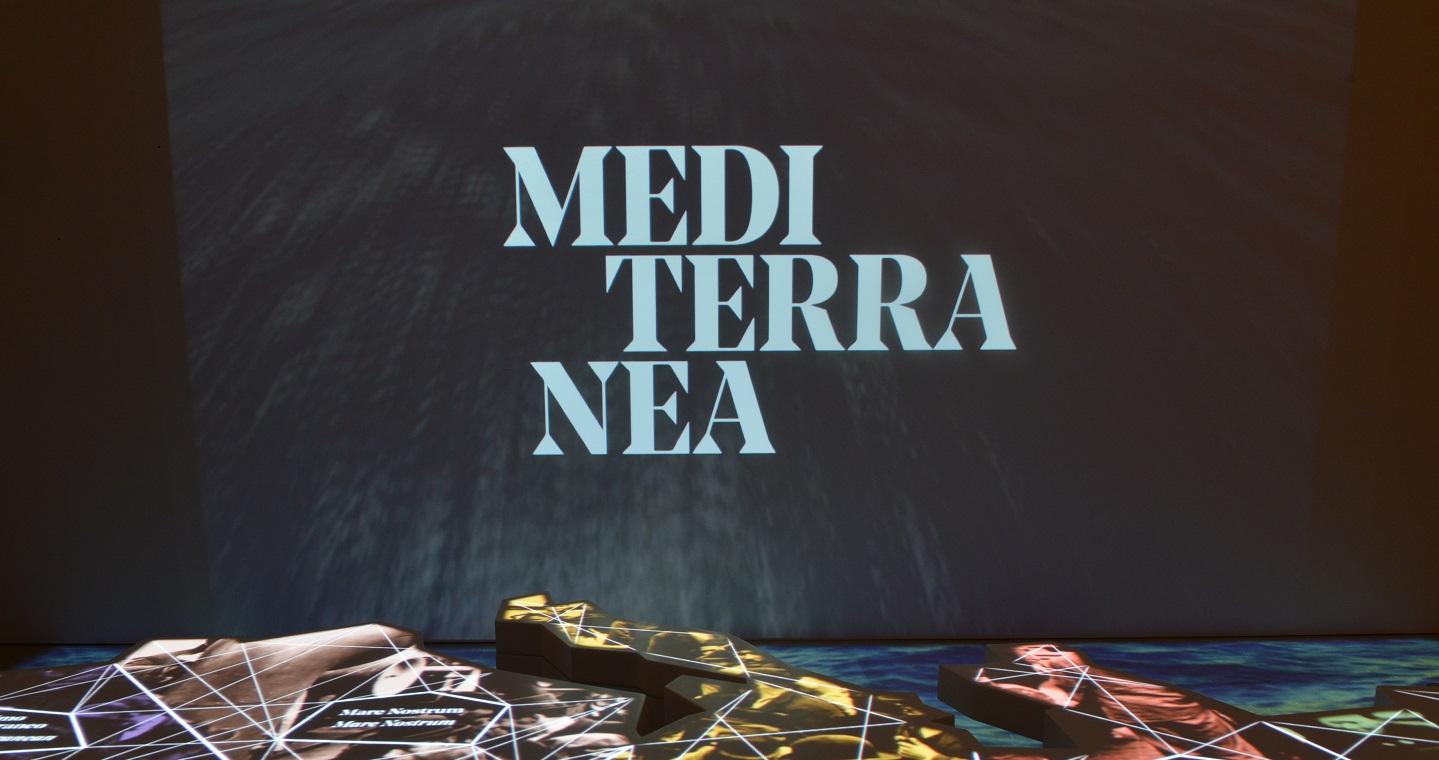
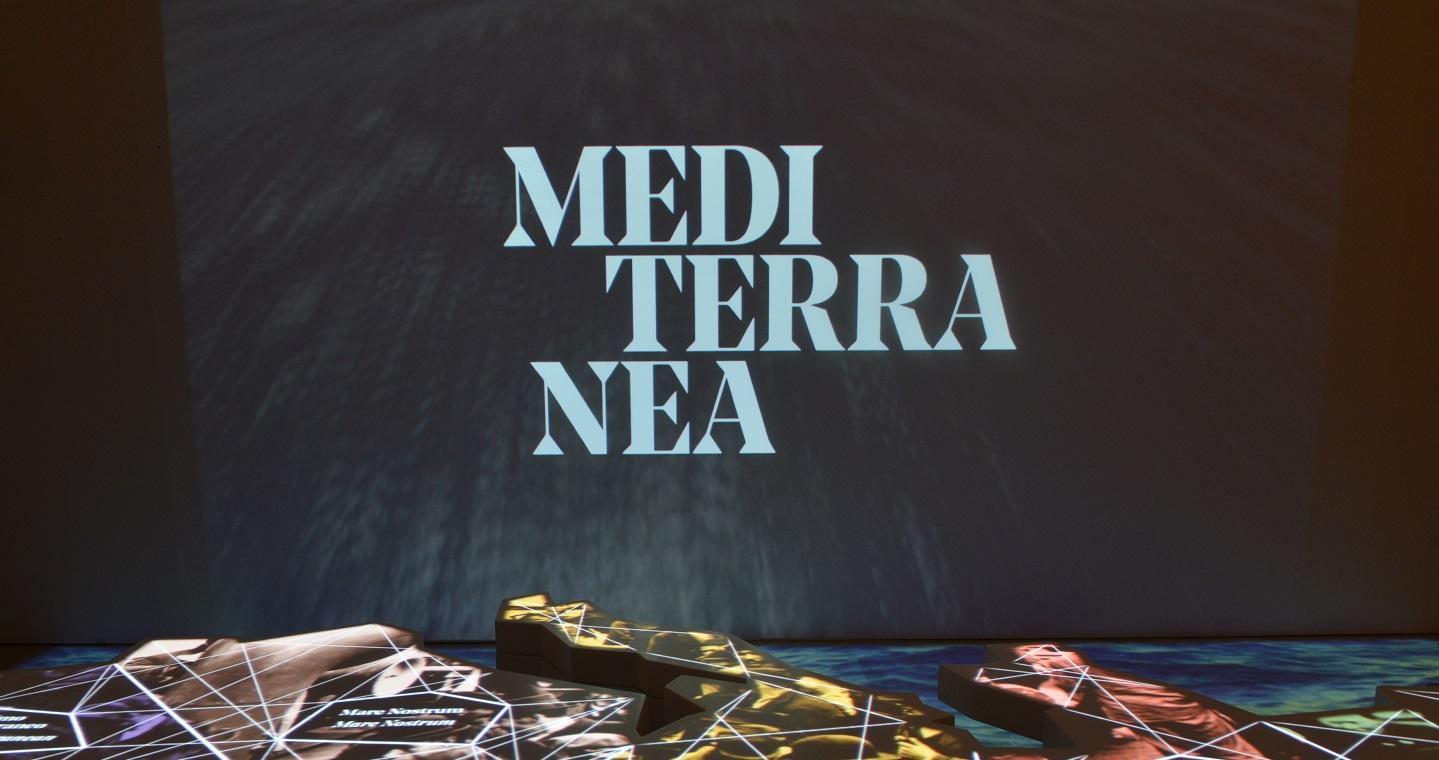
Today, The Italian Space Agency and Telespazio inaugurated the “Mediterranea – Visions of an ancient and complex sea” exhibition in Matera.
The initiative, an integral part of the Matera European Capital of Culture 2019 programme, has been promoted by the Matera Basilicata 2019 Foundation and by the Basilicata Superintendency together with the Italian Space Agency (ASI) and Telespazio.
The exhibition, organised by Viviana Panaccia at the "Domenico Ridola" National Archeological Museum in Matera, will be open to the public from 20 September 2019 to 19 January 2020.
"Mediterranea" intends to tell the story, the beauty, the populations and the myths of this marine continent, but also the hazards and the conflicts threatening it today. The exhibition itinerary offered to visitors represents, in fact, the Mediterranean in all its complexity, through the narration of its history with site-specific unpublished satellite images, elaborated by e-GEOS (an ASI/Telespazio company), photos, videos and installations of extraordinary emotional impact, in a perfect synthesis between science and art, between past and present.
"A very ancient future, this is the synthesis of Matera as a city and as a cultural heritage", recalls Giorgio Saccoccia, president of the Italian Space Agency. "The Mediterranea exhibition we inaugurated with Telespazio, thanks to the support of the Basilicata Museum Centre and of the Matera 2019 Foundation, practically is the story of a past oriented towards the future and represents the combination between ancient tradition and a place of great technology, emphasizing the contrast between a rock-like place like the Sassi and a high-tech facility like the Space Geodesy Centre of the Italian Space Agency. The exhibition summarises these states of contrast that represent the overall essence of the Mediterranean basin, which is our cradle, the sap of our culture that we must preserve and protect. Space, through its technologies, can field and support the actions and activities required for the sustainable development and protection of the whole area ".
Luigi Pasquali, Space Activities Coordinator of Leonardo and Chief Executive Officer of Telespazio, said: “I am very pleased to inaugurate this very interesting exhibition today in Matera, through which Telespazio and ASI want to increase public awareness about important issues associated with the Mediterranean Sea. The satellite images lead us to the places that have marked the history and evolution of our sea, and draw attention to the emergencies it is facing, first of all the environmental one. The exhibition is part of the many initiatives promoted by Leonardo and characterised by contamination between scientific and humanistic disciplines".
"The exhibition includes three elements of important continuity with respect to the Matera 2019 program - explains the Director of the Matera Basilicata 2019 Foundation, Paolo Verri -. First, it consolidates the relationship of the Foundation, the Museum Centre and the city of Matera with ASI and ESA. After the exhibition on Mars and the activities for the fiftieth anniversary of the descent of the first man on the Moon, "Mediterranea" certifies that Matera is the most appropriate place to discuss about present, innovation and Earth observation. It also demonstrates that the decision to talk about the remote future was more than appropriate. Finally, that among the main aims of a European capital of culture there is permanent education through unusual and effective tools such as interactive exhibitions ".
From ancient port cities to mythical islands, from the typical olive tree and wheat cultivations to the efforts made in the North African territories to wring cultivated fields from the desert: the exhibition highlights the potential of satellite observation, and in particular of the COSMO-SkyMed constellation, for the study of environmental problems and as a privileged tool for different management of the land and the soil and to counter their degradation: for a sustainable and more productive agriculture, for an intelligent use of water resources, for the study of phenomena arising from climate change.
Satellite images also provide extremely useful data about sea surface temperature, water acidification, soil moisture and plant health; they help navigation by providing accurate positioning data and also represent an essential tool for civil protection agencies in the relief management in case of environmental emergencies.
