

Earth observation and big data: a new partnership with Silicon Valley

Le Bourget (Paris)  19 June 2017

At the Paris Air Show in Le Bourget, Leonardo announced the signing of an agreement between e-GEOS (a joint venture between Telespazio and the Italian Space Agency) and the US-based company Orbital Insight to provide revolutionary satellite services.


The partnership will see the convergence of Space technologies and big data analytics to provide radically new products and services for numerous applications including emergency management, precision agriculture, environmental monitoring and safety.

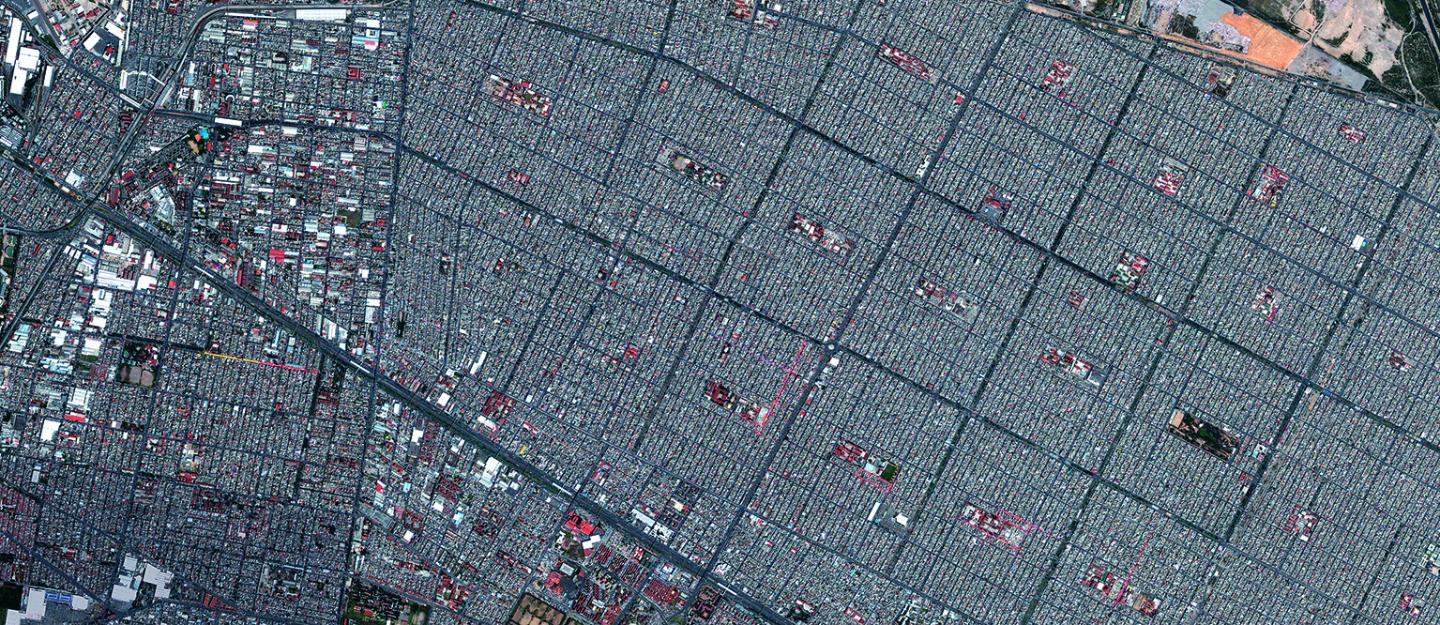
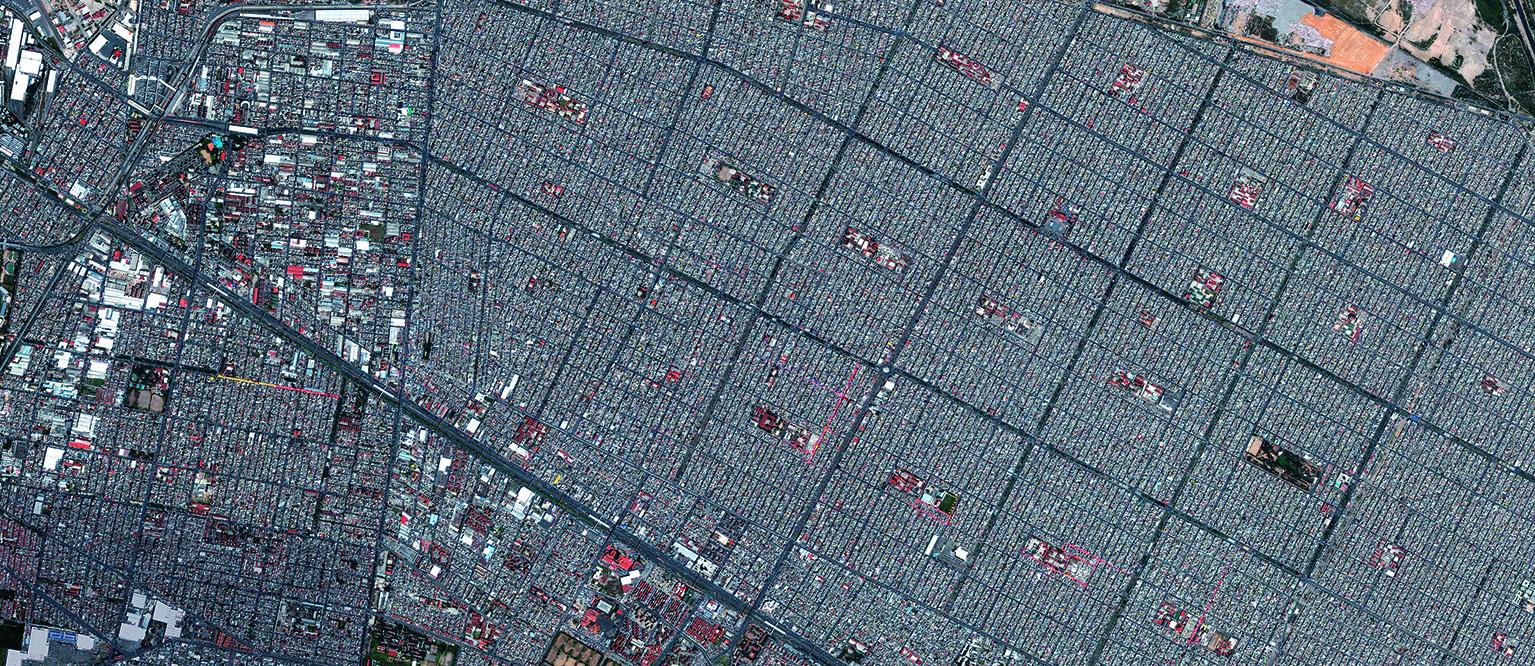
With the support of the Italian Space Agency (ASI), the collaboration between the two companies will allow cloud computing solutions and innovative machine learning/artificial intelligence techniques developed by Orbital Insight to be used to analyse high-resolution satellite images. The pictures, which e-GEOS acquires from the COSMO-SkyMed Earth observation satellite system and processes, can also be supplemented with data from other information sources.

To give an example, satellite radar images could be used to help generate a comprehensive picture of an area’s economic activity and urban development. By combining different strands of information, such as the income and consumption levels of the people that live there and the intensity of agricultural activities, it is possible to produce ‘poverty maps’ to help decision makers define support or growth policies. The use of Space imagery means that this kind of information can even be provided in regions which, due to a lack of funds to carry out ad hoc surveys or due to current conflicts, have little usable official data available.

“Space already provides an unimaginable quantity of information for a multitude of uses; the real challenge is working out how best to use it”, said Luigi Pasquali, Director of Leonardo’s Space Sector and CEO of Telespazio (a 67-33% joint venture between Leonardo and Thales). “The most sophisticated big data analytics solutions today come from the commercial sector, which are making it possible to manage and process the huge amount of information generated every day by space sensors, by a wide variety of data-gathering platforms and by industry, government organisations and citizens. Our partnership with Orbital Insight will combine our extensive experience in the processing of satellite data with these innovative new techniques, allowing us to offer new services and applications”.

Having signed important contracts in Europe, the United States, China and Japan which include the monitoring of energy infrastructure, land and maritime safety, Leonardo provides geo-information applications and services around the world through Telespazio and e-GEOS. Using large volumes of data from the Earth observation dataset, Leonardo can supplement high-resolution images of our planet with data coming from sensors on the ground and on aeroplanes, helicopters or drones, as well as from archives and social media.

Other News & Stories

25.09.2026
Fucino Space Centre: from the first "ping" to the future of the Internet

Prof. Luciano Lenzini, a pioneer in bringing the Internet to Italy, met with Telespazio engineers and technicians at the Fucino Space Centre, through which the first Internet link between Italy and the United States passed 40 years ago.

21.09.2026
Connectivity: results of the satellite trial in Lombardy presented in Milan

Connecting entire villages to the national network through an infrastructure that combines satellite, fiber and wireless connections, in order to bring quality digital services even to the hardest-to-reach areas. This is the goal of the trial carried out in Lombardy, whose preliminary results were presented at the Milan office of the Department for Digital Transformation. Telespazio took part in the initiative by developing a proprietary backhauling solution that aggregates multiple satellite links.

15.09.2026
FLEX and Sentinel-3C in Orbit: Leonardo and Telespazio's Contribution to ESA's Earth Observation Missions

On September 15th 2026, at 03:21 Italian time, the FLEX and Copernicus Sentinel-3C satellites of the European Space Agency (ESA) successfully launched from Europe's Spaceport in Kourou, French Guiana. Both travelled aboard the same launcher, Avio's Vega-C, and are now flying in tandem orbit, spaced roughly ten seconds apart, at an altitude of around 800 kilometres.

28.08.2026
MTG-I2 successfully launched: Telespazio acquired the first signal from the third Meteosat Third Generation satellite from the Fucino Space Centre

MTG-I2, the third Meteosat Third Generation satellite from ESA and EUMETSAT, lifted off yesterday, 27 August, at 20:11 UTC from the Kourou spaceport in French Guiana, aboard an Arianespace Ariane 6 launcher. About 25 minutes after launch, Telespazio's Fucino Space Centre — a Leonardo Group subsidiary — acquired the satellite's first signal, officially marking the start of the LEOP (Launch and Early Orbit Phase), which will last twelve days.

25.09.2026
Fucino Space Centre: from the first "ping" to the future of the Internet

Prof. Luciano Lenzini, a pioneer in bringing the Internet to Italy, met with Telespazio engineers and technicians at the Fucino Space Centre, through which the first Internet link between Italy and the United States passed 40 years ago.

21.09.2026
Connectivity: results of the satellite trial in Lombardy presented in Milan

Connecting entire villages to the national network through an infrastructure that combines satellite, fiber and wireless connections, in order to bring quality digital services even to the hardest-to-reach areas. This is the goal of the trial carried out in Lombardy, whose preliminary results were presented at the Milan office of the Department for Digital Transformation. Telespazio took part in the initiative by developing a proprietary backhauling solution that aggregates multiple satellite links.

15.09.2026
FLEX and Sentinel-3C in Orbit: Leonardo and Telespazio's Contribution to ESA's Earth Observation Missions

On September 15th 2026, at 03:21 Italian time, the FLEX and Copernicus Sentinel-3C satellites of the European Space Agency (ESA) successfully launched from Europe's Spaceport in Kourou, French Guiana. Both travelled aboard the same launcher, Avio's Vega-C, and are now flying in tandem orbit, spaced roughly ten seconds apart, at an altitude of around 800 kilometres.

28.08.2026
MTG-I2 successfully launched: Telespazio acquired the first signal from the third Meteosat Third Generation satellite from the Fucino Space Centre

MTG-I2, the third Meteosat Third Generation satellite from ESA and EUMETSAT, lifted off yesterday, 27 August, at 20:11 UTC from the Kourou spaceport in French Guiana, aboard an Arianespace Ariane 6 launcher. About 25 minutes after launch, Telespazio's Fucino Space Centre — a Leonardo Group subsidiary — acquired the satellite's first signal, officially marking the start of the LEOP (Launch and Early Orbit Phase), which will last twelve days.